
Nenwell’s exported commercial beverage refrigerators are compliant with DOE certification requirements. The DOE certification is a mandatory energy efficiency access scheme issued by the U.S. Department of Energy, implemented under the Energy Policy and Conservation Act, and applies to all refrigeration equipment circulating in the U.S. market. Based on our experience, many customers only request the relevant documentation and complete the certification process on their own. Of course, we can also handle the full certification procedure if customers have such needs.
I. Basic Workflow of DOE Certification
The first step in applying for DOE certification is to define the product category and match the corresponding regulations, so as to avoid certification invalidation caused by mismatched standards. Small supermarket beverage coolers are vertical glass-door commercial refrigerated display cabinets used for the refrigerated display of bottled beverages and dairy products. They fall under the regulatory category of commercial refrigerators, and the core applicable regulation is 10 CFR Part 431, Appendix B.
Enterprises shall complete three basic tasks in advance: First, distinguish commercial beverage coolers from household refrigerators. Supermarket display coolers are designed with advertising light boxes, large glass display surfaces and continuous commercial operation, which are not household refrigeration products and cannot apply the DOE standards for household refrigerators. Second, verify the product volume. The DOE sets differentiated energy consumption limits based on different refrigerated volumes, so enterprises shall measure two core parameters in advance: the internal net volume and the glass display area. Third, confirm the sales region. If the products are also sold in California, CEC energy efficiency certification shall be added on the basis of DOE certification. As California’s energy efficiency standards are stricter than the general federal requirements, the test plan shall be planned simultaneously.
After the classification is confirmed, the enterprise shall fill in the DOE certification application form, indicating information such as brand, model, volume, refrigeration method, rated power, defrost type and target sales channels (small supermarkets / convenience stores). Meanwhile, it shall select a third-party laboratory with DOE-recognized qualification and ISO/IEC 17025 accreditation. Test reports issued by unqualified institutions cannot be used for official registration.
II. Preparation of Basic Materials for Certification Testing
Documentation and prototype samples are the core basis for DOE testing and registration. Missing documentation or inconsistency between prototype performance and mass-produced products will directly lead to certification rejection. The industry-standard preparation list is divided into two major sections: technical documents and test prototypes.
1. Full Set of Technical Documents (Chinese-English Bilingual Version)
Enterprise qualification documents include the manufacturer’s business license, foreign trade export filing certificate, and complete information of the U.S. local importer (name, address, contact person and tax ID, which are mandatory for DOE registration. If there is no U.S. agent, a third-party compliance agent can be appointed);
Product technical files include the complete machine specification sheet, list of core components (compressor / condenser / evaporator), electrical schematic diagram, PCB layout drawing, nameplate label sample and English installation and operation manual;
Compliance supporting documents include the agency authorization letter (provided when a third-party institution handles the certification on behalf of the enterprise) and the Declaration of Conformity (DoC) template (signed after the test is passed, which is legally binding and certifies that the product meets federal energy efficiency standards).
2. Requirements for Test Prototypes
For the DOE test of commercial beverage coolers, at least 2 complete mass-produced prototypes shall be provided, and 3 units are recommended for models with complex volume specifications. The prototypes must be completely consistent with the mass-produced products from the assembly line, and simplified prototypes are prohibited. The prototypes shall be equipped with all original accessories including light boxes, door gaskets, thermostats and refrigeration pipelines, with no damage or modification. A 72-hour no-load stable operation test shall be completed in advance to ensure that the refrigeration performance meets the standards and reduce the probability of retesting in the laboratory. Before transportation, take photos of the complete machine, nameplate and internal volume of the prototypes and keep them on file for future reference.
III. Core and Key Links of DOE Certification
The testing phase is a critical part of the entire process. It is independently operated by the accredited laboratory throughout the whole process, and the enterprise may only observe. The test data is directly entered into the official DOE system and cannot be manually modified. For small supermarket beverage coolers, there are three core test items:
First, daily energy consumption test. Simulating the all-day continuous operation condition of supermarkets, the test runs for 24 hours in a constant temperature and humidity laboratory to accurately record the total power consumption of the unit (kWh/day). The measured energy consumption must be lower than the maximum energy consumption limit specified in the regulation to be deemed qualified.
Second, net refrigerated volume measurement. Standard filling materials are used to calculate the actual storage space of the cabinet. The volume value is used to match the corresponding energy efficiency calculation formula, and a volume data deviation of more than 5% will result in an invalid test.
Third, display surface and heat loss test. For the large-area glass doors of beverage coolers, the heat leakage through the door body and the additional power consumption of the light box are calculated and included in the total energy consumption. For models with LED advertising light boxes, the standby power consumption of the lighting shall be tested separately.
The test cycle is 5-10 working days depending on the complexity of the model. If the measured energy consumption exceeds the limit, the laboratory will issue rectification suggestions. The enterprise shall resubmit samples for retesting after optimizing the compressor, thickening the door gasket and replacing the insulation layer. After all items are qualified, the laboratory will issue an official English test report affixed with the accreditation seal. The report, which includes complete test curves, original data and prototype photos, is the only valid certificate for DOE online registration.
IV. Online Filing via the CCMS System
After the test report is issued, the process enters the online registration phase via the Certification Compliance Management System (CCMS). This step marks the actual completion of DOE certification. Merely holding a test report does not mean the product is compliant, and products without a registration number cannot clear U.S. customs. The complete registration operation process is as follows:
First, register a corporate CCMS account. The U.S. importer or authorized agent shall register an official account, fill in the basic information of the enterprise and products, and upload the laboratory test report, full set of technical documents and the signed Declaration of Conformity (DoC);
Second, fill in the dedicated Excel declaration template for commercial refrigeration equipment with data such as beverage cooler model, volume, daily energy consumption and component parameters. The system will automatically verify whether the values meet the Minimum Energy Performance Standards (MEPS);
Next, DOE staff will review all documents online. The standard review cycle is 7-15 working days. After the documents are verified to be correct, a unique and permanent DOE registration number will be generated and simultaneously entered into the U.S. national compliant product database;
Finally, the enterprise shall print the product energy efficiency label based on the registration data and affix it next to the nameplate on the beverage cooler body. The label shall clearly indicate the daily energy consumption, net volume and registration code, which must be fully displayed for sales in offline supermarkets and online platforms such as Amazon.
V. Ongoing Compliance Management and Precautions After DOE Certification
Certification is not a one-time process. After completing the registration, enterprises shall maintain compliance for a long time to respond to unscheduled market inspections by the U.S. Department of Energy.
First, mass-produced beverage coolers must be consistent with the certified prototypes. If key components such as the compressor, insulation material and door structure are replaced, retesting is required and the registration information in the CCMS system shall be updated. Unauthorized component changes will result in certification invalidation. Second, enterprises shall fully retain test reports, registration certificates and technical drawings for at least 5 years, and provide all files immediately upon inspection. Finally, pay attention to regulatory updates. The DOE updated the energy efficiency limits for commercial refrigeration equipment in 2024, and the standards will continue to be tightened in the future. Enterprises shall review the product energy efficiency every two years to avoid that the original certification fails to comply with new regulations.
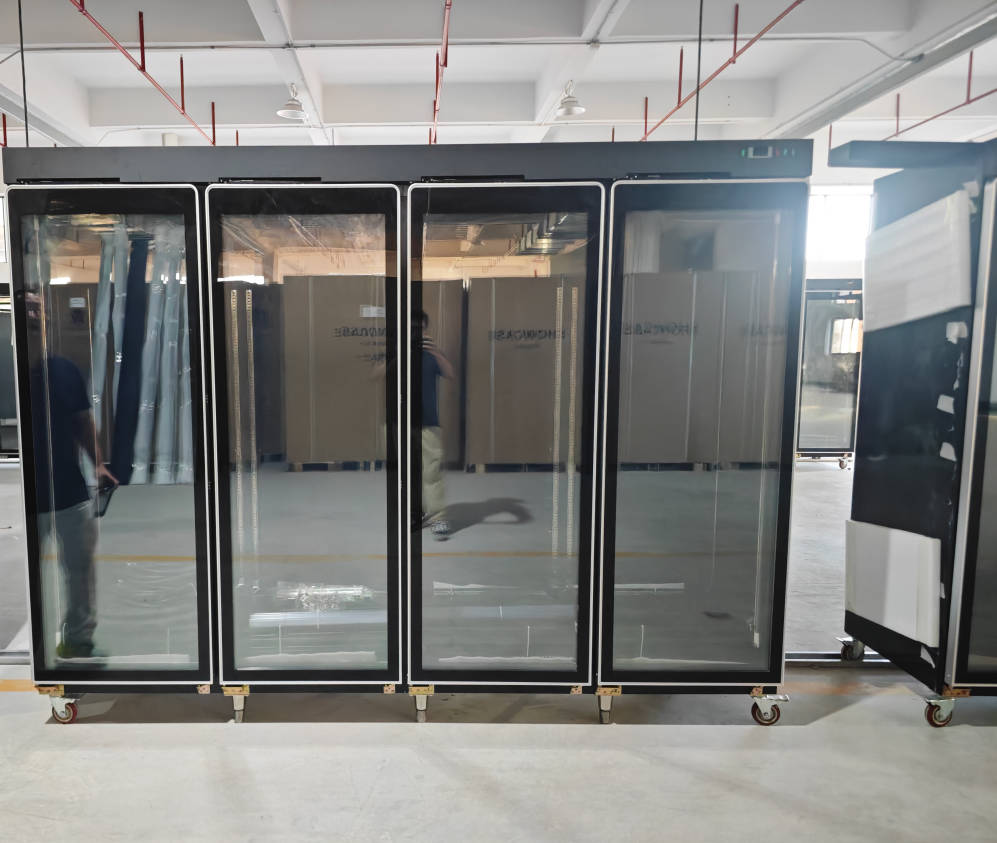
According to Nenwell, the entire DOE energy efficiency certification process revolves around five core nodes: standard determination – sample and material preparation – energy efficiency testing – online registration – long-term compliance. The core logic is to prove that products comply with federal energy conservation regulations through standardized testing, and complete compliance filing via the official CCMS system.
Post time: Jul-10-2026 Views: