
Within the contemporary commercial landscape, the cake display cabinet market exhibits distinctive developmental characteristics. Conducting an in-depth analysis of its market prospects to identify future trends and opportunities is therefore particularly crucial. Current market developments indicate that the flourishing baking industry is driving sustained growth in both supply and demand for cake display cabinets.
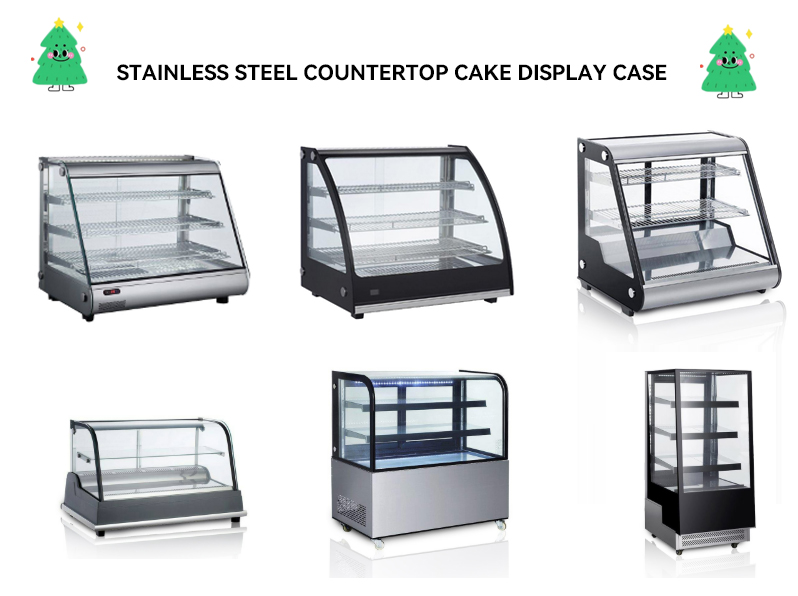
Over the past five years, the European and American markets have expanded at an annual rate of approximately 8%, with this growth trajectory projected to persist over the next three years.
Regarding market competition, major cake display cabinet brands exhibit a degree of concentration in market share. Renowned brands such as Nenwell and Cooluma command approximately 60% of the market through superior product quality, advanced technology, and comprehensive after-sales service.
Taking nenwell as an example, the brand emphasises innovative product design, incorporating intelligent temperature control systems that precisely regulate internal temperature and humidity. This effectively extends cake freshness, earning strong favour among consumers and retailers alike. Meanwhile, smaller brands have carved out their niche through differentiated strategies, focusing on specific segments such as offering more affordable basic models tailored for small bakeries.
From a consumer behaviour perspective, customers increasingly prioritise whether a display cabinet’s aesthetic aligns with their shop’s décor, alongside features like energy efficiency and environmental credentials. During the purchasing decision, price, brand recognition, product quality, and after-sales service are pivotal factors. As Philip Kotler observed: ‘Customers are maximisers of value.’ When selecting display units, consumers weigh these elements holistically to secure the greatest value.
Emerging technologies applied in display cabinets have also injected fresh vitality into the market. For instance, the integration of Internet of Things (IoT) technology enables remote monitoring and management of cake display cabinets. Retailers can utilise mobile applications to monitor real-time parameters such as internal temperature and humidity, promptly adjusting operational settings. Concurrently, the impact of energy-saving and environmentally friendly technologies on the market is becoming increasingly pronounced.
With heightened environmental awareness, both governments and consumers demand superior energy efficiency and eco-friendliness in products. Display units incorporating novel energy-saving compressors and insulation materials not only reduce energy consumption but also minimise environmental impact, significantly enhancing their market competitiveness.
Regarding the competitive landscape, key players employ distinct market strategies. Some brands enhance brand recognition through extensive marketing campaigns and participation in industry exhibitions, while others prioritise establishing long-term partnerships with major baking enterprises to secure stable market share.
Market segmentation and target customer identification are paramount. Different market segments exhibit distinct characteristics: commercial bakeries prioritise display cabinets with large capacities and effective presentation capabilities, whereas domestic users place greater emphasis on compact, elegant designs and ease of cleaning. Naturally, businesses must precisely target customer segments based on these traits. SWOT analysis reveals that while market opportunities exist, enterprises also face challenges such as raw material price volatility and intensifying competition.
However, market opportunities coexist with challenges. On one hand, growing consumer demand for healthier and personalised foods drives the development of specialised products, such as refrigerators designed for low-sugar cakes. on the other hand, intensified market competition and evolving regulatory policies may exert pressure on enterprises. Furthermore, the regulatory and policy environment exerts significant influence, with explicit stipulations regarding quality, safety, and environmental protection that enterprises must strictly adhere to. Subsidy policies can incentivise increased investment in technological R&D, yet stringent market access requirements may constrain the development of smaller enterprises.
1. Key Cake Display Cabinet Brands and Market Share
Understanding major cake display cabinet brands and their market share is crucial for clarifying the current competitive landscape and providing robust grounds for forecasting market trends. Among the numerous brands present, each possesses distinct characteristics in product quality, functionality, pricing, and service, which collectively influence their market share.
Taking the global brand Nenwell as an example, its advanced refrigeration technology and stylish design have secured a significant share in the premium segment. According to 2024 market research data, its high-end display cabinets command approximately 40% market share. While priced at a premium, their exceptional quality makes them favoured by large chain cake shops and upmarket bakeries.
Cooluma excels in the mid-to-high-end segment through its value proposition, commanding roughly 30% market share. Targeting smaller cake shops and independent bakers, its accessible pricing coupled with fundamental quality and performance meets the daily operational needs of such businesses.
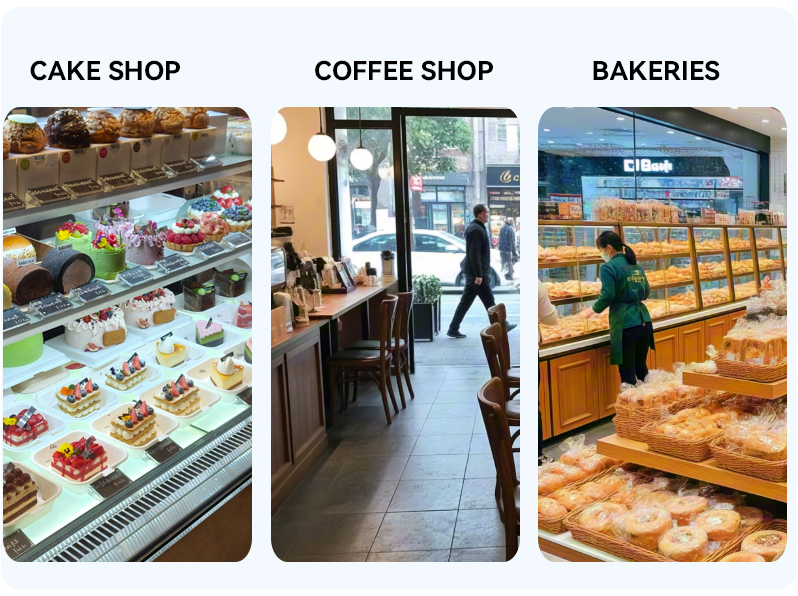
Analysing the market through Porter’s Five Forces model reveals that competitive dynamics drive market evolution. Brands continually innovate and enhance services to increase market share, while the threat of new entrants compels existing players to pursue ongoing optimisation.
From a market segmentation perspective, segmentation significantly influences brand selection and market share. Bakeries in commercial centres tend to favour premium brand display cabinets to elevate their overall shop image. Conversely, smaller neighbourhood bakeries prioritise price and practicality, resulting in relatively higher market share for mid-to-low-end brands.
For market participants, maintaining close attention to brands is crucial for gauging market prospects, seizing potential opportunities, and addressing challenges. By analysing and drawing upon successful experiences, businesses can refine their own products and services, thereby distinguishing themselves in intense market competition.
2. Consumer Demand Characteristics for Cake Display Cabinets
Current market trends indicate that diverse cake display cabinets drive business growth. Survey data reveals approximately 70% of consumers consider cabinet type when purchasing food refrigeration units, as different settings require varied styles and dimensions. Common types include island cabinets, tabletop models, barrel-shaped units, and built-in displays.
Consumers also place high importance on aesthetic design, with around 60% of the consumer base believing display cabinets should complement the shop’s overall style to attract customers.
Regarding space utilisation, approximately 80% of bakery operators seek efficient space management to showcase a greater variety and quantity of cakes. Large shopping centres, facing higher rental costs, prioritise efficient space utilisation. Consequently, multi-tiered commercial display cabinets with adjustable shelving become their preferred choice.
3. Key Factors in the Purchase Decision Process
Thoroughly analysing the critical factors influencing consumer purchasing decisions is essential for understanding market prospects and formulating effective strategies. Significant variations in market share among different brands necessitate comprehensive consideration of multiple factors.
Price remains a primary consideration throughout the purchasing journey. Typically, consumers seek value for money whilst meeting their requirements, often evidenced through brand comparisons. For instance, lower prices for equivalent specifications are favoured. However, specific factors must also be weighed, such as brands offering non-essential services that inflate overall costs to gain customer approval.
Technological trends significantly influence consumer purchasing decisions, particularly through innovations like intelligent temperature control systems and remote monitoring capabilities, which deliver convenient and efficient user experiences. Additionally, energy-saving and environmentally friendly technologies play a vital role, aligning with contemporary sustainability values while reducing operational costs for businesses. Statistics indicate that energy-efficient tabletop refrigerated cake display cabinets consume 20%–30% less electricity annually than conventional models, prompting growing preference for such environmentally conscious equipment.
Competitive landscapes also influence consumer purchasing decisions. Market strategies employed by major competitors, such as promotional campaigns and superior after-sales service, exert significant impact. Within the export sector, participation in trade exhibitions is a primary method for enhancing brand visibility. However, exhibitions across different countries and regions feature multiple competing brands, creating an intensely competitive environment.
Established bakery chains, coffee shops, and large brands prioritise equipment quality and functionality, being willing to pay premium prices for high-calibre appliances. Conversely, smaller bakeries and independent operators focus primarily on affordability and practicality when making purchasing decisions.
In summary, purchasing decisions are shaped by a complex interplay of key factors. A thorough understanding of these elements is essential for accurately gauging market prospects and enhancing competitive positioning.
4. Emerging Technologies in Cake Display Cabinets
Against a backdrop of favourable global market outlook, technological application is emerging as a pivotal driver for the development of display cabinet markets. Continuous technological advancement empowers an increasing number of enterprises, injecting fresh vitality and opportunities into the sector.
Internet of Things (IoT) technology enables remote intelligent management through network connectivity, providing real-time monitoring of temperature, humidity, and inventory levels within countertop cake display cabinets. Should abnormal temperature readings be detected, immediate alerts are triggered to notify relevant personnel for intervention, significantly reducing the risk of food spoilage due to temperature fluctuations.
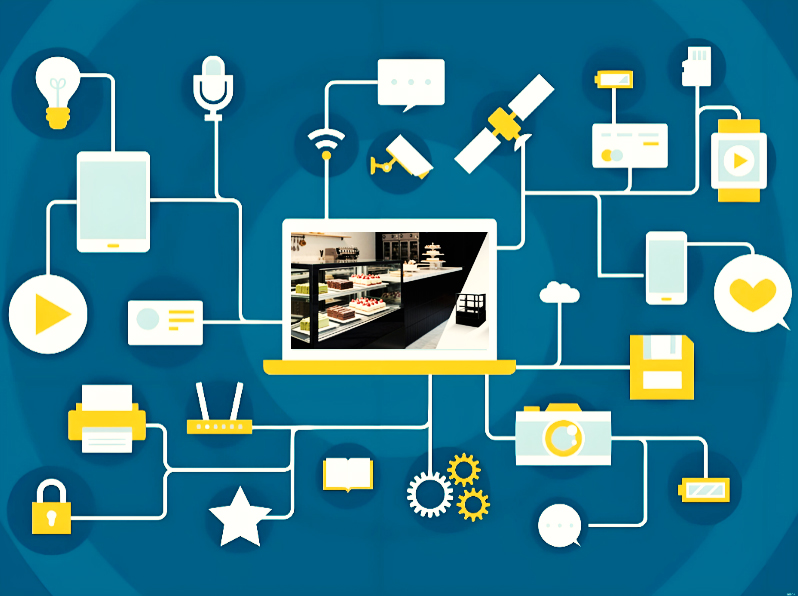
Artificial intelligence (AI) technology can automatically adjust temperature and humidity settings based on varying environmental conditions, ensuring cakes are consistently maintained at optimal ambient temperatures. Simultaneously, it analyses consumer behaviour—such as browsing and purchasing patterns captured via cameras and sensors—to discern preferences and buying habits, delivering precise marketing recommendations to retailers. Studies indicate AI adoption can boost sales by 10%–20%.
Moreover, 3D printing enables bespoke cake display cabinet designs to meet diverse customer requirements. Traditional cake cabinet manufacturing requires extensive moulding and complex processing techniques, whereas 3D printing can directly produce designs from blueprints, significantly shortening production cycles and reducing costs. As Steve Jobs once stated: ‘We are here to make a dent in the universe.’ Emerging technologies not only enhance performance and functionality but also deliver superior user experiences.
5. Impact of Energy-Saving and Environmental Technologies on the Market
In recent years, heightened focus on environmental protection and sustainable energy utilisation has driven broader adoption of energy-saving and eco-friendly technologies. Over the past five years, the market share of cake display cabinets incorporating such technologies has surged from 20% to 40%, with this growth trajectory continuing.

From a consumer behaviour perspective, energy efficiency and environmental friendliness are increasingly becoming key factors in purchasing decisions. Consumer expectations for cake display cabinets extend beyond basic preservation and presentation functions, with greater emphasis placed on energy consumption and eco-performance. During the purchasing process, cabinets demonstrating significant energy savings are often favoured. For instance, several prominent chain bakeries prioritise energy-efficient cake display cabinets when upgrading equipment. These cabinets, featuring advanced refrigeration systems and intelligent temperature control technology, achieve energy savings of 30%–40% compared to traditional models, substantially reducing operational costs. The adoption of energy-saving and environmentally friendly technologies has also reshaped the competitive landscape within the cake display cabinet market. Major competitors are adjusting their market strategies, increasing investment in R&D for such technologies. Take a certain cake display cabinet brand as an example: by introducing advanced energy-saving and environmentally friendly technologies, it launched a series of eco-friendly cabinets. This not only earned the brand a favourable reputation in the market but also successfully secured a larger market share. Simultaneously, energy-saving and environmentally friendly technologies have raised the industry’s entry barriers, posing a certain threat to potential new entrants. Enterprises unable to master advanced energy-saving and environmentally friendly technologies will find it difficult to establish themselves in the market.
From a market segmentation perspective, demand for and acceptance of energy-saving and environmentally friendly technologies vary across different segments. In high-end commercial markets, such as large shopping centres and hotels, cake display cabinets are subject to stringent energy efficiency and environmental performance requirements, with customers willing to pay premium prices for technologically advanced products. Conversely, in smaller cake shops and individual retail markets, while price sensitivity remains high, growing environmental awareness is gradually shifting focus towards the energy-saving capabilities of products. Therefore, enterprises must formulate differentiated marketing strategies tailored to distinct market segments. Regarding market outlook projections, energy-saving and environmentally friendly technologies will continue to drive growth in the cake display cabinet market. In the future, ongoing technological advancements will further enhance the energy efficiency of these cabinets while improving their environmental performance. However, enterprises also face challenges such as increased R&D costs and accelerated technological obsolescence. As management guru Peter Drucker observed: ‘Innovation is the entrepreneur’s concrete tool, the means by which they harness change as an opportunity to pioneer new ventures and services.’ Enterprises must continuously innovate and proactively address both the opportunities and challenges presented by energy-saving and environmental technologies to secure competitive advantage in the cake display cabinet market.
Furthermore, the regulatory and policy landscape significantly influences the adoption of energy-efficient and environmentally friendly technologies within the cake display cabinet market. Governments have introduced a series of policies encouraging the development of such products, including subsidies for energy-saving items and stringent energy efficiency standards. These measures not only support the advancement of eco-conscious cake display cabinets but also regulate the market. Enterprises must closely monitor regulatory changes and promptly adjust their product strategies to align with evolving market demands.
6. Market Strategies of Key Competitors
Given the current intense market competition, leading brands command nearly 60% of the market share. Taking industry player Nenwell as an example, they have adopted a differentiation strategy, investing heavily in R&D to integrate intelligent temperature control systems into practical applications.
Emphasis on after-sales service has led to the establishment of a comprehensive support system, enhancing customer satisfaction and loyalty. It is essential to thoroughly consider potential issues and formulate targeted market strategies to seize opportunities within the market outlook while addressing potential challenges.

7. Market Share Challenges
Over the past five years, the baking industry has expanded at an annual rate of 8%. This growth trajectory has attracted considerable attention from potential new entrants. For instance, enterprises originally specialising in refrigeration equipment manufacturing may enter this market, leveraging their expertise in refrigeration technology upon recognising its potential.
Established brands already command significant market shares: Nenwell holds 10%, while Cooluma holds 5%. These newcomers are rapidly capturing market share through low-price strategies. By adopting emerging energy-efficient and environmentally friendly technologies, they produce lower-cost, more energy-efficient products. Their use of novel refrigeration materials reduces energy consumption by 20% compared to traditional cabinets, while pricing remains 15% below the market average. Consequently, they pose a significant threat to the market share of established brands.
Post time: Nov-06-2025 Views: