
When sourcing commercial beverage display refrigerators for community convenience stores and small grocery stores across the US, the core principles are to prioritize regulatory compliance, match operational performance, and balance long-term operating costs. Buyers must first verify mandatory DOE energy efficiency certification from the U.S. Department of Energy, alongside UL electrical safety certification and NSF food equipment standards, to avoid customs clearance delays, regulatory penalties, and operational risks. On this basis, select units with stable temperature control, energy-saving performance, durability, and strong merchandise display capability that align with store size, foot traffic, and beverage display needs.
In 2026, Nenwell’s new line of commercial beverage coolers is engineered to fully meet US market regulatory requirements. With industry-leading credentials, space-optimized design, reliable refrigeration performance, and low maintenance costs, these units are a high-value choice for small-format retail locations.
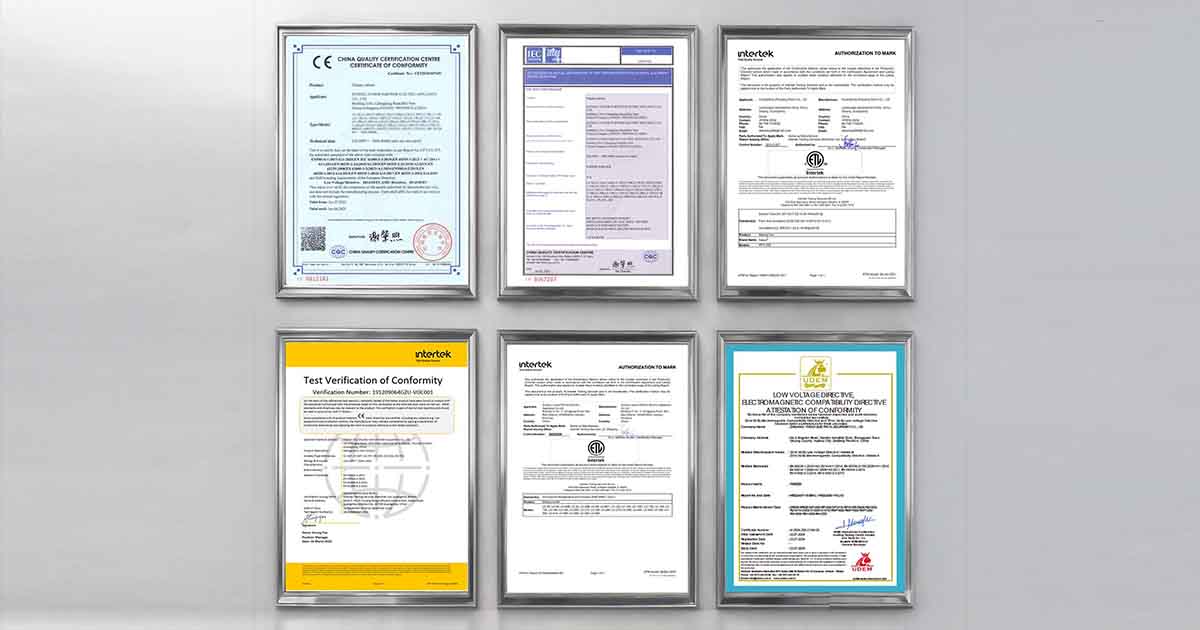
For small US grocery store operators, DOE certification is a non-negotiable regulatory requirement. Under the Energy Policy and Conservation Act (EPCA), all commercial glass-door beverage display coolers sold and used in the US must meet DOE energy efficiency standards and complete official model certification filing. Non-compliant units cannot be legally imported, will fail inspections by local regulatory and health authorities, and incur significantly higher ongoing electricity costs over their service life.
Beyond DOE compliance, UL-listed electrical safety certification is critical to ensure safe, reliable operation for end users. For beverage storage applications, NSF food contact standards are also essential: all interior materials must meet food retail safety regulations. Buyers should never make purchasing decisions based solely on upfront cost, as overlooking compliance credentials can lead to unusable equipment and costly retrofits or financial losses. For small grocery stores, the first step in selecting a display cooler is to verify the full set of compliance certificates, followed by comparing capacity, energy consumption, display design, and after-sales support.
What Are Common Pain Points of Display Coolers for Small Retail Stores?
Low-cost non-compliant units typically cause three major pain points for store owners: first, lack of DOE certification exposes operations to regulatory and legal risks; second, unstable temperature control and slow temperature recovery after frequent door openings lead to poor beverage freshness and inconsistent serving temperature; third, low-efficiency compressors drive up energy bills, adding significant long-term operational expense.
To balance compliance, display performance, and operating costs, a qualified unit must feature a stable forced-air cooling system, double-pane tempered insulating glass, adjustable shelves, and a low-noise commercial compressor, to accommodate a wide range of beverages from sodas and bottled teas to craft beer.
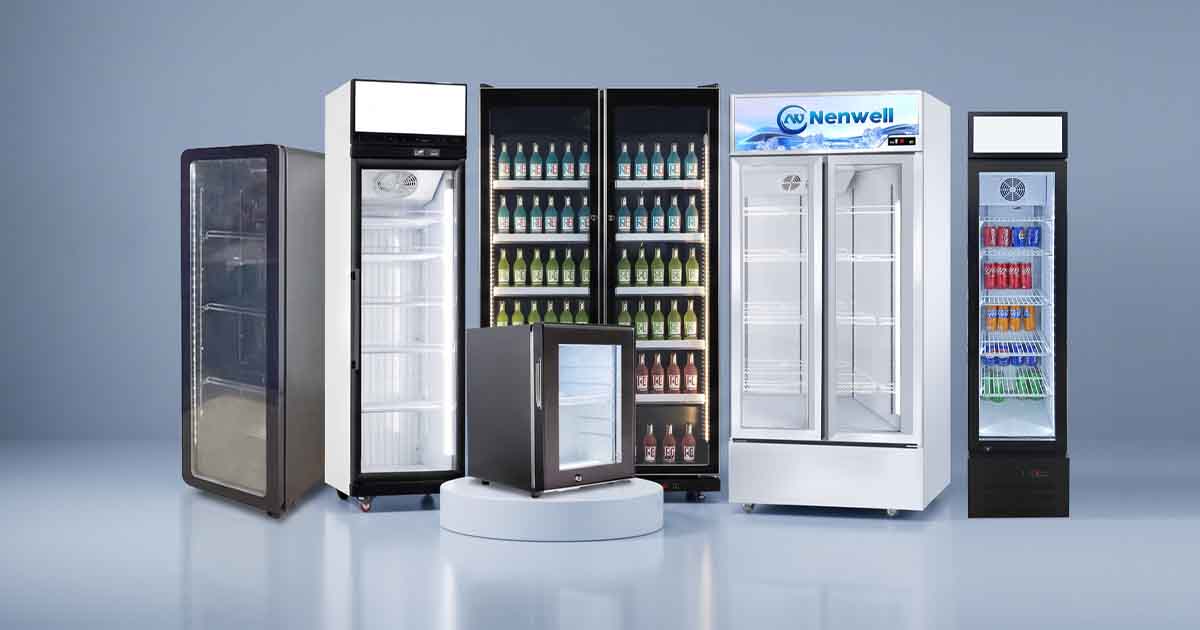
Nenwell’s diverse display cooler lineup is designed for small-format retail across North America, with full DOE mandatory energy efficiency filing, UL safety certification, and NSF compliance. The range eliminates core compliance concerns for grocery store owners and meets daily regulatory requirements for convenience stores in all US states. The product portfolio includes mini countertop cooler-freezers, single-door and multi-door glass-door units, and slim-profile models to suit various store layouts.
When it comes to core refrigeration performance, Nenwell units are equipped with high-efficiency hermetic commercial compressors paired with a uniform forced-air circulation system. Even during peak hours with frequent door openings, the cabinet maintains a steady temperature range of 32°F to 50°F, ensuring optimal serving temperature for bottled and canned beverages. Double-pane Low-E tempered glass effectively blocks external heat, reducing compressor cycling and cutting daily energy consumption compared to standard same-size display coolers. This design aligns with DOE energy efficiency standards and lowers ongoing electricity costs for small stores.
Space efficiency is one of the top priorities for small grocery stores. Nenwell offers a full range of form factors including ultra-slim upright units, standard single-door upright models, and countertop mini display coolers to fit diverse store layouts. Slim upright models have a small footprint, ideal for narrow aisles and spaces alongside checkout counters; countertop mini coolers can be placed at checkout zones to drive impulse purchases. Inside the cabinet, height-adjustable rust-resistant metal shelves accommodate beverages of all sizes, from tall juice bottles and cans to large-format water bottles, with flexible shelf configuration. The glass doors come standard with a self-closing mechanism to prevent cold air loss from forgotten open doors, further reducing energy waste. Optional security door locks are available for overnight inventory management, suited for 24/7 convenience store operations.
Merchandise display performance directly impacts beverage category sales. The Nenwell NW-EC series features high-CRI anti-glare LED lighting that evenly illuminates every shelf without harsh reflections, enhancing product visibility and encouraging impulse buys. The units come in classic black and white exterior finishes, with a customizable top lightbox for store branding or beverage supplier logos to create a cohesive in-store visual identity. The corrosion-resistant food-grade interior liner is easy to clean, resists staining and moisture buildup common in high-traffic convenience stores, and extends the unit’s service life.
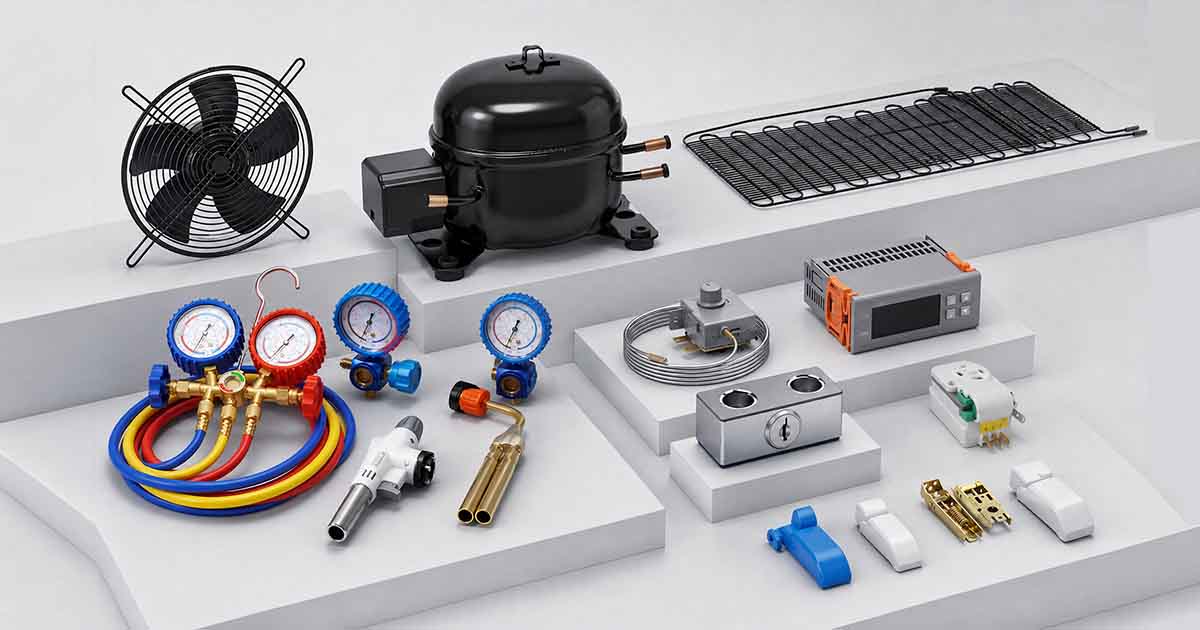
From a long-term maintenance perspective, many imported refrigeration units suffer from hard-to-source replacement parts and long repair lead times. A compressor failure can directly cause beverage spoilage and costly inventory losses. Nenwell maintains a comprehensive supply of replacement parts, with customizable components including compressors, evaporators, and condensers compatible with all its models. With competitive upfront pricing and low ongoing maintenance costs, the lineup is ideal for independent grocery stores and neighborhood convenience stores operating on tight budgets and seeking reliable, low-risk operations.
As a key note for buyers: when importing purpose-built display coolers for grocery stores, consult with suppliers in advance to confirm DOE certification status and request supporting documentation to avoid losses from non-compliance later in the process. It is recommended to evaluate multiple suppliers and compare offerings to find the best overall value for your operation.
Post time: Aug-12-2026 Views: