
For small business owners in the U.S.—from corner bodegas and neighborhood cafes to bustling sports bars and grocery stores—a reliable commercial beverage display cooler isn’t just an appliance; it’s a silent salesperson. The right cooler turns passersby into customers by showcasing icy-cold sodas, craft beers, and fresh juices in an eye-catching, accessible way. But with dozens of models, sizes, and features on the market, how do you cut through the noise and pick the one that fits your unique needs? This guide breaks down the key factors to consider, so you can make a choice that balances functionality, durability, and long-term value.
Start with Space and Foot Traffic
Before you dive into specs, take a hard look at your store’s layout and daily customer flow. A busy urban bodega (like the one pictured with dual glass-door coolers lining the wall) will need high-capacity, multi-door units to keep up with peak-hour demand, while a cozy coffee shop might only require a compact single-door cooler near the register. Measure your available floor space and ceiling height—many coolers need clearance for ventilation, so skipping this step can lead to costly returns or awkward rearrangements.
Foot traffic patterns matter too. If your store sees most customers during morning rushes or weekend crowds, prioritize coolers that let staff restock quickly without disrupting lines. For example, units with sliding glass doors (instead of swing doors) work better in tight aisles, as they prevent collisions and keep the space flowing smoothly.
Prioritize Cooling Performance and Temperature Control
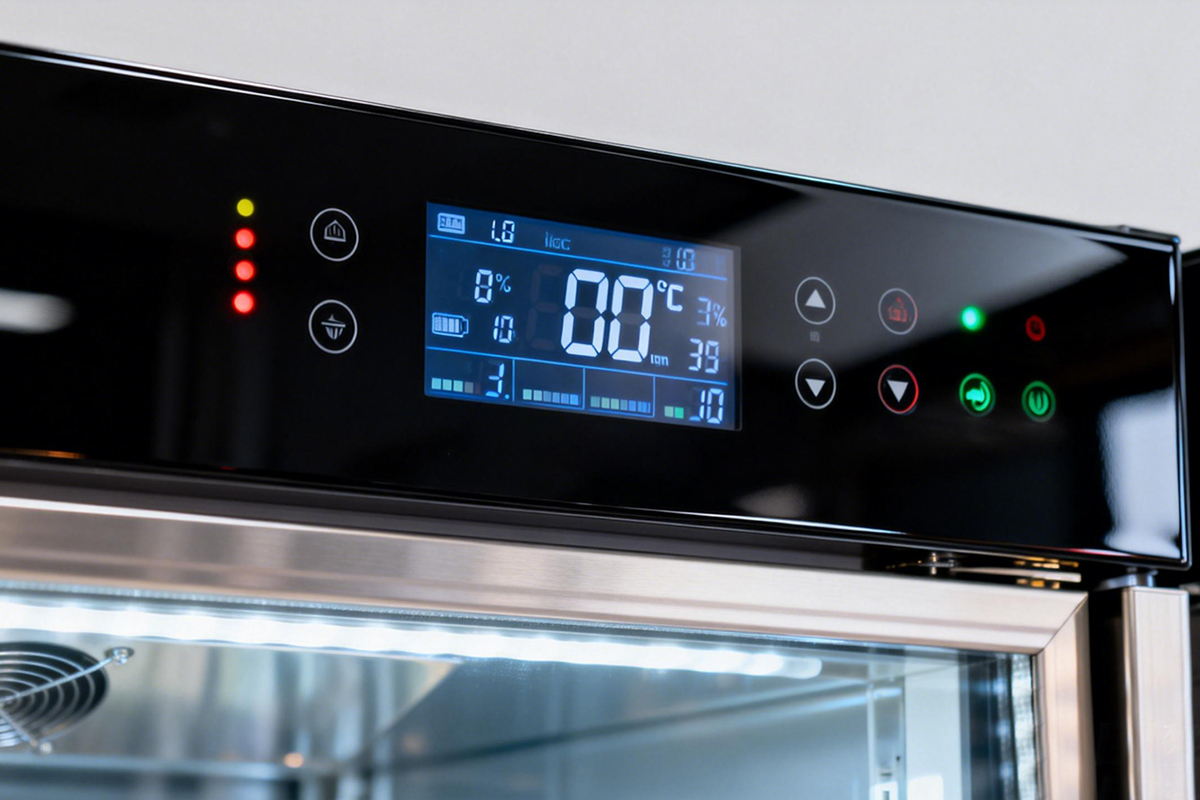
In the U.S., where summer temperatures can soar above 90°F, consistent cooling performance is non-negotiable. Your cooler must maintain a steady temperature between 34°F and 40°F (1°C to 4°C) to keep beverages fresh and safe to consume. Look for models with digital temperature controls (like the sleek touchscreen panel in the close-up photo) that let you adjust settings with precision, rather than analog dials that leave room for error.
Compressor type is another critical factor. Most commercial coolers use either a hermetic compressor (affordable, ideal for low-volume spaces) or a semi-hermetic compressor (more durable, better for high-traffic environments). If your business runs 12+ hours a day, a semi-hermetic compressor will hold up longer and require fewer repairs. Don’t forget to check for features like automatic defrost cycles, which prevent ice buildup and reduce manual maintenance—especially important in humid climates like Florida or Texas.
Match Capacity to Your Inventory
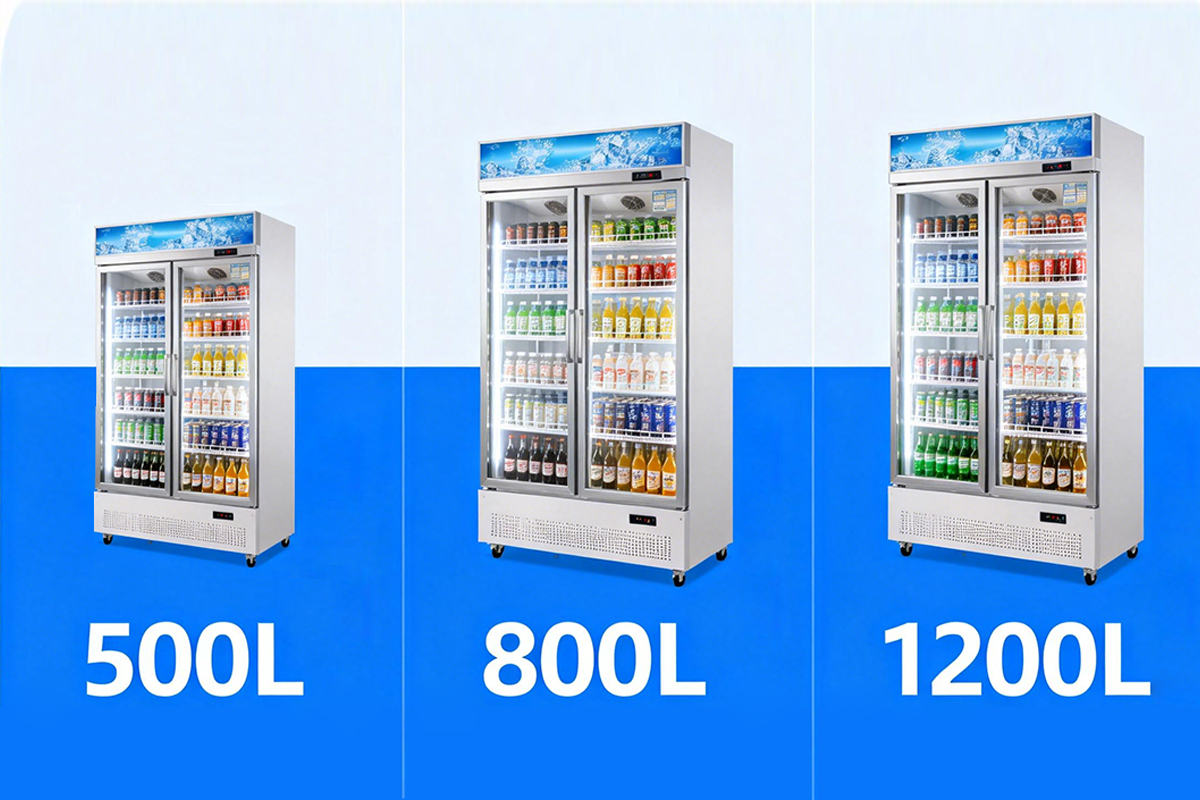
The “right size” cooler depends on what you’re selling and how much you stock. The image showing 500L, 800L, and 1200L units illustrates how capacity scales with business needs: a 500L cooler works for a small deli or boutique brewery, while a 1200L model serves a large grocery store or concert venue. But capacity isn’t just about volume—it’s about how well the interior layout fits your products.
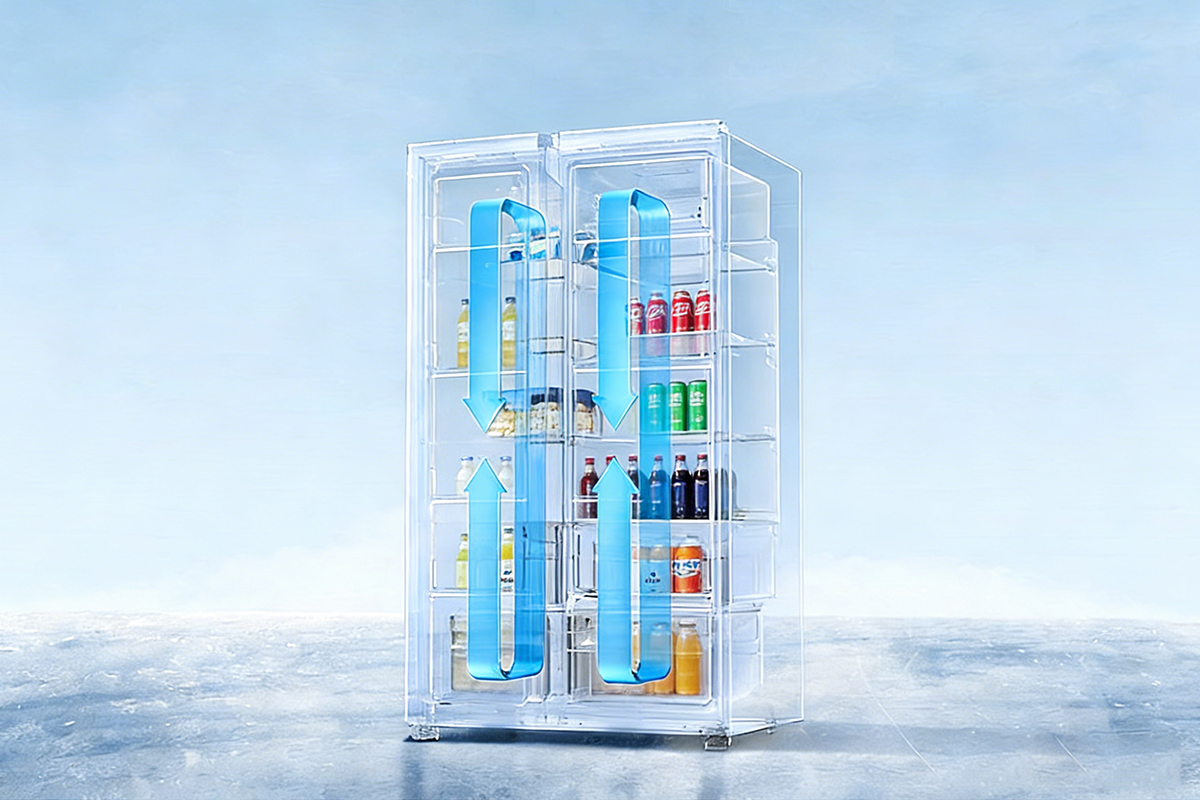
Look for adjustable shelving that can accommodate tall bottles, cans, and even gallon jugs, as well as LED interior lighting that makes beverages pop (without generating excess heat). Glass door quality is also key: low-E (low-emissivity) glass blocks UV rays to prevent beverage degradation, while anti-fog coatings ensure your products stay visible even when customers open the door frequently. For example, the transparent, frost-resistant cooler in the ice-themed photo keeps drinks clearly on display, even in a busy, high-humidity space.
Durability and Maintenance for Long-Term Use
Commercial coolers work hard—often 24/7—so build quality directly impacts their lifespan. Stainless steel exteriors resist dents, scratches, and rust, making them perfect for high-traffic areas where carts, customers, and cleaning tools might bump into the unit. Interior surfaces should be seamless and easy to wipe down, as spills and sticky residue are inevitable when dealing with sugary drinks.
Ask about service and support too. Many U.S. manufacturers offer nationwide warranty coverage, but third-party repair services can be hit-or-miss in rural areas. Opt for brands with a network of certified technicians, so you don’t get stuck with a broken cooler for days. Simple maintenance habits—like cleaning condenser coils every 3–6 months and checking door gaskets for wear—will also extend your cooler’s life and prevent unexpected breakdowns.
Balance Energy Efficiency with Upfront Cost
Energy costs are a major expense for U.S. small businesses, so an energy-efficient cooler can save you thousands of dollars over time. Look for the ENERGY STAR® label, which certifies that the unit meets strict energy efficiency standards set by the EPA. ENERGY STAR coolers use 10–20% less energy than non-certified models, thanks to features like high-efficiency compressors, insulated doors, and smart defrost systems.
While ENERGY STAR units often have a higher upfront price, the long-term savings add up. For example, a 1200L cooler that uses 1,500 kWh/year (average for non-certified models) will cost ~$180/year to run at a $0.12/kWh rate, whereas an ENERGY STAR model using 1,200 kWh/year costs ~$144/year. Over 10 years, that’s a $360 difference—enough to cover routine maintenance or a new set of shelving.
Align Aesthetics with Your Brand
Your cooler isn’t just a functional tool—it’s part of your store’s aesthetic. The color-changing LED options and sleek finishes on modern coolers let you match your brand’s vibe: a retro diner might opt for a chrome-accented cooler, while a minimalist juice bar could choose a frameless glass door unit that blends into the background. Even small details, like door handle design or logo placement, can reinforce your brand identity and make your space feel cohesive.
For example, the compact, backlit cooler in the bar scene photo adds a subtle pop of color to the dark, moody space, drawing attention to craft beers and premium sodas without overwhelming the decor. By choosing a cooler that fits your aesthetic, you turn a practical appliance into a design element that enhances the customer experience.
Invest in the Long Game
Choosing a commercial beverage display cooler isn’t a decision to rush. By evaluating your space, cooling needs, inventory, and budget, you’ll find a unit that supports your business growth rather than holding it back. Remember: the cheapest option today might cost more in repairs and energy bills tomorrow, while a slightly pricier, high-quality cooler will pay for itself in reliability and customer satisfaction. Whether you’re a new bodega owner in Brooklyn or a cafe manager in Los Angeles, the right cooler will keep your drinks cold, your customers happy, and your bottom line healthy for years to come.
Post time: Jan-27-2026 Views: