
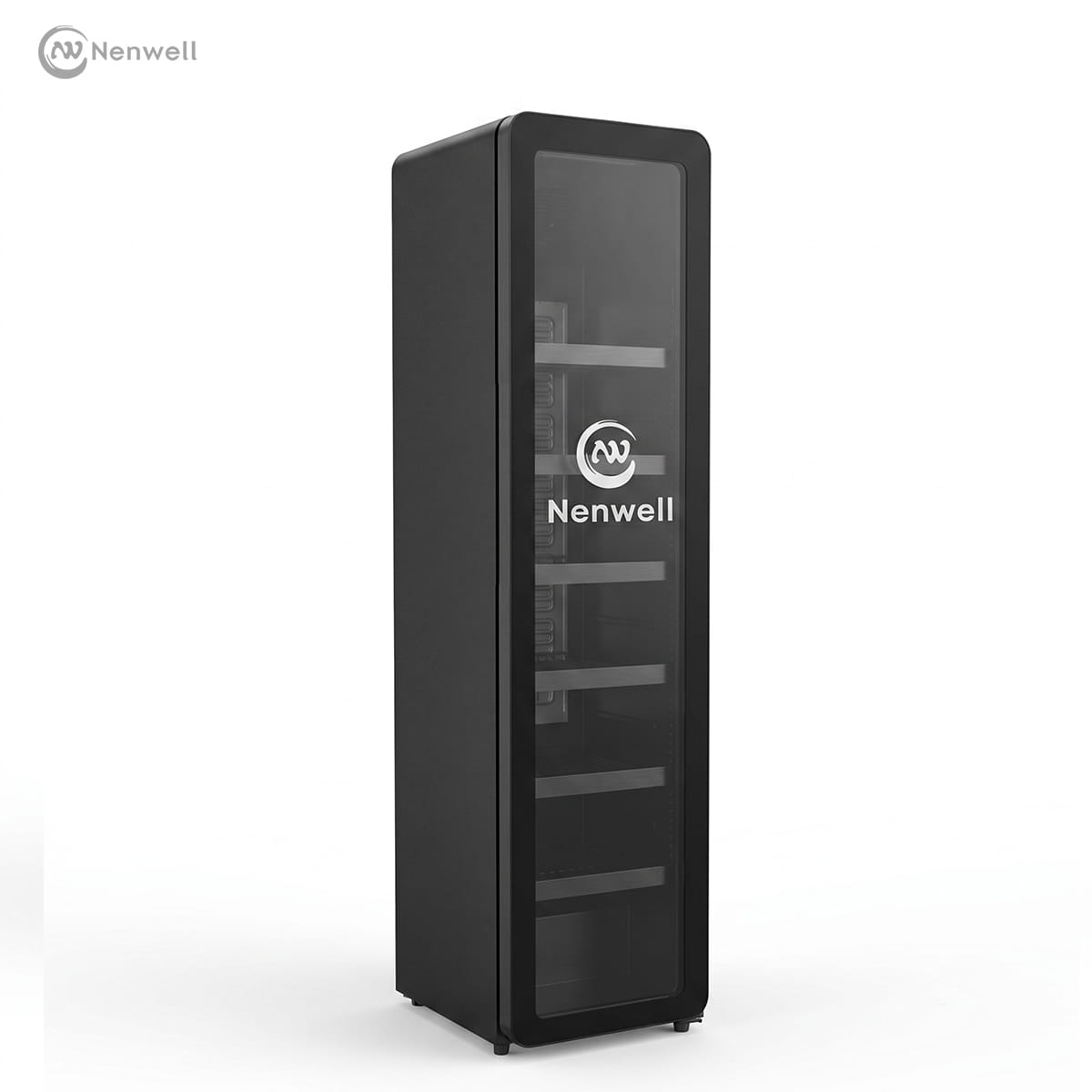
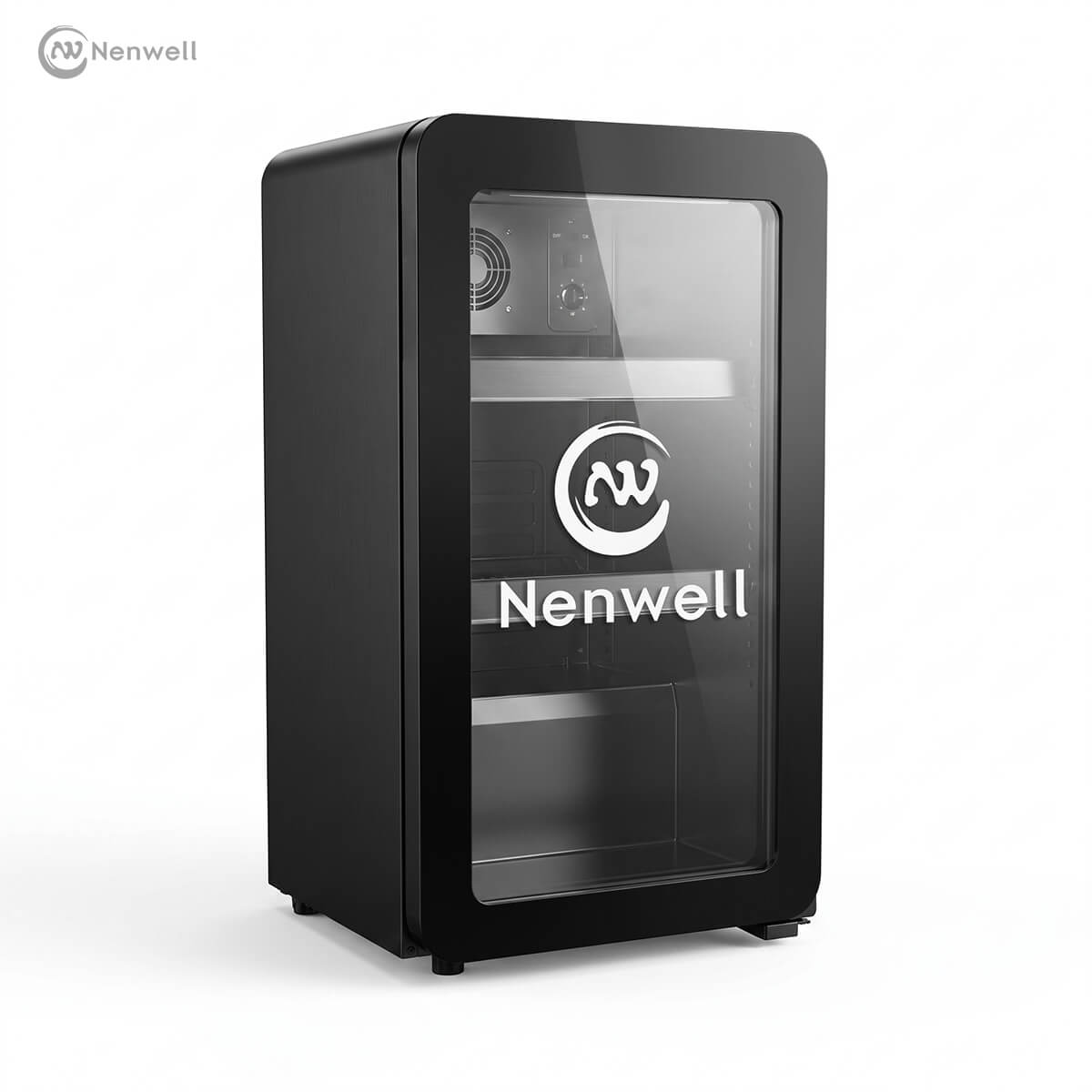
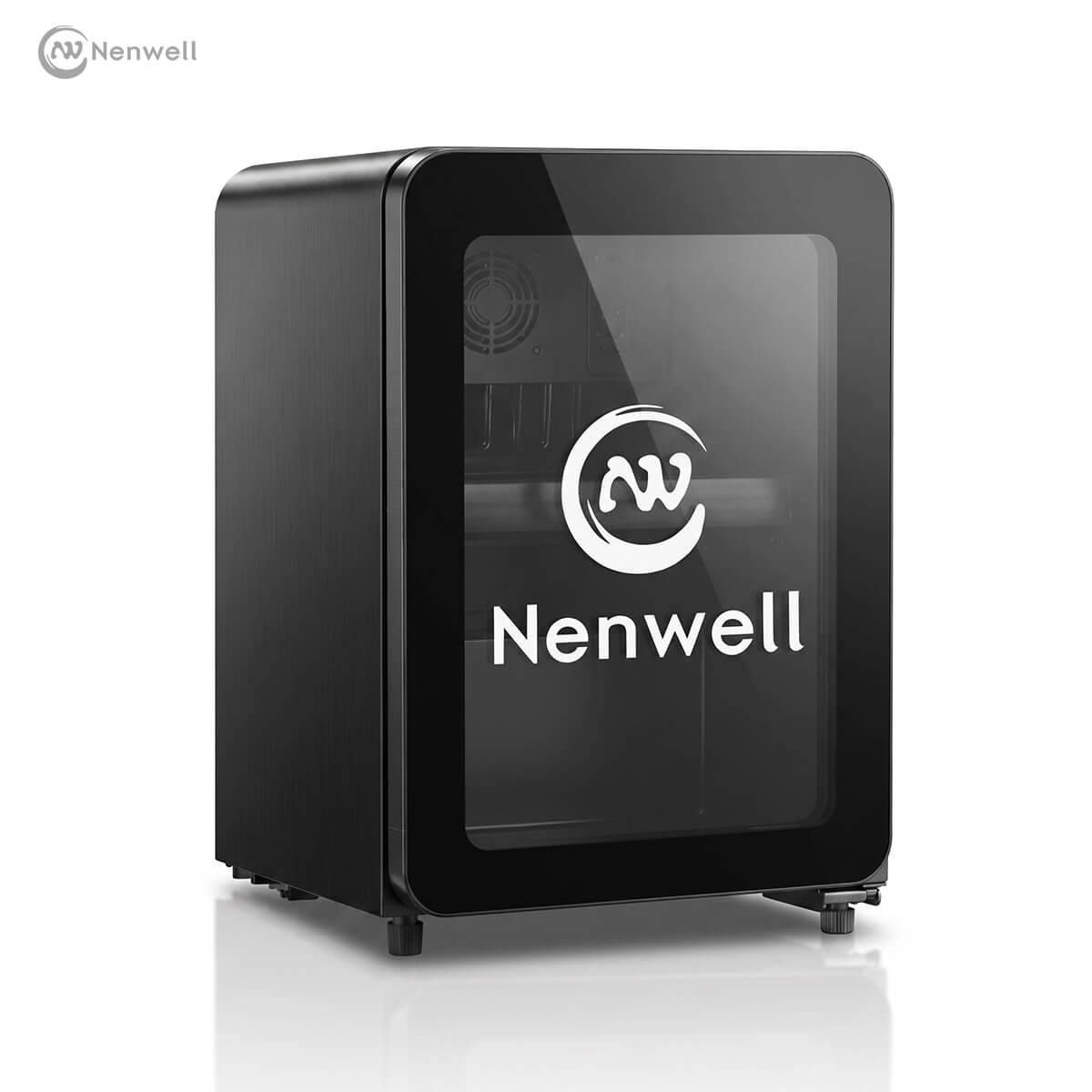
The Nenwell EC Series is a slim vertical glass door beverage merchandiser line engineered for overseas markets. It includes standardized models NW-EC50, NW-EC70, NW-EC170 and NW-EC210. Built to align with North American and European regulatory requirements, the range features a compact footprint, variable-speed energy-efficient refrigeration, broad application adaptability and custom branding support. These strengths have helped the products quickly penetrate convenience store, gas station, café and specialty retail channels across North America and Europe, becoming a widely adopted commercial display cabinet export solution in recent years.
I. Global Commercial Refrigerated Display Cabinet Industry and Market Analysis for Europe & North America
1.1 Global Market Landscape and Structural Demand Shifts in European and North American Markets
Industry forecasts for the 2025–2026 commercial refrigerated display cabinet sector estimate the global commercial food display cabinet market surpassed USD 18.4 billion in 2025, with a projected CAGR of 6.2% from 2026 to 2034. Growth is mainly driven by three factors: expansion of convenience store networks, rising consumption of ready-to-eat packaged foods, and energy-saving retrofits of ageing refrigeration equipment. Regionally, Europe and North America represent the two largest mature markets for commercial display cabinets, accounting for more than 60% of global market share. The Asia-Pacific region delivers the fastest growth, supported largely by local supply chains. Growth in Europe and North America is not fueled primarily by new large supermarket construction; instead, it comes from retrofits of existing retail premises and continuous expansion of small-format retail outlets.
The North American commercial display cabinet market reached approximately USD 1.137 billion in 2025, accounting for 32.5% of the global total. The US convenience store sector keeps expanding. 7-Eleven plans to renovate more than 7,000 North American locations by 2030, while chains including Yesway and Couche-Tard keep opening new outlets. Retail spaces attached to gas stations and neighbourhood grocery stores form the core growth segment for commercial display cabinets. North American retailers prioritise these requirements: US DOE federal energy certification, stable temperature control, low failure rates, compact sizing for tight spaces and custom branded lightbox options. Commercial electricity costs remain persistently high across North America, making long-term operating expenditure a major consideration for retailers. Demand for replacing old high-energy-consumption cabinets continues to rise, and frost-free air-cooled merchandisers are increasingly preferred over older static-cooled display units.
The European market is heavily shaped by regulation. The EU F-Gas Regulation, EU Regulation 2024/573 on refrigerants and mandatory energy efficiency classes for vertical refrigeration cabinets continuously push product upgrades. Large-scale deployment of refrigerants with high Global Warming Potential (GWP) is restricted in Europe, mandating low-carbon refrigerants for commercial refrigeration equipment. Meanwhile, Germany, France and Nordic nations impose strict requirements on store energy record-keeping, with commercial equipment energy consumption factored into retail operational compliance assessments.
European retail is dominated by small neighbourhood convenience stores, bakeries, cafés and discount outlets. Retail premises tend to be compact with high rental costs, so operators favour slim, space-efficient vertical glass door display cabinets that maximise product presentation. Unlike open multi-deck display cabinets used in large supermarkets, compact standalone glass door beverage merchandisers are seeing the fastest sales growth in European community retail channels.
1.2 Market Opportunities for EC Series Penetration in Europe and North America
First, rising energy costs push up operating expenses for legacy commercial refrigeration. European electricity prices increased sharply from 2022 onwards, and US commercial power tariffs also stayed elevated. Many traditional display cabinets use low-efficiency compressors running 24/7, resulting in substantial monthly electricity bills. Many retailers in Europe and North America note that the upfront purchase cost of a display cabinet is only a minor expense. Over the 5–8 year equipment lifecycle, electricity costs may even exceed the original cabinet purchase price. Legacy high-consumption models create heavy operating burdens, creating market demand for efficient display cabinets balancing upfront cost and ongoing power use.
Second, limited retail space makes standard wide vertical coolers unsuitable for small outlets. Many North American and European neighbourhood convenience stores, gas station counters, café back-of-house areas and specialty liquor shops only have narrow allocated spots for refrigeration. Standard vertical beverage cabinets commonly exceed 550mm in width and cannot fit into counters or tight corners. Slim alternatives manufactured by local European and North American brands carry premium pricing, long lead times and high barriers for customisation.
Third, compliance thresholds keep rising, and many Asian export products fail to meet European and North American certification requirements. US DOE energy standards plus EU CE, RoHS, F-Gas refrigerant controls and food contact safety rules form strict market entry requirements. Many manufacturers only secure basic CE certification, failing DOE energy testing or low-GWP refrigerant requirements. Products without full compliance risk customs detention, market withdrawal and fines. Most European and North American buyers require suppliers to provide complete certification documentation to mitigate regulatory risks.
Fourth, operational risks arise from equipment downtime. If a retail display cabinet breaks down, bottled drinks and packaged ready-to-eat foods quickly warm and spoil, causing direct inventory losses. Repair labour costs are high across Europe and North America. High failure rates and difficult access to spare parts are key concerns for retailers, who seek refrigeration systems with proven reliability plus accessible spare part supply chains.
Fifth, retailers require display cabinets to serve dual purposes: preserving products and supporting brand marketing. Beverage brands and convenience store chains want customisable logos, lightboxes and exterior colours to drive impulse purchases. However, local Western brands typically enforce long customisation lead times, high minimum order quantities and reject smaller custom orders.
The Nenwell EC Series was developed specifically to address these industry pain points. Optimised product structure, refrigeration architecture, certification compliance and customisation services align the units closely with small-format retail requirements across North America and Europe. Rather than competing head-on in the crowded large supermarket refrigeration segment, the EC Series targets the niche slim vertical beverage merchandiser market to deliver differentiated value.
II. Core Specifications & Hardware Design of Nenwell EC Series Display Cabinets
The Nenwell EC Series consists of slim, frost-free air-cooled vertical glass door commercial beverage merchandisers. The four flagship models NW-EC50, NW-EC70, NW-EC170 and NW-EC210 cover capacities from 50L to 208L, engineered for refrigerated display of beverages and pre-packaged food in small and mid-sized retail environments. All models use air-cooled frost-free circulation refrigeration with an operating temperature range of 0~10°C, suitable for bottled drinks, dairy products, ready-to-eat salads, fruit juices and packaged snacks. It serves as a standard core product line for convenience stores, gas stations, cafés and foodservice customers across Europe and North America.
2.1 Overview of Core Hardware Specifications
1. Refrigeration System & Refrigerant Solution
Every EC Series unit is equipped with high-performance compressors paired with electronically commutated (EC) fans — the product line name “EC” originates from this EC fan technology. The fan automatically adjusts speed based on cabinet temperature to cut wasted power. A forced air circulation system delivers fully automatic defrosting and removes manual defrost maintenance. This eliminates common drawbacks of static-cooled cabinets including frost buildup, labour-intensive cleaning and uneven internal temperatures. R600a low-GWP eco-friendly refrigerant is available as an option. With a low global warming index, it fully satisfies EU F-Gas rules and US AIM Act refrigerant regulations. The range has also obtained full market access certifications including US DOE energy certification, CE and RoHS, forming the foundation for market entry into Europe and North America.
2. Temperature Monitoring & Control System
Elitech digital smart temperature controllers are fitted as standard, with real-time digital readout of cabinet temperature and ±1°C control accuracy. Temperature variance across multiple shelves is kept within 1°C. High-temperature and door-open timeout alarms activate automatically to alert operators of abnormal conditions, protecting stored goods and reducing spoilage losses. Built-in smart logic triggers an automatic night energy-saving mode to reduce consumption without compromising preservation performance.
3. Cabinet Structure & Glass Door Design
The slim, ultra-narrow cabinet design reduces depth and width compared to conventional vertical beverage coolers, supporting counter-embedded installation. Doors use double-layer insulated tempered glass with anti-condensation treatment, minimising fogging in humid environments for clear product visibility and improved merchandising. Self-closing door hardware comes standard to prevent cold air loss and excess power consumption when customers leave doors open. A built-in lock secures inventory overnight. Adjustable wire shelving enables flexible height configuration to accommodate bottles and packaged dairy goods, with reinforced shelf load ratings for continuous commercial use.
4. Lighting & Brand-Focused Exterior Design
Low-consumption shadowless LED strips are fitted inside the cabinet as standard, using roughly 70% less power than traditional fluorescent lighting. Uniform soft lighting eliminates shadows to maximise product visual appeal and encourage impulse purchases. A replaceable top lightbox area supports custom printed brand logos and graphics. Outer casings can be customised in colours including black, white and retro finishes. The cabinet coating resists oil stains for simple daily wiping. Adjustable levelling feet are installed at the base, and braked swivel castors are available as an option for flexible repositioning.
5. Energy Performance
The combination of EC variable-speed fans, high-efficiency compressors and high-density cyclopentane foam insulation delivers daily power consumption far below comparable merchandisers of equal volume. Take the NW-EC210 as an example: this 208L model consumes only 1.2 kWh per day under continuous running conditions, saving roughly 2000 kWh annually versus standard commercial display cabinets of similar size. Based on typical European and North American commercial electricity pricing, accumulated power savings over a 5-year period can offset a meaningful portion of the equipment purchase cost, addressing one of overseas buyers’ biggest concerns: long-run operating expenses. High-density cyclopentane foam delivers excellent thermal insulation, reducing cold leakage, cutting compressor cycling frequency and extending compressor service life.
Power consumption figures are measured under standard laboratory operating conditions. Actual energy savings will vary with ambient temperature, door opening frequency, local electricity tariffs and operating environment. Energy savings are not guaranteed.
III. Multi-Scenario Deployment Analysis of Nenwell EC Series Display Cabinets
Nenwell EC Series targets small and mid-sized retail environments. Its slim, lightweight build prioritises fit for space-constrained physical stores instead of ultra-large capacity requirements. The product range covers five major commercial scenarios widely used in North America and Europe, with different models matched to store sizes for comprehensive application coverage.
3.1 Gas Station Convenience Stores (Core North American Market)
Counter zones inside US gas stations are compact and generally only fit slim vertical coolers for bottled soda, energy drinks, water and ready-to-eat sandwiches. NW-EC70 and NW-EC170 serve as the primary models for this scenario. Gas station stores operate 24/7 year-round, requiring refrigeration equipment with strong stability, low failure rates and energy efficiency to control electricity costs.
Automatic defrosting and locking features align perfectly with gas station operational needs. The top advertising lightbox also supports co-branding campaigns with beverage labels. Many global beverage brands select the EC Series as display equipment for gas station retail channels.
3.2 Neighbourhood Convenience Stores & Grocers (Primary European Market)
European urban convenience stores generally occupy small premises with expensive rent and tightly packed shelving, leaving little room for wide vertical beverage cabinets. Compact NW-EC50 and NW-EC70 can be positioned beside checkout counters as impulse-purchase merchandisers for small-volume drinks and packaged ready-to-eat foods. The larger NW-EC210 is placed against walls as the main beverage display unit. All food-contact materials meet compliance standards, with stable temperature control to satisfy periodic local food hygiene inspections.
3.3 Cafés, Bakeries & Light Casual Dining Outlets
Independent cafés, bakeries and salad shops across Europe and North America need refrigerated display for fresh juice, bottled drinks, chilled cakes, yoghurt and pre-packaged light meals. These venues often feature refined interior design and high aesthetic requirements for equipment. The EC Series’ clean modern look supports custom cabinet colours and logos to blend seamlessly with store decor. The slim footprint also allows embedding within café counters to preserve valuable retail floor space. A stable 0–10°C temperature range maintains freshness for dairy and fresh food products and cuts ingredient spoilage.
3.4 Specialty Liquor Stores, Gyms & Unmanned Retail Sites
Gyms, specialty liquor retailers and self-service retail points in Europe and North America have fragmented limited space requiring compact refrigerators for bottled beverage display. Small EC Series models can be locked to secure inventory in unattended environments. Low-noise operation avoids disrupting in-store ambience. The compact footprint simplifies installation; units run from standard 110V/220V commercial or domestic power supplies without circuit modification, lowering deployment barriers. Many unmanned retail customers pair EC cabinets with optional remote temperature monitoring modules to view readings remotely and reduce on-site inspection labour.
3.5 Brand Pop-Up Stores & Temporary Promotion Sites
EC Series units have moderate weight and optional castors for simple transport, making them ideal for beverage brand pop-up activations and seasonal promotional stalls. Brands can customise cabinet exteriors and top lightboxes for exclusive branded merchandising. After events, the equipment can be relocated and reused at other retail locations. Flexible customisation capabilities drive repeat orders from many beverage brands.
IV. Five Core Reasons Behind Sustained EC Series Adoption in Europe and North America
4.1 Regulatory Compliance Built Into Product Development Reduces Buyer Risks
Many export manufacturers design products first and apply for certifications afterwards, creating risks of non-compliance and customs clearance failures for buyers. In contrast, the EC Series was engineered from the outset with US DOE energy standards, EU F-Gas, CE, RoHS and food contact material requirements as non-negotiable design specifications.
Low-GWP eco-friendly refrigerants are selected. Insulation materials, glass and inner liners all meet European and North American food contact standards, with complete certification documentation available. Importers in Europe and North America are most concerned about regulatory fines and customs seizure risks. The comprehensive certification package removes this key barrier for large chain buyers and smaller distributors alike, enabling smooth customs clearance and local sales. Within Europe, F-Gas rules keep tightening. Many competing legacy models have exited the market due to non-compliant refrigerants, and the EC Series’ early low-carbon refrigerant design captures the market space left by discontinued competitor products.
4.2 Targeted Slim Differentiated Product Design Resolves Retail Space Limitations
Vertical beverage merchandisers manufactured by local European and North American brands are mostly wide, high-capacity models built for large supermarkets. Slim compact alternatives are limited in range, carry premium pricing and have lead times stretching multiple months. The fast-growing small convenience store and counter service segment prioritises compact footprint paired with high display density. The EC Series features ultra-slim cabinets that maximise internal display volume within limited floor space, holding more bottled beverages than competing units with the same footprint. The tiered model portfolio spans from compact 50L units to the flagship 208L model, letting customers select units matching their available space without paying for unnecessary capacity. This differentiated positioning avoids direct competition against large local European refrigeration brands and captures value within a growing niche market.
4.3 Full-Lifecycle Energy-Saving Design Cuts Long-Term Operating Costs
Buyers of commercial refrigeration equipment in Europe and North America now evaluate total cost of ownership, rather than only comparing upfront purchase prices. Three energy-saving features — EC variable-speed fans, high-efficiency compressors and dense insulation — substantially reduce power draw during 24-hour continuous operation. Calculations modelled for North American gas station deployments show that a NW-EC210 unit saves roughly 2000 kWh per year. At a commercial electricity price of USD 0.18/kWh, this equates to USD 360 in annual power savings. Over an 8-year equipment service life, total potential energy savings approach USD 2,880.
While the upfront cost of EC Series cabinets is slightly higher than standard Chinese export coolers, they offer major price advantages versus local Western brands while delivering measurable electricity savings. Aggregate power reductions create tangible benefits for retail chains and represent a primary driver of bulk purchases by convenience store groups. The core compressor also comes with an extended warranty. The complete unit is engineered for an 8–10 year service life, far exceeding the 3–4 year typical lifespan of low-cost competing products and reducing capital expenditure for equipment replacement.
4.4 Frost-Free Air Cooling + Smart Temperature Control Lower Labour Costs & Inventory Waste
Legacy static-cooled display cabinets require periodic shutdown for manual defrosting, consuming staff working hours and forcing product relocation during defrost cycles with associated warming and spoilage risks. All EC Series units feature frost-free air cooling with an automatic defrost evaporation system, eliminating manual defrosting and greatly reducing store maintenance workload. Precise temperature stabilisation maintains minimal temperature variance inside the cabinet. Given the high labour cost environment of European and North American retail, labour savings translate directly to reduced operational expenses.
4.5 Flexible Customisation & Global Supply Chain Support
Nenwell operates 7 supporting manufacturing facilities. Large-scale production ensures stable delivery while supporting small-to-medium custom orders. Customisable options include cabinet colours, exterior graphics, printed logos on top lightboxes and minor adjustments to shelving layouts. Beverage brands and retail chains across Europe and North America have substantial needs for branded refrigerated display hardware.
Local Western suppliers impose high minimum order quantities and decline small custom orders, while Nenwell accepts small and medium custom runs with controllable lead times. The brand has also built a global spare parts supply network, enabling overseas distributors to source repair components quickly. This addresses the pain points of expensive on-site service and long spare-part lead times in European and North American markets. Robust aftersales spare support strengthens purchasing confidence for distributors and end retailers and drives repeat purchases and positive word of mouth.
V. Competitive Challenges & Future Product Development Roadmap
Although the EC Series has achieved solid market performance within the small commercial display cabinet segment, competitive pressures persist. On one hand, refrigeration manufacturers from other Asian regions are entering the slim beverage cooler market, with low-price competitors impacting the lower market tier. On the other hand, leading European commercial refrigeration suppliers have launched compact energy-efficient models and leverage local aftersales networks to target major clients. Meanwhile, EU energy and refrigerant regulations will continue tightening, raising market entry thresholds over time.
Four development priorities guide future product iteration in response to market shifts. First, continuously upgrade refrigeration systems to further cut energy consumption and qualify for higher European energy efficiency tiers. Second, add IoT remote temperature monitoring modules as an optional upgrade, supporting remote temperature tracking and fault alerts to meet digital management requirements for unmanned retail and multi-location chains. Third, expand the model portfolio by introducing dual-temperature versions combining refrigeration and freezing to unlock additional application scenarios. Fourth, strengthen local warehousing and aftersales infrastructure across Europe and North America to shorten spare parts lead times and further enhance end-customer service experience.
Nenwell EC Series display cabinets have moved beyond simple hardware price competition to compete holistically across compliance, energy efficiency, space utilisation, total lifecycle cost and application fit. Capturing growth opportunities from expanding small-format retail including convenience stores and gas stations, the product differentiates itself around slim frost-free air-cooled construction, backed by full European and North American certifications, variable-speed energy-saving refrigeration and flexible branding customisation, precisely addressing the requirements of international retail operators.
Post time: Sep-03-2026 Views: