
The MTD-560 and MTD-700 top-opening countertop refrigerated display cabinets launched by Nenwell feature dual-temperature switching and a compact footprint. They deliver great cost performance for small and medium-sized commercial spaces with outstanding refrigeration and freezing capabilities. Customized solutions are also available to meet diverse needs.
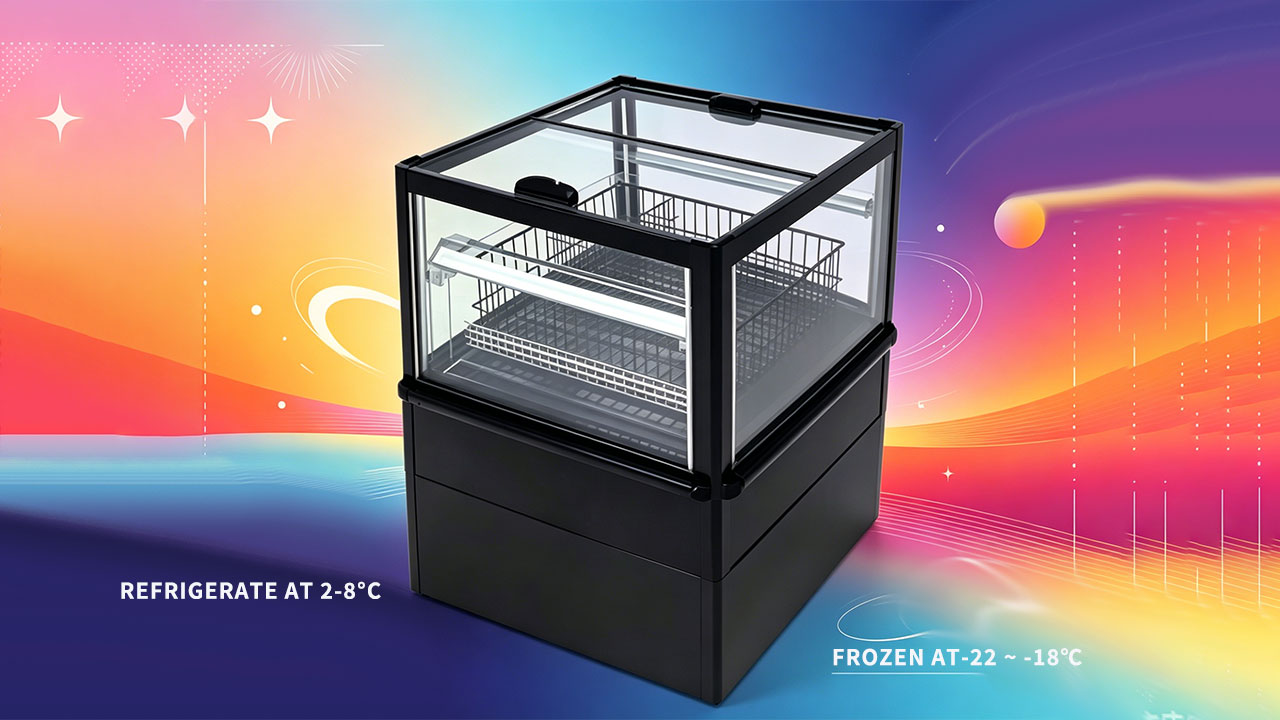
1. Key Parameter Comparison of Nenwell Top-opening Countertop Refrigerated Display Cabinets
To help you clearly distinguish between the two models, we have compiled a comparison of core parameters for your easy selection:
|
Parameters |
MTD-560 |
MTD-700 |
|
Usable Capacity (L) |
110 |
140 |
|
Overall Dimensions (W×D×H, mm) |
620×760×1000 |
760×760×1000 |
|
Packing Dimensions (W×D×H, mm) |
680×820×1200 |
820×820×1200 |
|
Temperature Range (℃) |
Refrigeration: 2~8℃ / Freezing: -22~-18℃ |
Refrigeration: 2~8℃ / Freezing: -22~-18℃ |
|
Refrigerant |
Eco-friendly R290 Refrigerant |
Eco-friendly R290 Refrigerant |
2. Advantages of Dual-temperature Switching Design
Unlike traditional single-temperature refrigerators, this top-opening display cabinet is equipped with one-touch dual-temperature switching. A single unit can satisfy both refrigeration and freezing requirements, effectively cutting equipment procurement costs for merchants.
2.1 Refrigeration Mode (2~8℃)
This mode is ideal for storing beverages, yogurt, fruits, baked desserts, packaged snacks and cooked food. It maintains steady temperature to prevent food spoilage caused by temperature fluctuations. Meanwhile, the top-opening design minimizes cold air loss and reduces energy consumption.
It is perfectly suited for restocking room-temperature drinks in convenience stores, temporary storage of raw materials in milk tea shops, and displaying freshly baked goods in bakeries.
2.2 Freezing Mode (-22~-18℃)
The freezing mode works well for ice cream, frozen food, meat, ready meals and ingredients for cold drinks. It features powerful deep-freezing and fresh-keeping performance, which freezes food thoroughly and extends its shelf life. It fully meets the storage demands for icy treats in summer and frozen ingredients in winter.
It is a great choice for ice cream sections in convenience stores, temporary storage of frozen ingredients at fresh food stalls, and keeping ice cubes and frozen materials in milk tea shops.
3. Usage Guidelines for Various Commercial Scenarios
Commercial venues usually have limited floor space. With a compact countertop structure and a height of 1000mm, this top-opening display cabinet allows customers to pick up goods conveniently and fits well into various space-constrained commercial environments.
3.1 MTD-560: Ideal Choice for Small Spaces
With a width of only 620mm and a floor area of less than 0.5 square meters, the MTD-560 fits neatly in small convenience stores and alongside bar counters. Its 110-liter capacity can hold around 60 to 80 bottled drinks or 40 boxes of ice cream, fully catering to the daily operation of shops with moderate customer flow.
3.2 MTD-700: Medium-capacity Display Cabinet
The MTD-700 has a width of 760mm and a 140-liter capacity, which can hold about 30% more goods than the MTD-560. It is recommended for busy neighborhood convenience stores, refrigerated sections in supermarkets and fresh food stalls.
Both models come with protective packing to cushion impacts during transportation, so you do not need to worry about damage in transit. They are also easy to install and place for small and medium-sized shops.
4. R290 Eco-friendly Refrigerant
Both models adopt R290 eco-friendly refrigerant, which outperforms traditional refrigerants in multiple aspects:
First, it causes no damage to the ozone layer and has an extremely low Global Warming Potential (GWP), complying with environmental policies and relevant standards for commercial equipment at home and abroad.
Second, it delivers superior heat exchange efficiency. The cabinet can quickly reach the preset temperature, shortening the running time of the compressor and lowering long-term energy costs.
It ensures stable refrigeration performance. Even under high temperatures in summer, the internal temperature stays constant to avoid food spoilage and losses.
5. Highlights of Top-opening Structure
Compared with side-opening refrigerators, the top-opening countertop design boasts unique strengths for commercial use:
1. Lower cold air loss and energy consumption: Cold air is denser and escapes much more slowly when the top lid is opened. This design cuts cold air loss by roughly 30%, making it especially practical for convenience stores where customers frequently access goods.
2. Dust and moisture resistance for longer service life: The top lid effectively blocks dust and moisture from entering the cabinet. It avoids food contamination and protects internal components from damp damage, thus prolonging the equipment’s service life.
3. Easy self-service access and improved shopping experience: Thanks to the reasonable height and top-opening design, customers can take items easily without bending or leaning. It optimizes the shopping experience in self-service shopping venues like convenience stores and supermarkets, and helps boost sales indirectly.
4. Flexible layout for diverse products: Baskets and partition boards (optional accessories) can be freely arranged inside the cabinet. You can lay bottled drinks flat or store ice cream and frozen food on separate layers to accommodate different display needs.
6. Tips to Optimize Equipment Performance
First, perform regular maintenance to prevent component failures. Clean dust inside and outside the cabinet on a routine basis, apply special lubricant to moving parts, check loose screws and wires, and replace worn-out parts in a timely manner.
Second, follow standard operating procedures to reduce man-made damage. Start and shut down the equipment as required. Avoid overloading or prolonged continuous operation, and never alter parameters or force the unit to run abnormally.
Third, optimize the operating environment. Ensure good ventilation and proper temperature and humidity around the unit. Keep it away from dust, corrosive substances, strong magnetic fields and vibration sources for stable operation.
Fourth, conduct regular inspection and parameter calibration. Use professional tools to test operating indicators, calibrate deviated parameters and troubleshoot potential faults to keep the equipment running at its best.
Fifth, update firmware and software regularly for intelligent and numerically controlled models. Official firmware, drivers and supporting programs should be updated to fix system bugs, optimize operating logic and improve overall efficiency.
Sixth, manage spare parts properly. Stock up on commonly used accessories in advance to carry out quick repairs when minor faults occur, minimize downtime and maintain full operating performance.
Nenwell suggests that if you are looking for a commercial display cabinet integrating refrigeration and freezing features with small footprint and low energy consumption, you may select the suitable model according to your shop space and customer flow.
Post time: Jun-09-2026 Views: