
Commercial display cases are typically used for showcasing and storing foods like bread, cakes, pastries, and beverages. They are essential tools for convenience stores, bakeries, and coffee shops. Naturally, display cases often face issues like frost buildup. Therefore, the automatic defrost function offers convenience, eliminating the hassle of manual defrosting. 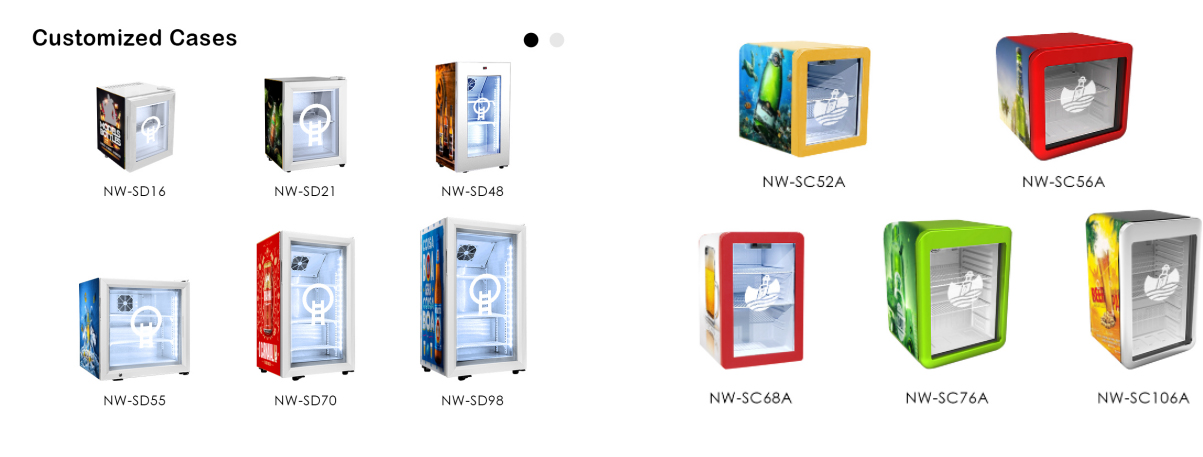
Core Logic of Automatic Defrosting: “Timed + Temperature Control” Dual-Safety Trigger
The automatic defrosting in display cabinets essentially installs an “intelligent switch” for the “frosting → defrosting” cycle:
Timer Trigger: An internal timer (typically set for 8-12 hour intervals) activates defrosting at a predetermined time—such as 2 a.m. (when foot traffic is minimal)—to prevent temperature fluctuations during peak hours that could compromise food preservation.
Temperature-Sensitive Trigger: A “defrost thermostat” near the evaporator forces defrosting when frost buildup lowers the evaporator temperature to around -14°C (to prevent excessive frost accumulation if the timer malfunctions).
Defrosting Process: Applying a “Hot Towel” to the Refrigeration Core
The core of display cabinet refrigeration is the “evaporator.” Frost clogs its heat dissipation holes, causing cooling efficiency to plummet — automatic defrosting specifically addresses this step:
After triggering defrost, the defrost heater (typically heating wires attached to the evaporator) activates, slowly raising the temperature (without sudden heating);
The frost layer melts into water, flowing away through the evaporator’s drainage channels;
When the evaporator temperature returns to around 5°C (most frost melted), the thermostat cuts power to the heater, and the refrigeration system restarts.
The Crucial Finale: The Secret Behind the “Vanishing” Defrost Water
The most tedious part of manual defrosting is “scraping ice only to wipe water.” Commercial display cabinets eliminate this step with automatic defrosting: melted water flows into an evaporation tray at the cabinet base. This tray either incorporates a low-power heating element or sits directly against the compressor (utilizing its residual heat), slowly evaporating the water into vapor that is vented outside — — eliminating manual water disposal and preventing stagnant, foul-smelling water buildup inside the cabinet.
Commercial Display Cabinets’ “Specialized Optimization”: How They Differ from Home Refrigerators Home refrigerators open infrequently, so frost builds slowly. But display cabinets experience constant door openings (especially in convenience stores), causing frost to accumulate 2-3 times faster than in home units. That’s why their automatic defrosting includes these additional details:
Higher defrost heating power (with controlled duration) prevents incomplete frost removal;
Post-defrost ventilation systems rapidly stabilize internal temperatures;
Evaporators feature “anti-water accumulation design” to prevent defrost water from re-freezing on cooling components.
Simply put, the principle behind automatic defrost display cabinets is using “timing + temperature control” to precisely manage defrosting cycles, and employing “heating + evaporation” to handle frost and water—turning the shopkeeper’s “manual labor” into the machine’s “automated task.”
Post time: Dec-04-2025 Views: