
For home baking enthusiasts, ovens and stand mixers are the well-known “main equipment,” but few realize—the refrigerator is the hidden “baking support champion.” From controlling butter softening and chilling dough for fermentation to preserving whipping cream and storing finished cakes, every step relies on the refrigerator’s support. Choosing the right refrigerator tailored to baking needs can double your success rate and save you a lot of hassle.
1. Precise Temperature Control + Minimal Temperature Fluctuations: Prevent Baking Disasters
How sensitive is baking to temperature? Consider this simple example: Whipping cream requires a cool environment. If the refrigerator’s temperature is too high, the cream may melt prematurely, making it impossible to achieve stable peaks. Similarly, butter for cookies must be chilled to a specific firmness. A temperature deviation of just 1-2°C can cause the butter to soften excessively, resulting in cookies that either lose their shape or develop a sticky texture. However, precise temperature control is the top criterion for home bakers when selecting a refrigerator.
An ideal baking-friendly refrigerator should maintain a stable refrigerator compartment temperature between 3-5°C and a freezer compartment temperature consistently below -18°C. Temperature variations across different zones within the unit should not exceed 1°C. Prioritize models featuring “computerized temperature control,” which offers more precise adjustments than mechanical systems and provides real-time temperature displays for convenient monitoring during baking. Additionally, some high-end refrigerators feature “airflow channel technology,” which ensures more uniform cold air circulation throughout the unit. This prevents ingredients from freezing solid near air vents or spoiling due to excessive heat when stored far from them, making it particularly suitable for storing baking ingredients that require stable temperatures.

2. Dedicated Variable-Temperature Compartment for Diverse Baking Needs
In home baking, different ingredients and processes demand distinct refrigeration temperatures: dough requires 1-4°C for cold fermentation, butter needs 8-10°C to soften, chocolate needs 5-8°C for setting, and finished mousses require 0-4°C for storage. Fixed refrigeration and freezer compartments alone struggle to meet these specialized needs. This is where an independent variable-temperature compartment becomes an essential feature for baking enthusiasts.
A quality independent variable-temperature compartment should offer precise multi-level temperature adjustment within a range of -7°C to 10°C. For instance, when refrigerating dough for fermentation, set the compartment to 2°C. This ensures slow fermentation without stalling due to excessive cold. To soften butter, adjust to 10°C. This allows butter to gradually soften in a constant-temperature environment until it reaches a state where “it yields easily to finger pressure without sticking,” offering greater stability than room-temperature softening—especially beneficial in summer or air-conditioned rooms with fluctuating temperatures.
Overall, the variable-temperature compartment also serves as dedicated storage for perishable ingredients like whipping cream and cheese, preventing cross-contamination of flavors and preserving their pure taste.
3. Ample Refrigeration Capacity, Especially with Drawer-Style Design
Once you get into home baking, storage needs for ingredients and finished goods increase significantly: whipping cream, cream cheese, eggs, milk, and other ingredients require refrigeration; baked goods like cakes, cookies, and bread need airtight storage; and sometimes pre-kneaded dough or prepared fillings must be chilled for later use. If the refrigerator’s cold storage capacity is too small, you’ll easily run into situations where “ingredients don’t fit, and baked goods get squished out of shape,” negatively impacting the baking experience.
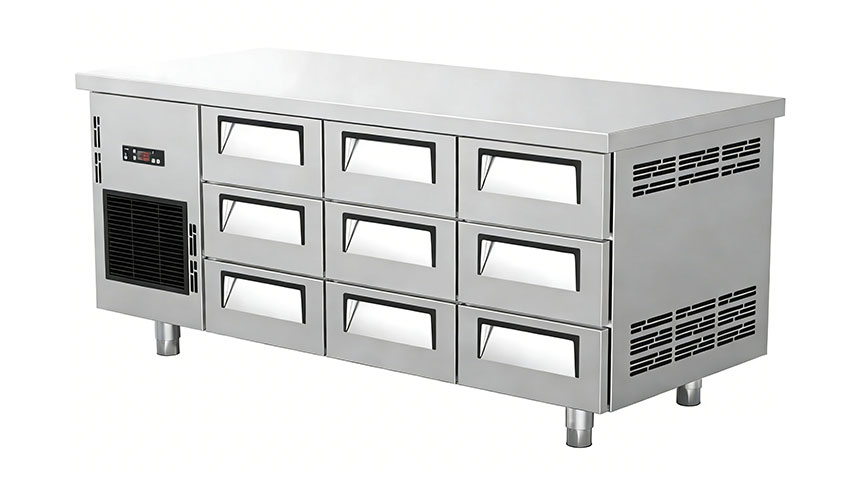
Home bakers are advised to choose refrigerators with a cooling capacity of at least 250 liters. For larger households or frequent baking, a capacity exceeding 300 liters offers greater flexibility. Beyond capacity, drawer-style refrigeration deserves special attention. Compared to open shelves, drawers maintain more stable temperatures and prevent cross-contamination between ingredients. This is particularly suitable for storing dough that requires sealing, finished cakes, and similar items. Some refrigerator drawers also feature a “high-humidity preservation” function, maintaining humidity levels around 90% inside the drawer. This is ideal for storing fresh fruits, vegetables, and other baking ingredients (such as strawberries or mangoes for fruit cakes), effectively extending their shelf life and preventing them from drying out.
4. Low-Humidity Freezing + Rapid Freezing: Longer-Lasting Freshness for Ingredients
Many home bakers prepare large quantities of ingredients in advance, such as frozen butter, frozen dough, and frozen fruit. This places higher demands on a refrigerator’s freezing capabilities. An effective freezing function should feature two key characteristics: low-humidity freezing and rapid freezing.
Low-humidity freezing reduces moisture in the freezer compartment, preventing frost buildup on food surfaces. If butter, dough, or other ingredients develop frost, excess moisture during thawing can compromise texture and flavor. For instance, frosty frozen butter used in cookies results in overly runny dough and soft, soggy baked goods. Rapid freezing quickly chills ingredients to freezing temperatures, rapidly locking in nutrients and moisture while preventing cellular damage. When freezing fresh fruit, rapid freezing preserves its firm texture, preventing mushy or watery thawed fruit—ideal for fruit tarts or cakes.
Therefore, a freezer compartment with compartmentalized design is ideal. It allows separate storage of different types of frozen ingredients, preventing odor transfer while also facilitating quick retrieval.
5. Antibacterial Freshness Function, Safeguarding Food Safety
Among baking ingredients, eggs, milk, cream cheese, and similar items are highly perishable and nutrient-rich, making them prone to bacterial growth. If bacteria are present in the refrigerator, it can easily lead to spoilage, not only affecting the taste of baked goods but also potentially posing health risks. Therefore, antibacterial freshness preservation is a crucial consideration for home bakers when selecting a refrigerator.
Current mainstream refrigerator antibacterial technologies include silver ion antibacterial, UV ultraviolet antibacterial, and photocatalytic antibacterial. These technologies effectively inhibit the growth of common bacteria like E. coli and Staphylococcus aureus inside the refrigerator, reducing the risk of food contamination. It is recommended to choose refrigerators explicitly labeled with “antibacterial rate ≥99%” and prioritize models with food-grade materials for the interior lining to further ensure food safety.
Additionally, the refrigerator’s sealing performance is crucial. A tight seal prevents external bacteria from entering while minimizing cold air loss, thereby enhancing freshness retention.
6. Quiet Operation for Undisturbed Baking Creativity
Home baking often requires extended periods in the kitchen—from ingredient prep, dough kneading, and fermentation to baking and cooling. Excessive refrigerator noise can severely disrupt your creative flow and even interfere with hearing critical oven signals (like preheat completion alerts or subtle changes during dough fermentation).
Therefore, while quiet operation isn’t a core feature, it’s crucial for enhancing the baking experience.
Opt for refrigerators with operating noise ≤38dB—equivalent to a quiet conversation—to avoid disruptions during daily use. When selecting, note the compressor type: inverter compressors run smoother and quieter than fixed-frequency models.
Refrigerator vibration dampening also impacts noise levels. High-quality vibration-reducing feet minimize operational shaking, further lowering noise.
Below are different selection recommendations
Prioritize “precise temperature control” and “sufficient refrigeration capacity.” Opt for a basic model with computerized temperature control and a refrigeration capacity ≥250L to meet fundamental daily baking needs.
Opt for models featuring a “separate variable-temperature compartment” and “antibacterial freshness preservation.” The variable-temperature compartment accommodates more baking scenarios, while antibacterial technology safeguards food safety, offering better value for money.
For premium models, prioritize features like “low-humidity freezing + rapid freezing,” “airflow technology,” and “quiet inverter operation.” Simultaneously consider capacity and compartment design to comprehensively enhance your baking experience.
Centered on the core needs of “food preservation” and “scenario adaptability,” focusing on these six key points—precise temperature control, independent variable-temperature compartment, sufficient capacity, premium freezing, and antibacterial quiet operation—will help you select a “baking-friendly” refrigerator that suits your needs.
Post time: Dec-30-2025 Views: