
In the custom manufacturing of commercial display cooler, the door logo serves as the core carrier of brand recognition. For refrigerated display equipment used in supermarkets, catering stores and chain outlets, logo craftsmanship directly affects brand presentation, long-term service performance and after-sales costs. The industry currently adopts two mainstream logo processing technologies: silkscreen printing and adhesive decals. Most manufacturers and brand buyers only focus on upfront production costs while ignoring end-user experience, environmental adaptability and long-term operation risks. Combined with the actual project experience of retrofitting brand logos on finished beverage display coolers for Nenwell clients last year, this article objectively compares the pros, cons and applicable scenarios of both processes to help you select the most suitable logo solution.
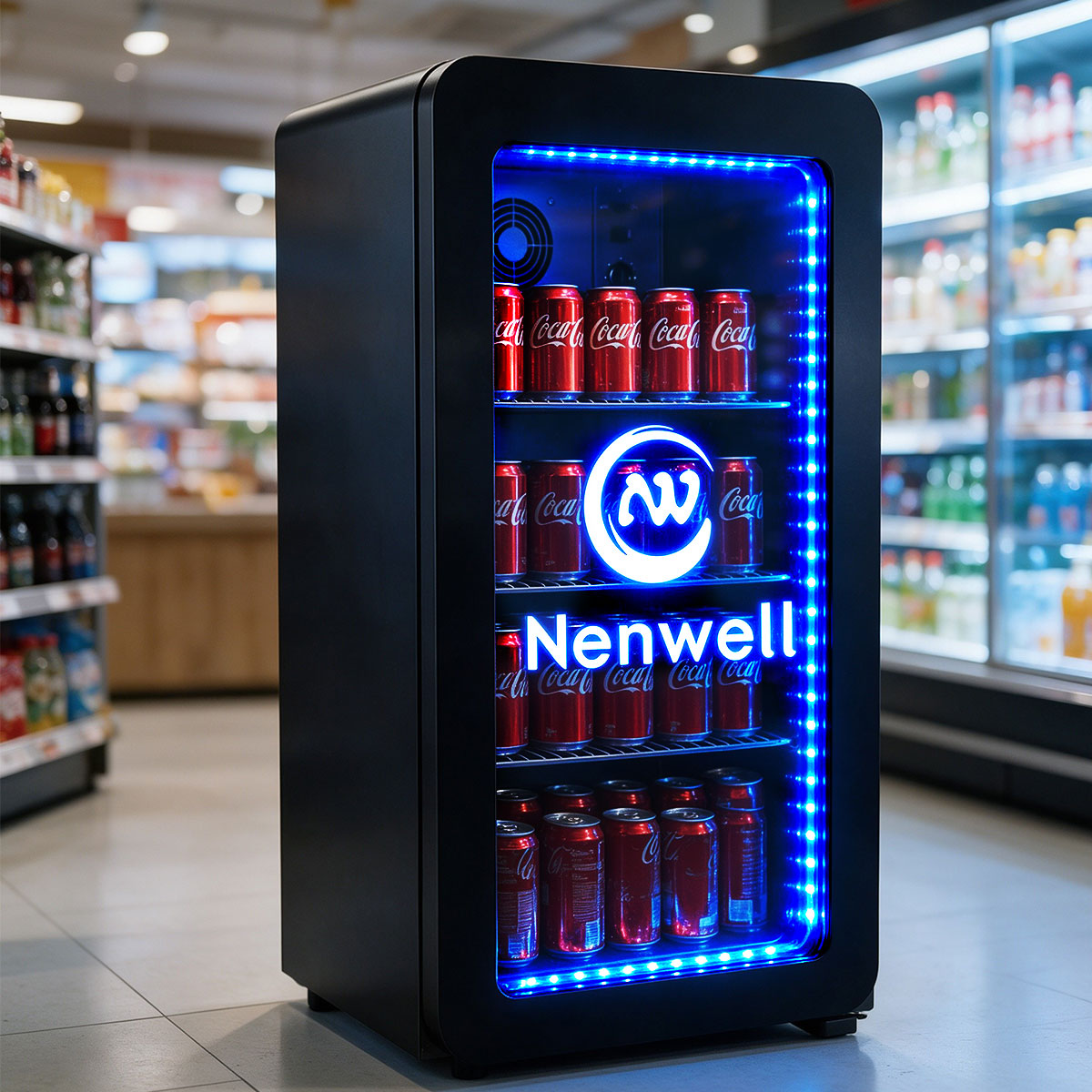
Advantages of Adhesive Decals for Commercial Display Cabinet Logos
Adhesive decal application is the most popular and widely adopted logo processing method in the commercial refrigeration industry, with outstanding core advantages in flexibility and low comprehensive cost. This technology uses high-quality waterproof self-adhesive labels, PVC films or acrylic sticker materials, which are firmly bonded to the glass doors and sheet metal panels of display coolers through professional lamination processes. It requires no custom screen stencils or special professional equipment, resulting in an extremely low production and technical threshold.
This solution shows unique superiority for scattered and customized orders, including small-batch customization, multi-style model revision and new product trial orders. Most importantly, it perfectly solves the pain point of secondary logo installation for finished commercial display cabinets that have completed mass production and delivery, supporting flexible brand matching for temporary equipment use scenarios.
Core Disadvantages of Sticker Logos on Refrigerated Display Equipment
Despite its flexible and cost-effective strengths, the drawbacks of adhesive decals are the most concentrated feedback from Nenwell’s long-term clients. A beverage display cooler always operates in a low-temperature and high-humidity working environment. Frequent equipment start-stop generates a large amount of condensation on the cabinet surface, and repeated door opening and closing causes continuous temperature differences, which gradually erode the edges of adhesive stickers.
After a period of daily use, ordinary decal logos are prone to edge lifting, blistering and delamination. Once the sticker falls off, the original brand display effect is completely lost. The residual adhesive on the cabinet will turn yellow and accumulate dust over time, making the whole commercial display cabinet look old and rough. In addition, supermarket and catering application scenarios require frequent cleaning and wiping. Corrosion from cleaning agents and repeated friction will accelerate the fading and whitening of sticker materials, seriously damaging the terminal display effect. This not only reduces product grade but also easily triggers customer complaints, bringing additional rework and replacement costs for manufacturers.
Superiority of Silkscreen Printing for Mid-to-High-End Display Cooler Logos
Silkscreen printing is the preferred mainstream process for mid-to-high-end commercial display cabinets, with core advantages in stable performance and premium visual texture. This process uses customized professional screen stencils to print and cure special ink directly on the surface of cabinet doors, making the brand logo integrated with the display cooler equipment without raised edges or gaps on the surface.
Compared with adhesive decals, silkscreen printed logos are resistant to condensation erosion, chemical corrosion, repeated wiping and temperature changes. There is no risk of peeling or fading during the entire service life, and the durability is almost synchronized with the whole commercial display cabinet. The delicate and uniform printing effect greatly improves the overall grade of the equipment. The clear and three-dimensional brand presentation is highly suitable for high-end scenarios such as brand chain stores, premium supermarkets and standardized catering outlets, maintaining a neat and unified appearance for long-term use and bringing excellent user experience.
Visible Shortcomings of Silkscreen Printing Technology
Silkscreen printing also has obvious limitations in practical application, which are mainly reflected in high technical thresholds and high upfront comprehensive costs — the biggest obstacle for Nenwell clients when upgrading logo processes. Unlike the zero-threshold operation of adhesive decals, silkscreen printing requires independent screen stencil production according to the size, color matching and design style of different brand logos, with high one-time stencil customization costs.
For multi-style and small-batch custom orders, repeated stencil production will significantly increase the unit production cost of refrigerated display cabinets. Meanwhile, the silkscreen process has strict requirements on production environment, ink quality and operator proficiency. Improper operation will easily cause quality defects such as color deviation, rough edges and uneven ink layers, resulting in a lower product yield than the decal process. The biggest limitation is poor flexibility: the cured silkscreen logo cannot be modified. Once the brand image is updated or the customer’s design requirements change, the stencil needs to be remade and reworked, which is not conducive to frequent product iteration and model revision.
How to Choose the Right Logo Process for Different Display Cooler Scenarios
There is no absolute superior or inferior logo process for commercial display cabinets; the core is matching the product positioning and application scenarios. Manufacturers need to make hierarchical selection based on product positioning, order attributes and terminal use environment to avoid blind selection.
For entry-level mass-produced beverage display coolers, temporary customized orders, short-term rental equipment and products requiring frequent style updates, adhesive decals are the most cost-effective choice. By upgrading to low-temperature resistant, waterproof and anti-corrosion special sticker materials, and optimizing professional lamination and edge-sealing processes, the problems of peeling and fading can be effectively improved, perfectly balancing production cost and basic product quality.
For mid-to-high-end finalized display cabinet models, long-term mass-produced brand equipment and supporting refrigeration equipment for chain brands, silkscreen printing is the optimal solution. Although the upfront stencil production and labor costs are higher, it has the advantages of zero after-sales maintenance, high-end texture and strong stability throughout the equipment life cycle. It effectively avoids long-term maintenance costs and brand image loss caused by logo damage, delivering higher long-term cost performance.
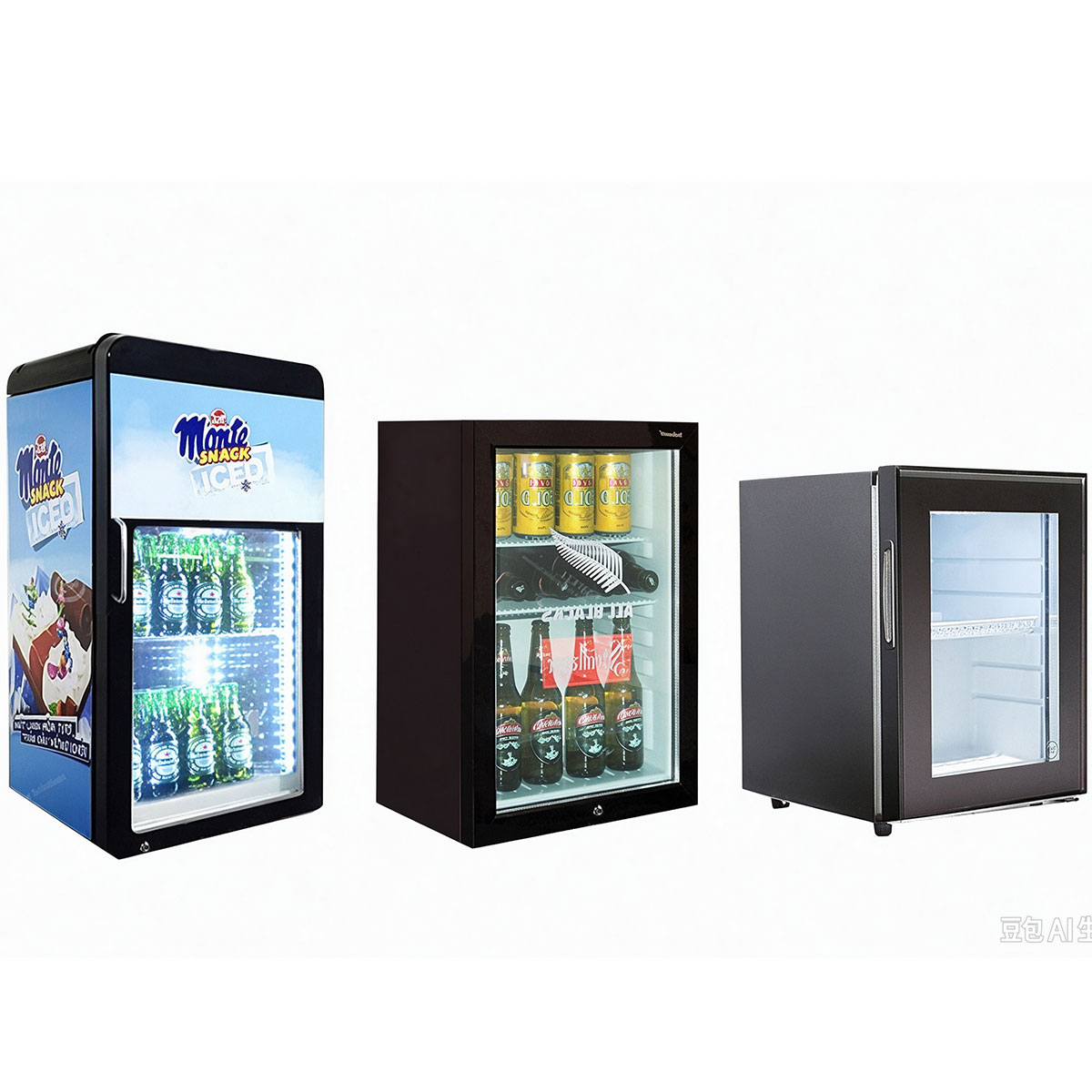
To sum up, the two mainstream logo processes for beverage display cooler doors have their own pros and cons. Adhesive decals feature flexible operation and low upfront costs but have poor environmental adaptability and potential after-sales hidden dangers. Silkscreen printing provides durable use and premium visual effects but requires higher investment in early production and has poor modification flexibility. Enterprises can choose the most appropriate solution according to actual production needs and brand positioning to maximize product value and user experience.
Post time: Oct-07-2026 Views: