
When choosing between island freezers and upright display freezers for your fresh food store, the decision should be based on your store positioning, product categories, floor area and actual operation scenarios. You can make the selection referring to the following situations.
1. Store Floor Area
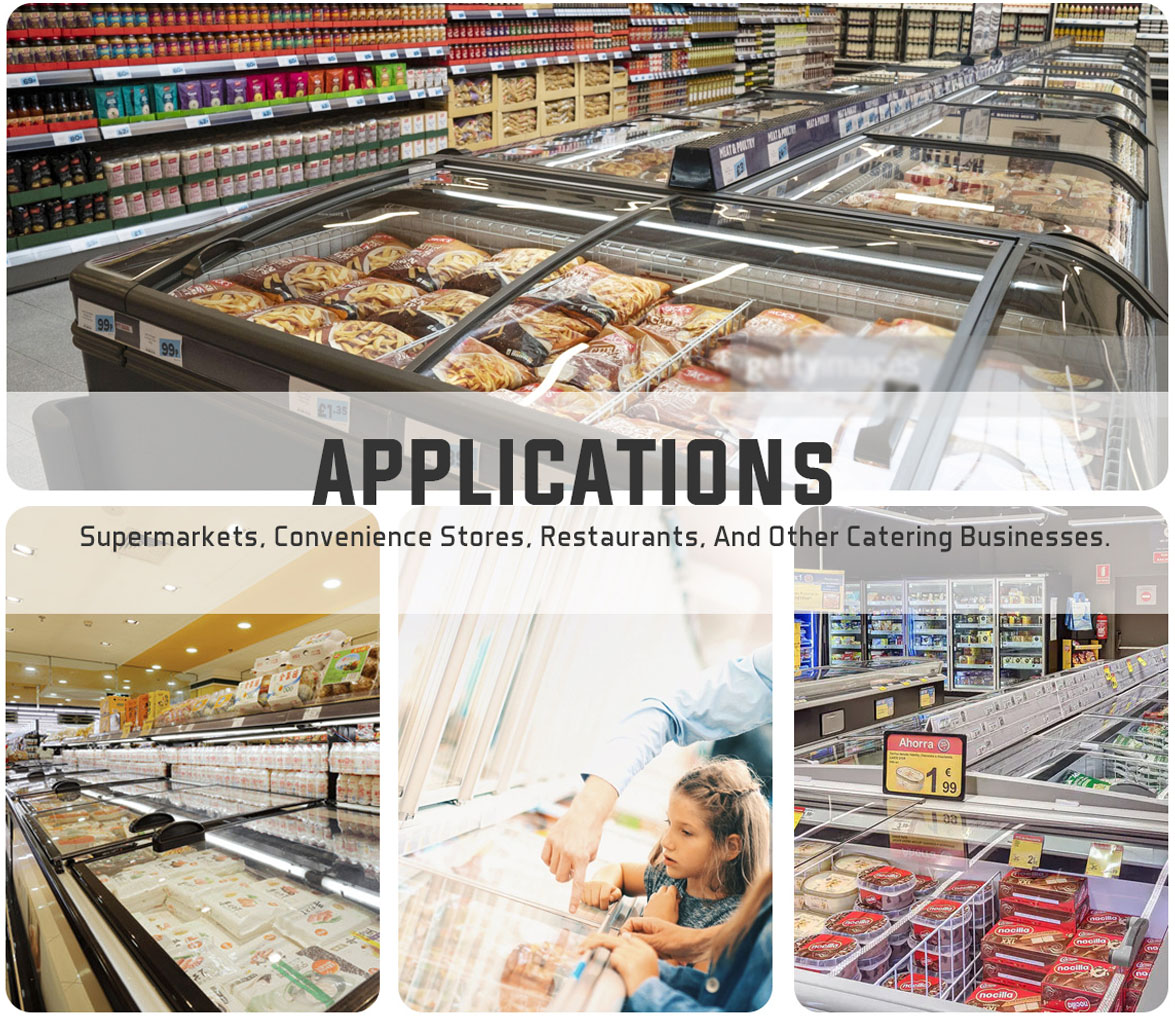
For large fresh food stores, horizontal frozen island freezers (commonly seen as flat-top open island freezers or glass-door island freezers) are a viable option. Their greatest strength is large capacity, which fits well with large-scale stockpiling. For example, the NW-WD700Y model measures 2025×754×840mm, and purchasing multiple units can satisfy the storage demand.
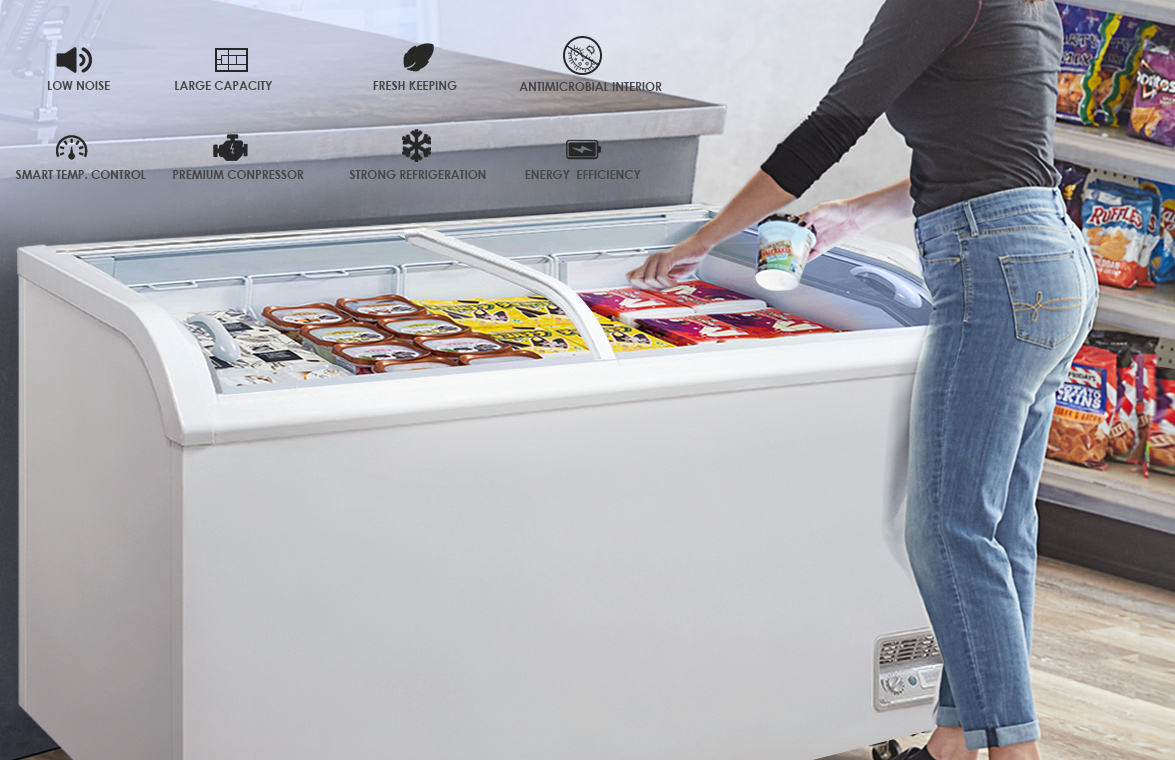
In terms of energy consumption, island freezers deliver better thermal insulation. As cold air naturally sinks, island freezers with closed glass lids suffer less cold air loss, and their daily power consumption is lower than that of upright display freezers of the same volume. Many seasoned store owners report that during summer peak periods, running multiple upright freezers simultaneously brings notably higher electricity bills. Besides, island freezers feature a simple structure with a low compressor failure rate, keeping after-sales maintenance costs under control.
For stores with limited space, upright display freezer series are recommended, such as NWSD-220H and NW-LD1253M2W.
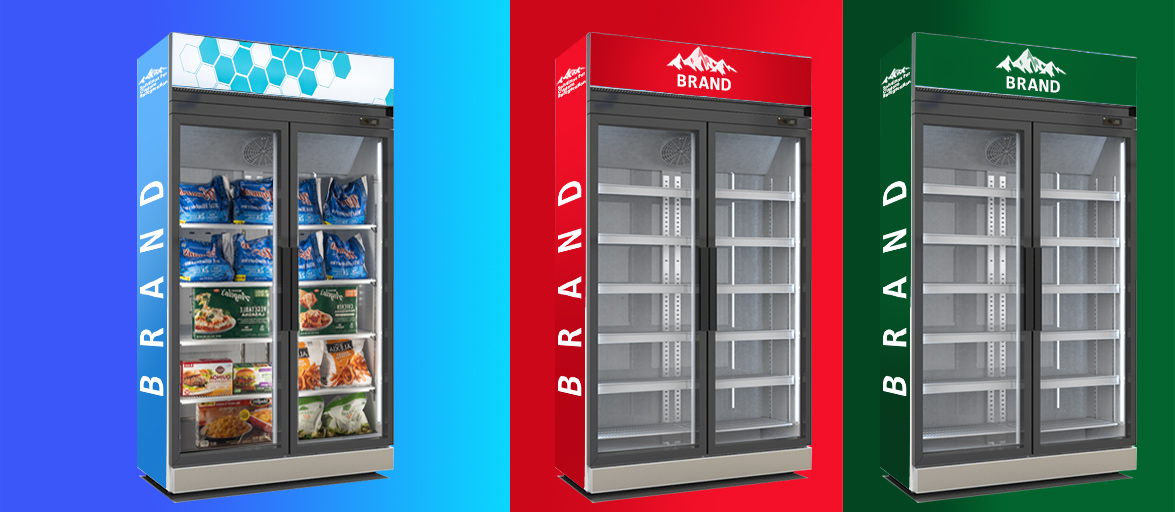
Both single-door and double-door options are available. They take up little floor space and support 6 layers of shelves for frozen food display and storage.
Upright freezers make full use of vertical space with a compact footprint, making them ideal for community fresh food stores under 80 square meters. When the store has a compact traffic flow, placing upright freezers along the walls will not occupy the central aisles. Product categorization is also clearer with one category per shelf, making it convenient for staff to conduct inventory checks and locate goods. Near-expiry products can be spotted in time easily, thus reducing product waste.
2. Advantages and Disadvantages
Island freezers excel at large-volume frozen storage for items like frozen shrimp and frozen hairtail. However, they have drawbacks in product variety: most island freezers only have 2-3 compartments for 2-3 categories. Furthermore, with a flat display layout, products at the bottom are barely visible when customers browse through the goods.
Most customers only pick products from the top layer, leaving products at the bottom in long-term backlog and prone to expiry-related waste. Customers also need to bend over to select items, resulting in poor shopping experience for the elderly and customers with children. If your fresh food store focuses on prepared meals, high-end frozen products and small-packaged seafood, and relies on visual appeal to drive purchases, the display effect of island freezers is relatively unsatisfactory. In addition, island freezers occupy a large floor area and cannot utilize vertical space. For stores with narrow aisles, they will cause congestion during peak hours.
As for upright display freezers, glass-door models are standard equipment for premium fresh food stores. The biggest highlight of upright freezers is visualized display. The glass doors fully showcase exquisitely packaged prepared meals, steaks, seafood and small-packaged frozen products, allowing customers to see the goods right from the aisle and stimulating impulse purchases. Many fresh food stores achieve premium pricing for frozen products precisely because of the display effect of upright freezers. For the same frozen prepared meal, sales volume is usually higher when placed in an upright freezer than when buried at the bottom of an island freezer.
The pain point of upright freezers is faster cold air loss. Every time a customer pulls open the glass door, a large amount of cold air escapes. For high-foot-traffic stores, hundreds of door openings per day will cause a noticeable rise in power consumption. Moreover, upright freezers have more internal air ducts and a more complex auto-defrost system, making later maintenance more troublesome than island freezers. There is also a capacity limitation: with the same floor area, the storage volume of upright freezers is much smaller than that of island freezers, making them unsuitable for large-scale stockpiling and bringing high stocking pressure for high-volume frozen products.
How to match the two types for fresh food stores?
For most community fresh food stores, it is not recommended to choose only one type; a combined solution is more advisable.
If your store is under 80 square meters, focuses on premium fresh food and small-packaged frozen seafood, follows a high average transaction value strategy, and carries about 30–60 frozen SKUs, you can take upright display freezers as the main equipment, paired with 1 small island freezer for high-volume staple items like meatballs and ice cream. Customers see the upright freezers first upon entering, which boosts sales of premium products, while island freezers cover affordable daily frozen essentials.
If your store is over 120 square meters, focuses on frozen product wholesale and community group-buy pick-up, and has high sales of budget hot pot balls and frozen poultry with over 80 frozen SKUs, you can take island freezers as the main equipment, paired with 2–3 upright display freezers for high-margin items such as premium prepared meals and steaks. Island freezers handle large-volume stockpiling and sales, while upright freezers build brand image and display high-margin products.
There are also several on-site implementation details that must be verified before purchase. For island freezers, confirm whether they are equipped with sliding lids or flip-up lids: flip-up lids are convenient for customers to access goods but have slightly inferior sealing performance. For upright freezers, prioritize low-emissivity insulated glass to reduce fogging, otherwise customers cannot see the interior products clearly. In addition, evaluate the store’s power supply capacity: multiple upright freezers starting simultaneously generate high inrush current, so confirm the circuit load with an electrician before the new store renovation.
Core logic for freezer selection: Choose island freezers for high-volume stockpiling, and upright freezers for premium display and pricing. Opting for only one type of freezer often leads to either sluggish sales or excessive operating costs.
Post time: Sep-24-2026 Views: