
When shopping in supermarkets, have you ever wondered: those display cabinets holding ice cream, beverages and dairy products do not look particularly large, yet they actually weigh 90–220 kg. Moving them requires several people working together, and sometimes a hydraulic trolley is even necessary.
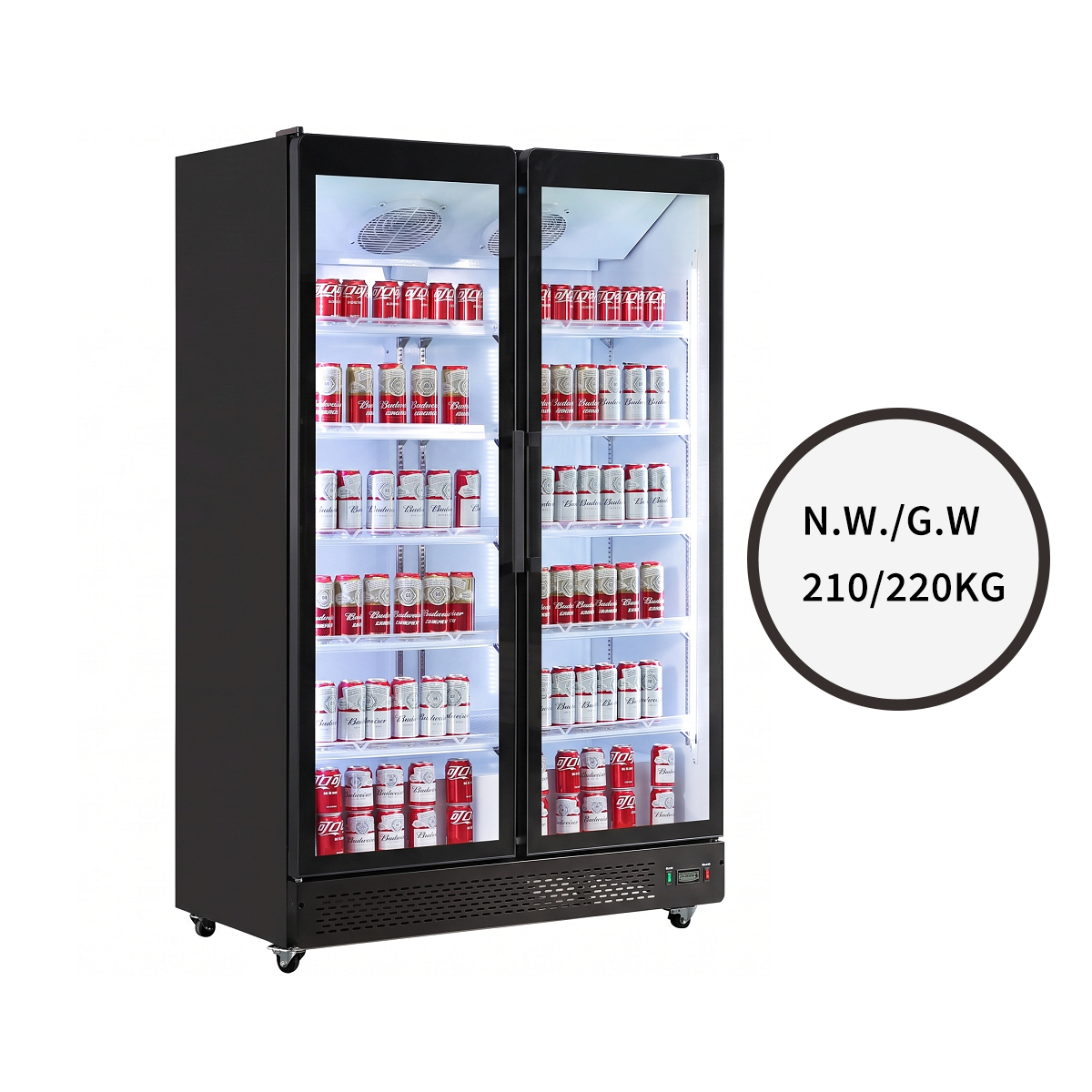
The answer is straightforward: the heavy weight of these cabinets comes from deliberate engineering design. Nearly every kilogram serves a specific purpose. Let us break down the contributing factors layer by layer.
1. The Thickest Layer — The Insulating “Coat”
These cabinets maintain low temperatures year-round (2–8°C for refrigeration, and as low as -18°C or below for freezing), while the ambient temperature can exceed 30°C in summer. With such a large temperature difference between the interior and exterior, thin cabinet walls would allow cold air to escape rapidly. The compressor would then run continuously, consuming excessive power while failing to sustain stable temperatures.
Therefore, display cabinets must be fitted with a thick insulating “coat”. The dominant material is rigid polyurethane foam, a widely recognised high-efficiency thermal insulator with extremely low thermal conductivity. To achieve optimal insulation performance, cabinet walls are typically made 5 to 10 centimetres thick. Larger cabinets and greater temperature differentials require thicker insulation. The volume of this foam filling accounts for a significant portion of the cabinet’s total weight and directly determines its energy-saving capability.
2. The Heaviest Core Component — The Refrigeration System
Continuous cooling relies on the classic vapour-compression refrigeration cycle, which consists of four core components: compressor, condenser, evaporator and expansion device.
The compressor is the single heaviest part of the whole system, mostly manufactured as hermetically sealed metal castings, weighing from more than ten kilograms up to several tens of kilograms.
The condenser is equipped with large heat-dissipating fins and a fan to expel heat out of the cabinet.
The evaporator is made of copper tubes and aluminium fins coiled inside the cabinet to cool the circulating air directly.
The pipelines are filled with refrigerant (mostly eco-friendly refrigerants).
Nearly all these components are metallic, including compressors, copper tubing, fins and fans, which inevitably add substantial weight. The refrigeration system can be regarded as the quiet yet heavy “heart” of the display cabinet.
3. Load-Bearing Frame Built for Merchandise Storage
A display cabinet is not an empty enclosure. It must support fully stocked goods over long periods — rows of drinks and cartons of milk that can easily weigh over a hundred kilograms combined. This demands sufficient structural strength for shelves, upright supports and load-bearing frames to prevent deformation under load.
For this reason, cabinet shells are mostly fabricated from cold-rolled steel sheets, with folded sheet metal edges and reinforcing ribs to guarantee rigidity and stability. This portion of the weight represents an engineered safety margin for load capacity, a necessary feature to ensure structural robustness.
4. Visible Weight — Glass Panels
Customer-facing surfaces are almost always large glass doors or glass partitions. For safety and insulation purposes, tempered glass is commonly used, and insulated double glazing may be adopted to further improve thermal performance. Tempered glass is thick and large; a single panel can weigh dozens of kilograms. Overall, glass accounts for a considerable proportion of the cabinet’s total weight — a major source of its substantial heft.
5. Concealed Refrigerant and Electronic Control System
Beyond visible components, the cabinet houses a complete “nervous system”: thermostats, defrost heating wires, LED lighting, circulation fans and more. Individually these parts are lightweight, but together with refrigerant inside the pipes and various electronic elements, their combined mass adds to the cabinet’s overall weight.
6. Deliberate Stability Design
Refrigerated cabinets are placed in high-foot-traffic areas. Shoppers may lean against them, children may climb on them, and the units endure mechanical stress during transportation. A low centre of gravity reduces the risk of tipping over. Weighted components are fitted at the base to prevent the cabinet from toppling easily. Much of the cabinet’s weight and structural strength is engineered for safety and stability. A lightweight design would make it far easier to knock over, creating safety hazards.
The substantial weight of refrigerated display cabinets stems from thick insulation layers, heavy refrigeration systems, load-bearing steel structures, large tempered glass panels, and safety-focused stability considerations.
Post time: Oct-14-2026 Views: