
Walk into any convenience store or supermarket, and you will find nearly all refrigerated beverage display cabinets fitted with double-layer tempered glass doors. This is not simply an industry trend; it stems from the core requirement of refrigeration. The cabinet doors are opened and closed dozens or even hundreds of times every day. Cold air continuously escapes through gaps around the door and the glass surface, forcing the refrigeration unit to run constantly under heavy load. Sandwiched between the two glass panes is an insulating layer of air (or inert gas). Air conducts heat far less efficiently than glass itself, which greatly slows heat transfer from the cold interior to the outside and cuts cold air loss significantly. Combined with the light transmission property of tempered glass, the design maintains low temperatures without blocking customers’ view, meeting both preservation and visual merchandising goals from the very first glance.
I. Advantages of Double-Layer Tempered Glass Doors
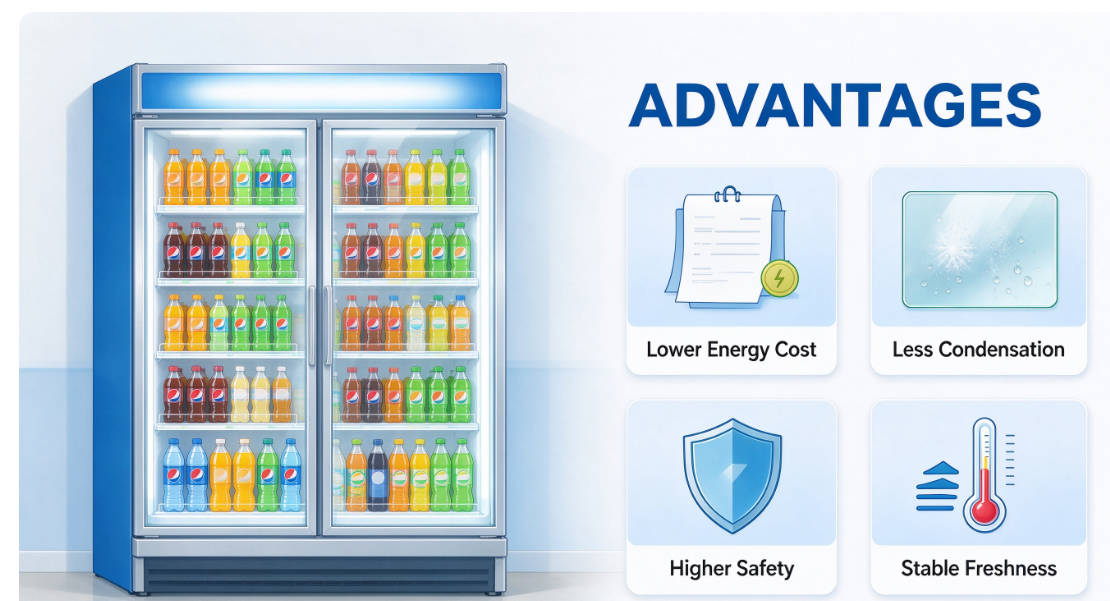
The most obvious benefit is energy efficiency. Thanks to superior heat insulation, the compressor starts and stops less frequently and runs for shorter periods. Over time, the savings on electricity bills are substantial. Estimates show that for cabinets of the same volume, double-glass doors reduce energy consumption by roughly 20% compared with single-glass doors, translating into tangible cost savings for refrigerators operating year-round.
Next is anti-condensation performance. When there is a large temperature difference between the two sides of the glass, single-layer glass easily fogs up and forms water droplets, obscuring products and causing dripping. The double-pane structure keeps the inner glass closer to the cabinet’s internal temperature, drastically reducing fogging. Customers can clearly view products without opening the door to search, which in turn cuts cold air leakage.
Thirdly, there is improved safety. Tempered glass boasts high impact resistance and strength. When broken by external force, it crumbles into granular pieces instead of sharp shards, greatly lowering the risk of injury. This makes it ideal for locations frequented by children. Better thermal insulation also stabilizes temperatures inside the cabinet, preserving beverage taste and extending shelf life.
II. Disadvantages of Double-Layer Tempered Glass Doors
The primary drawback is higher cost. The more complex construction of double-layer tempered glass doors means the purchase price per door is noticeably higher than that of single-layer doors, increasing upfront investment.
Then come weight and wear issues. Double doors are heavier, placing greater stress on hinges and sliding tracks. With prolonged use, these components are more prone to wear and sagging, and repairs or replacements cost more.
In addition, extra glass slightly reduces light transmittance. Poor glass fabrication or inadequate sealing of the hollow cavity can compromise the clarity of product display. Finally, maintenance is more difficult. If moisture seeps into the hollow layer due to failed sealing, the entire door usually needs replacement, unlike single-pane glass which can be cleaned easily.
III. How to Make the Right Choice?
The decision hinges on your usage scenario and budget. For convenience stores, supermarkets and similar venues with refrigerated cabinets running all day, fluctuating humidity and heavy foot traffic, condensation and high energy use are major concerns. Double-layer tempered glass doors deliver the best value. Despite higher upfront costs, long-term gains from energy savings and anti-fog performance offset the price difference. For small shops or short-term rental businesses with tight budgets, low cabinet usage frequency and low ambient humidity, single-layer or ordinary glass doors may suffice, so there is no need to pay extra for unnecessary features.
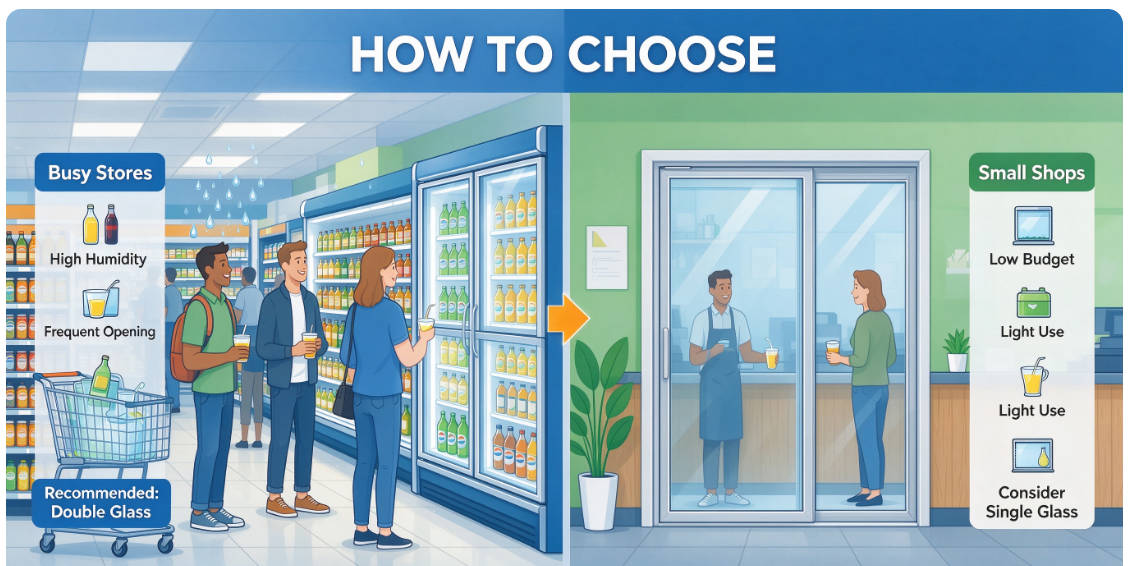
When purchasing, check three key specifications carefully: whether the glass has passed China’s 3C safety certification, whether the hollow cavity is filled with inert gas (for better heat insulation), and whether the door frame sealing strips fit tightly. Also consider temperature requirements for stored goods. If you mainly sell temperature-sensitive items such as yogurt and fresh milk, the thermal retention benefits of double-glass doors make them a top priority.
Post time: Oct-13-2026 Views: