
Are you struggling to pick the right cold‑chain equipment for your small grocery store? Opening a new location means working with limited capital. You need to stay within your equipment budget while worrying about bulky coolers eating up floor space and sky‑high monthly electric bills. Choosing the wrong refrigerated display case can lead to inconsistent cooling and frustrating maintenance headaches.
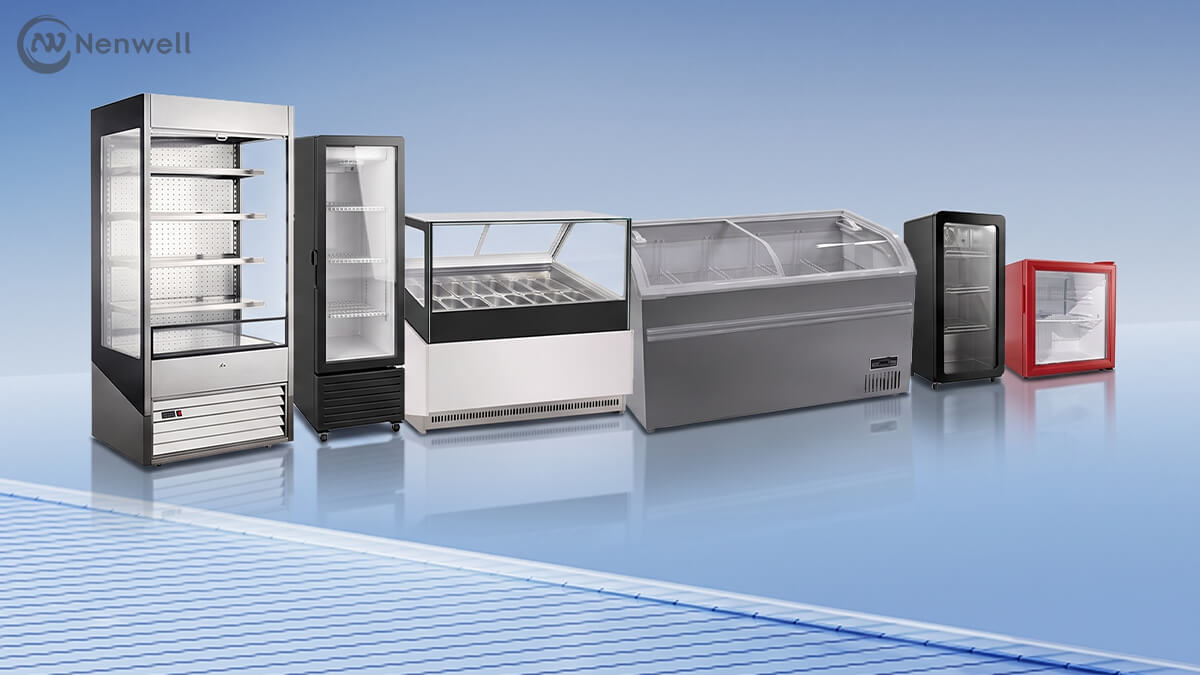
Nenwell delivers well‑rounded cold‑chain solutions for small grocery retailers, covering equipment selection, footprint optimization and operating electricity costs. We help cut store‑level expenses with a full lineup of cost‑effective commercial refrigeration units.
Commercial Refrigerated Display Case Industry Outlook 2026
According to joint data released by the China Refrigeration and Air‑Conditioning Industry Association and Zhiyan Consulting, China’s total commercial freezer market reached $2.59 billion in 2025, a 9.6 % year‑over‑year increase. Within this segment, refrigerated display cases hit $1.78 billion, up 7.3 % YoY. Growth is projected to hold around 8 % in 2026, pushing market size past $1.91 billion.
In 2025, convenience stores and small grocery outlets purchased 423 000 commercial refrigeration units, accounting for 36.1 % of total end‑user sales. This channel surpassed large‑format supermarkets (34.7 %) for the first time to become the industry’s largest single application. Small grocery stores in county‑level and rural markets posted the fastest growth, with purchases rising 11.4 % YoY to 342 000 units.
Three clear industry trends are shaping 2026 around technology and regulatory compliance:
R290 natural‑refrigerant models now hold a 61.4 % penetration rate among small grocery stores, replacing legacy R134a and R404a units. These units align with carbon‑reduction policies and the latest energy‑efficiency standards, cutting individual unit energy consumption by 12‑18 % compared to older generations.
Stricter Food‑Safety Standards: National Food Safety Standard GB 31605‑2024 took full effect in 2025. Tightened temperature accuracy of ±0.5℃, antimicrobial interior liners and self‑evaporating condensate systems are now mandatory purchasing requirements.
Smart Features Shift from Optional to Standard: IoT‑enabled units offering remote temperature control, energy‑use tracking and fault alerts now make up 38.6 % of the market. Though these units carry an 18‑25 % price premium, owners can recoup the extra investment within 3‑5 years through energy savings and early‑issue warnings.
I. In‑Depth Guide to Core Cabinet Models (Full NW Series Compatibility)
1.1 Upright Refrigerated Display Cases
Use‑Case Profile
Upright refrigerated display cases form the cold‑chain backbone for small grocery stores. They store and showcase bottled/canned beverages, dairy and short‑shelf‑life baked goods. Key benefits include excellent vertical space utilization, 100 % product visibility and fast customer pickup — making them central to driving in‑store beverage sales.
Key Models & Specifications
Nenwell upright refrigerated display cases come in the classic LSC line and space‑saving EC narrow series, covering capacities from small to large for every store layout. All models use fan‑forced no‑frost cooling built for frequent door openings common in small grocery retail.
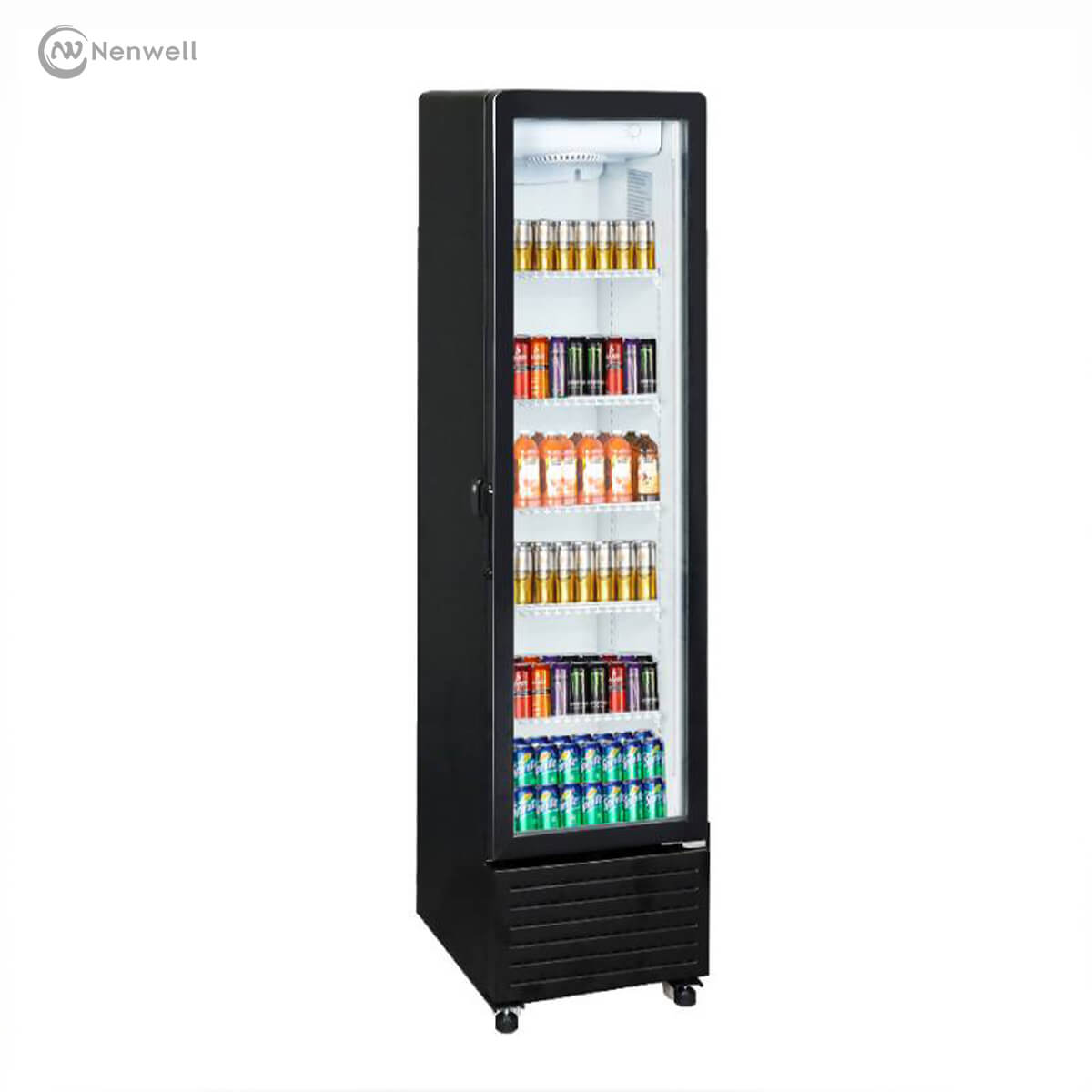
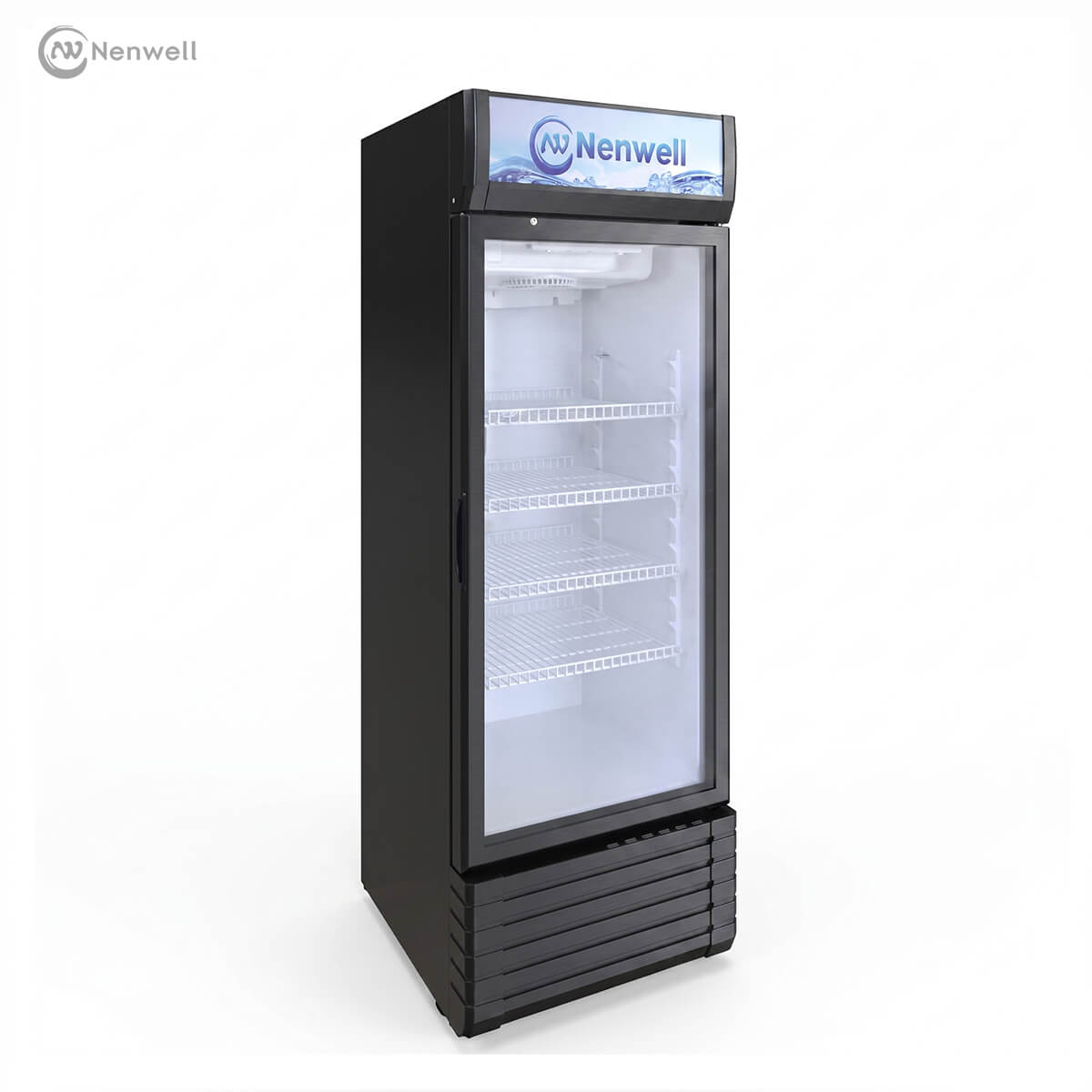
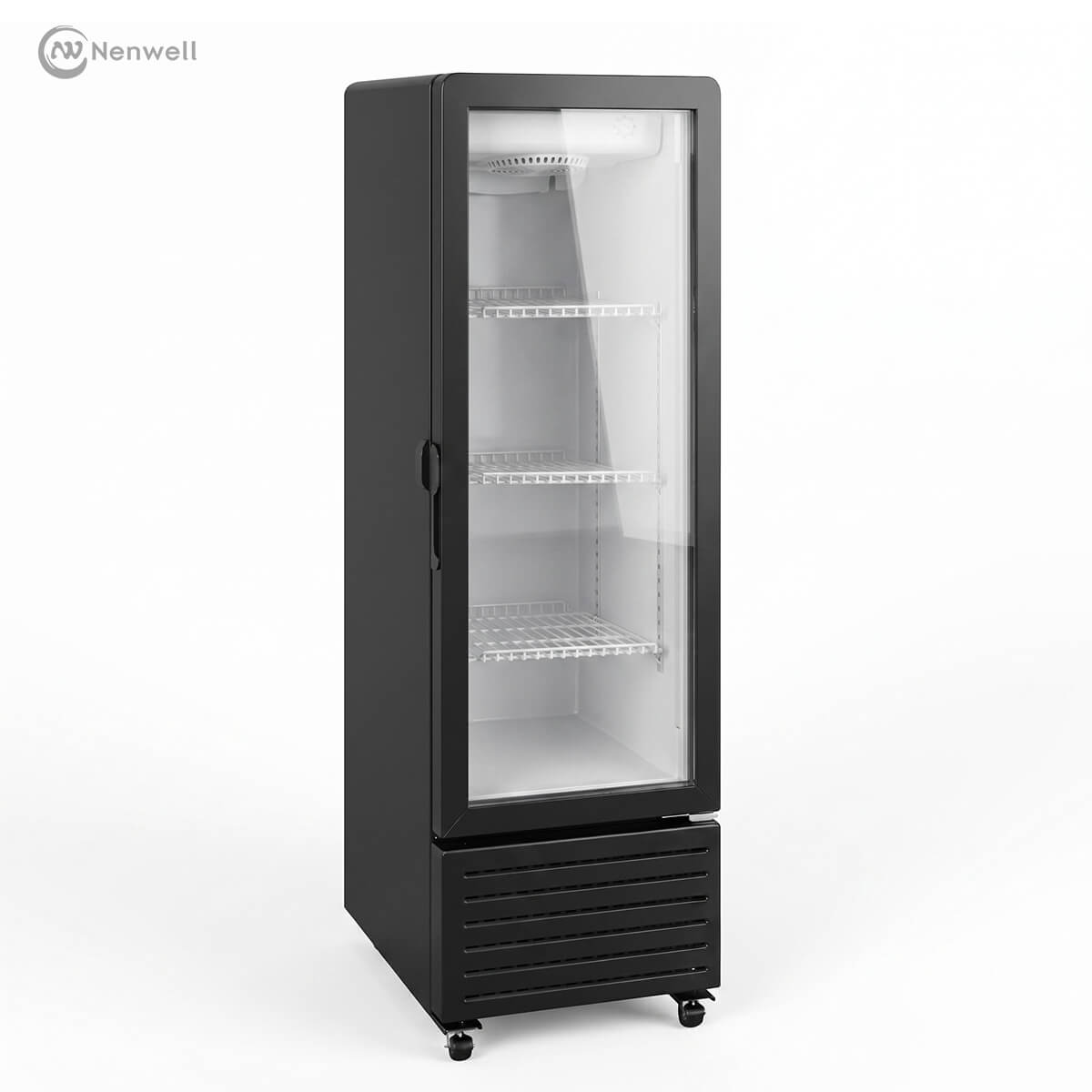
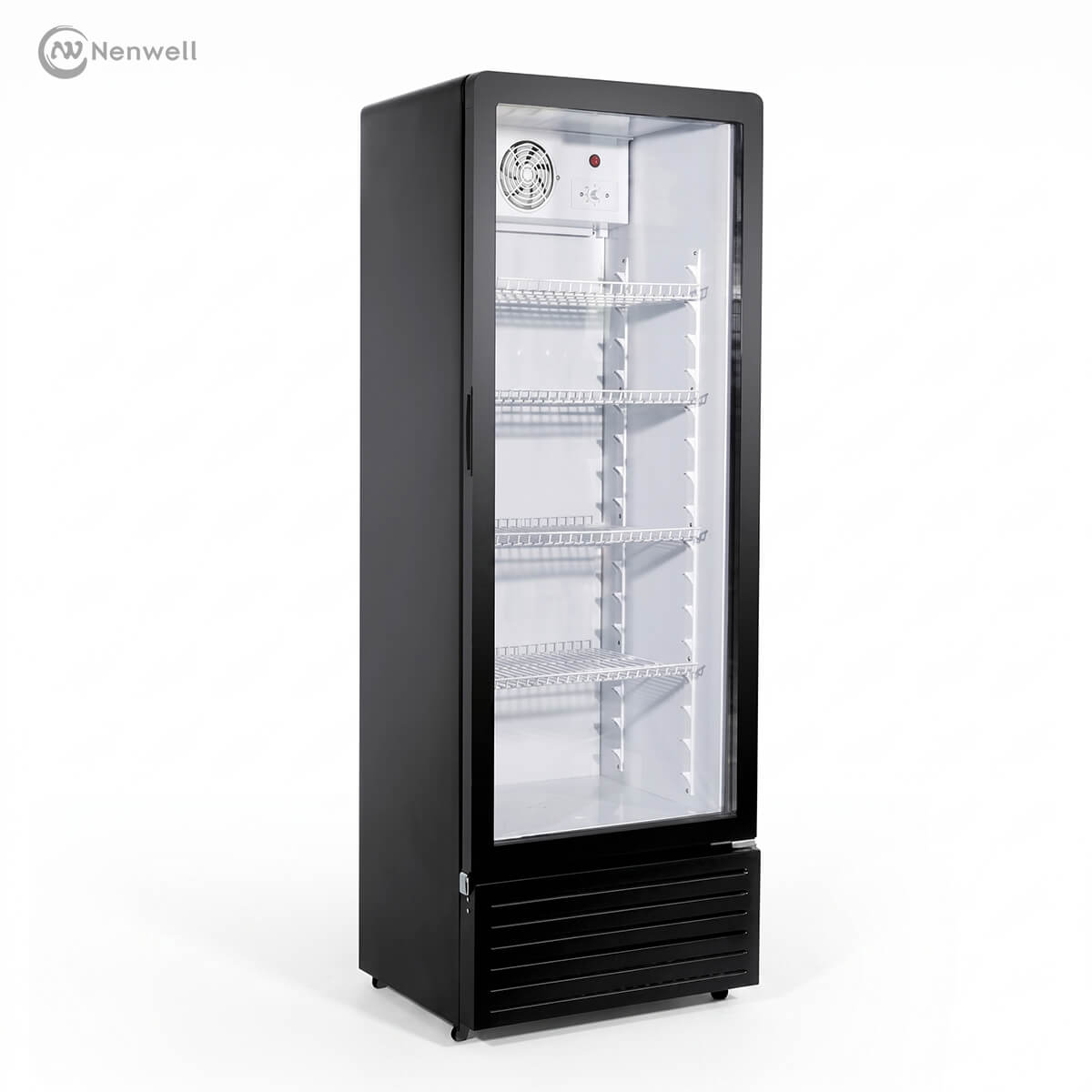
| Model | Gross Usable Volume | Temperature Range | Rated Power | Daily Energy Use | Dimensions (W × D × H mm) | Refrigerant | Shelf Count |
| NW‑LSC225W | 217L | 0‑10℃ | 225w | 1.1kW·h | 420×525×1960 | R600a | 5 |
| NW‑LSC307W | 301L | 0‑10℃ | 307w | 1.4kW·h | 575×525×1770 | R600a | 4 |
| NW‑LSC145W | 140L | 0‑10℃ | 145W | 1.6kW·h | 420*525*1430 | R600a | 4 |
| NW‑LSC420G | 420L | 0‑10℃ | 300w | 1.0kW·h | 600*600*1985 | R600a | 6 |
Selection Advantages
Space‑efficiency benefits: Upright cabinets maximize vertical storage. On the same floor footprint, they deliver 1.8‑2.4 times the usable volume of chest‑style freezers. Take a 300L unit as an example: an upright case occupies just 0.3 m², while an equal‑capacity chest freezer needs at least 0.76 m². For high‑rent street‑front small grocery stores, a single upright unit can save roughly $430 in annual floor‑rent costs.
From real‑world operational testing, customer average pick‑up time is only 8 seconds, versus 23 seconds for chest freezers, cutting checkout wait times during peak hours. With full product visibility, shoppers do not need to bend over to reach bottom‑shelf items, lifting turnover rates by 27 % compared to chest‑style merchandising.
You can also use a practical sizing formula: estimate based on average daily beverage sales. Roughly 50 L of volume is needed for every 100 × 500 mL water bottles. A standard 300L upright case supports daily turnover of 300‑400 beverage units for typical neighborhood grocery stores.
Ideal Applications
One LSC215W works for micro‑grocers under 30 m², covering basic beverage needs;
Two side‑by‑side LSC305W units fit standard 60 m² stores, separating ambient‑temp and cold beverages;
The EC narrow‑body series suits shops with long narrow wall space or fragmented floor layouts to utilize otherwise‑wasted corner areas.
1.2 Countertop Refrigerated Display Cases
Use‑Case Profile
Countertop coolers sit right on checkout counters for high‑impulse close‑range visibility. They showcase high‑margin items such as bottled coffee, energy drinks, yogurt and chilled snacks. By tapping into customer wait‑time psychology at checkout, these low‑cost units lift average transaction values for small grocery stores.
Key Models & Specifications
Nenwell countertop refrigerators are available in full‑view four‑sided glass and standard bar‑top configurations. All feature tempered‑glass doors plus internal LED lighting to maximize product presentation.
| Model | Gross Usable Volume | Temperature Range | Rated Power | Daily Energy Use | Dimensions (W × D × H mm) | Weight |
| NW‑SC86BT | 70L | -18 to -24℃ | 352W | 0.7kW·h | 600×520×845 | 47kg |
| NW‑SC21‑2 | 21L | 0‑10℃ | 76W | 0.6kW·h | 330×410×472 | 16.5kg |
| NW‑SC40B | 40L | -25 to -18℃ | 160W | 2.0kW·h | 420×460×810 | 39kg |
Business Value & Supporting Data
Industry statistics show checkout‑position refrigerated displays boost corresponding item sales by 30‑40 %. Profit margins on high‑margin drinks can offset hardware costs. Take the NW‑SC52 as an example: unit purchase cost stays under $140, with daily electricity expense around $0.06. Selling just 20 extra energy‑drink servings per month pays off the unit, delivering an outstanding return on investment.
Buying Tips
First, prioritize four‑sided‑glass LT‑series models for 360‑degree visibility, ideal for center‑counter placement visible to customers on both sides.
Second, keep overall height under 80 cm so the unit does not block cashier sightlines or barcode scanners.
Third, select models with adjustable shelves to fit products of varying package heights.
1.3 Mini Beer Coolers: Targeted Merchandising for Beverage Categories
Use‑Case Profile
Mini beer coolers are dedicated refrigeration units for alcoholic beverages, offered in narrow upright and countertop formats. Precision temperature control and purpose‑built merchandising make them perfect for neighborhood grocery stores and street‑front convenience shops with large alcohol sales share. Beer tastes best at 2‑6℃. Dedicated beer coolers prevent temperature swings that hurt flavor, which can happen when beer is mixed with regular beverage stock.
Key Models & Specifications
Nenwell EC‑series narrow beverage coolers serve as our core mini‑beer‑cooler selections. Their slim footprint lets them slot between alcohol shelving or sit beside bar counters.
| Model | Gross Usable Volume | Temperature Range | Cooling Method | Highlights |
| NW‑EC50 | 50L | 0‑10℃ | Fan‑forced no‑frost | Ultra‑slim for corner spots |
| NW‑EC70 | 70L | 0‑10℃ | Fan‑forced no‑frost | Dual‑use countertop / upright |
| NW‑EC170 | 170L | 0‑10℃ | Fan‑forced no‑frost | Single‑door narrow unit for standard beer merchandising |
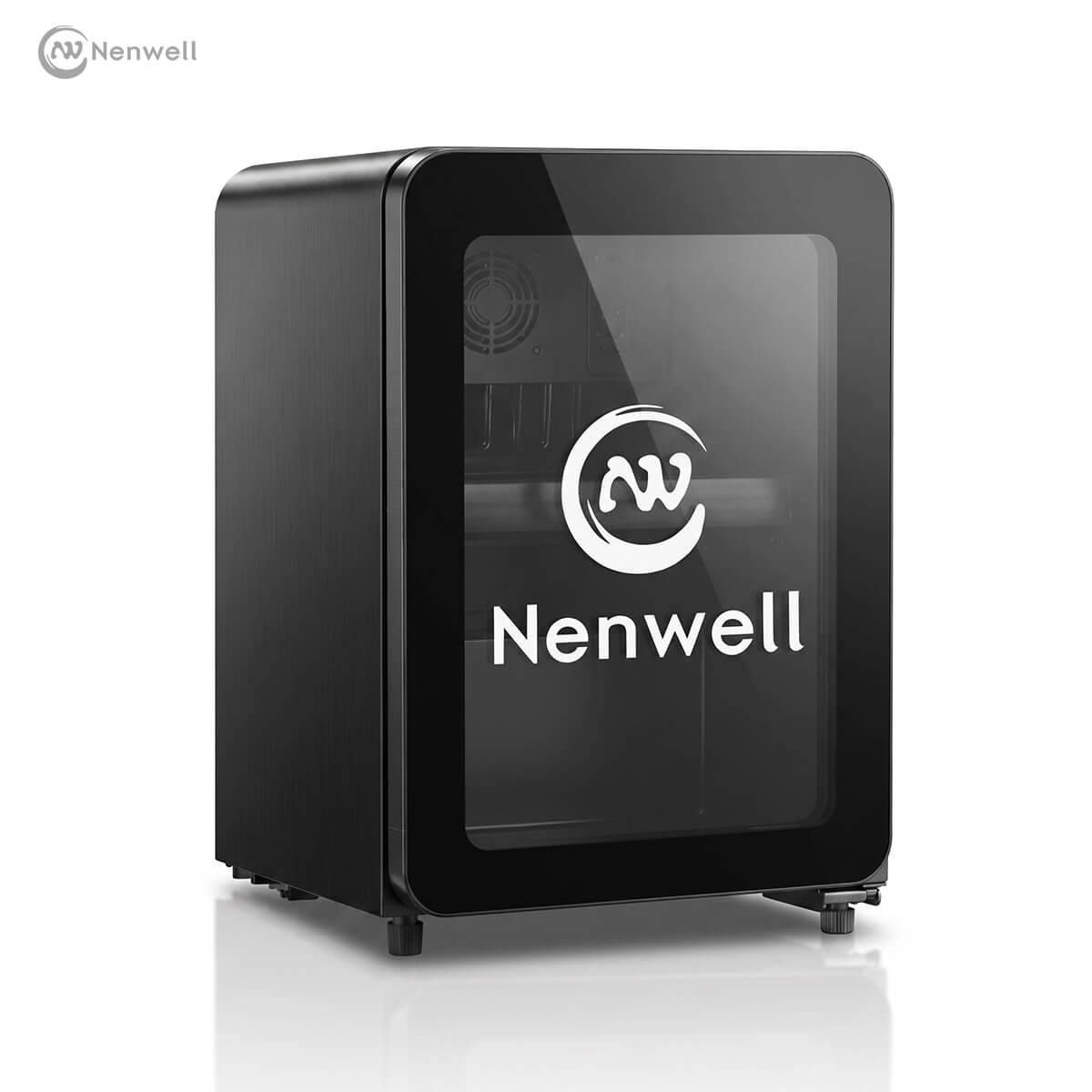
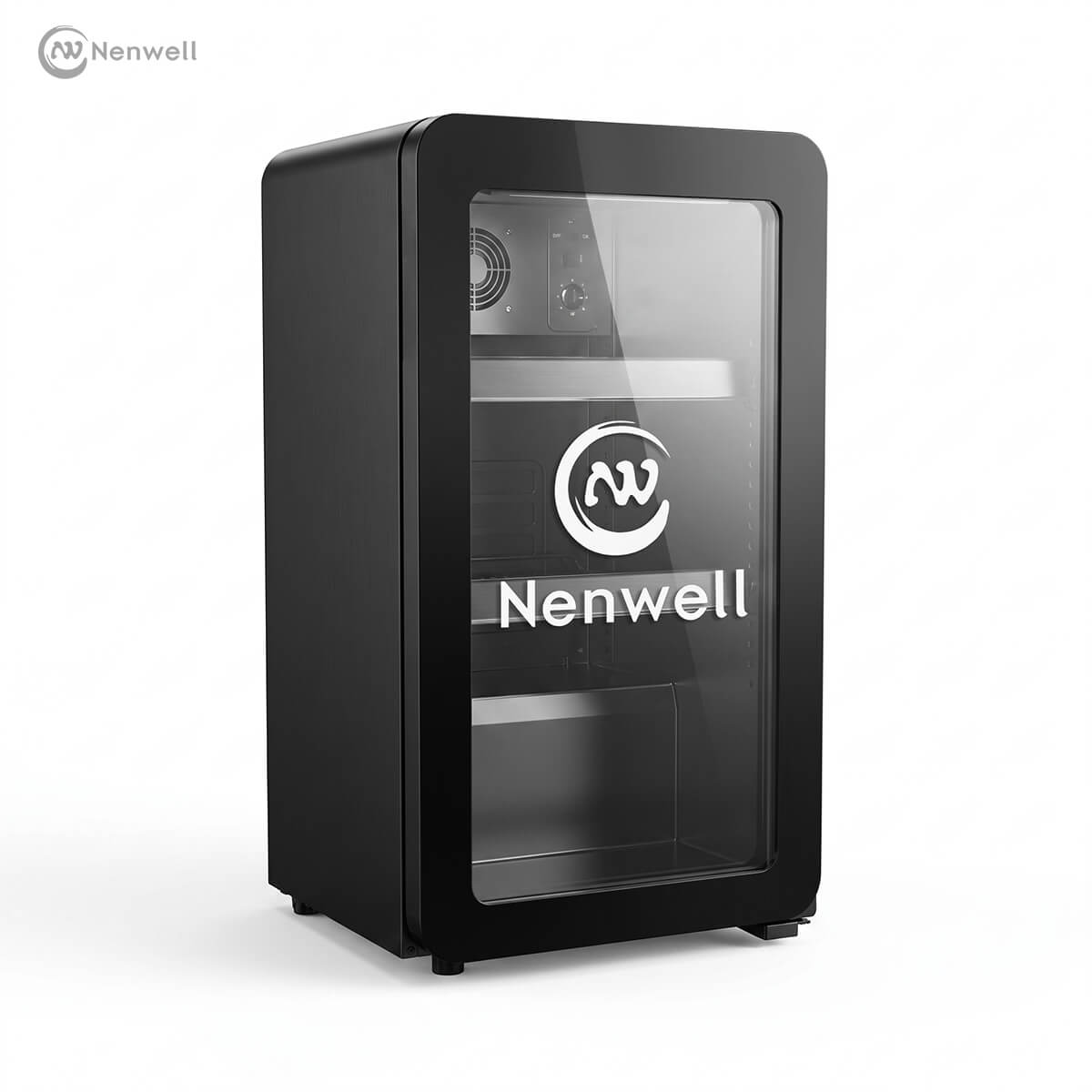
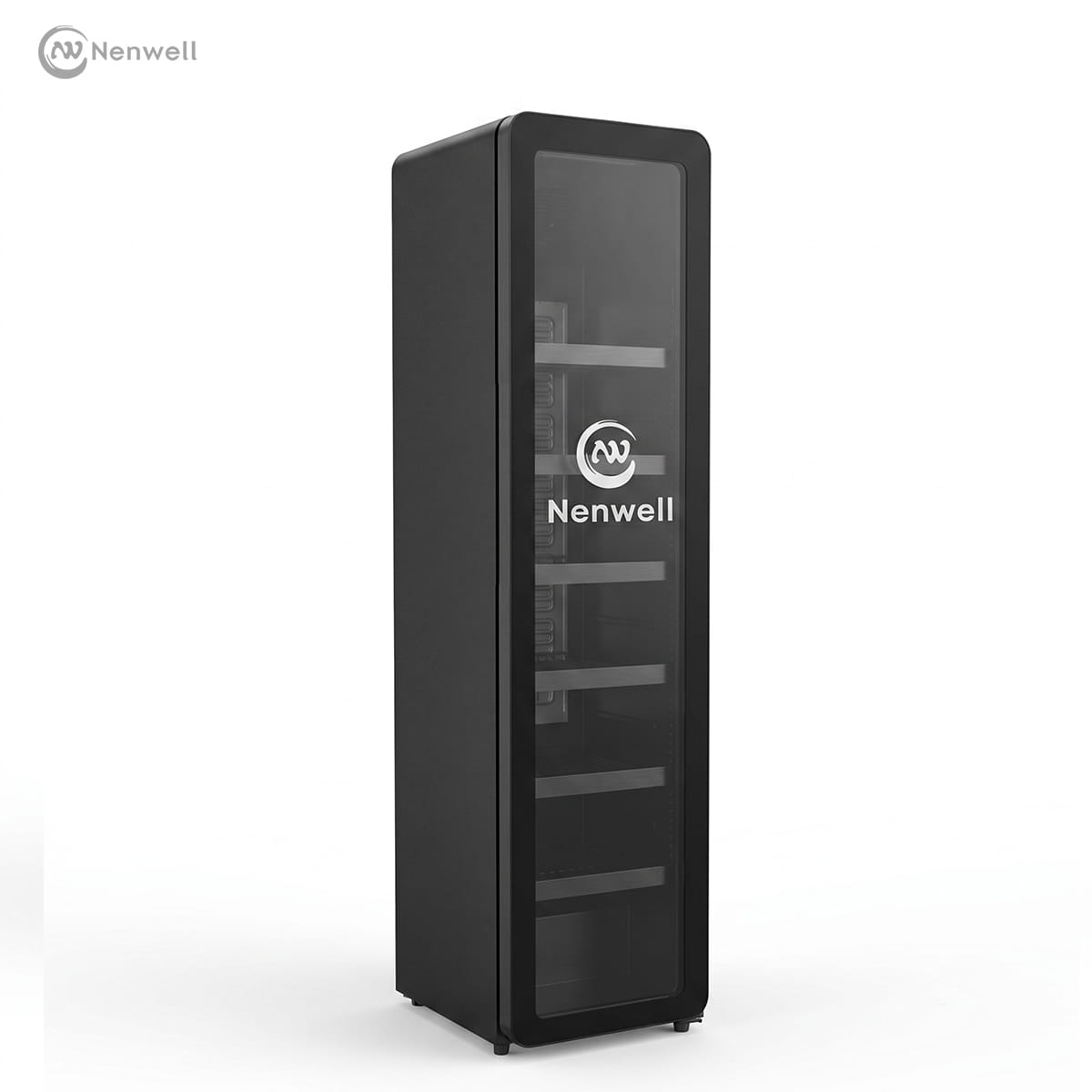
Market Demand & Store Fit
On‑demand retail continues lifting chilled‑beer sales through 2026. The share of neighborhood grocery stores merchandising cold beer climbed from 58 % in 2023 up to 72 % in 2025. For stores where alcohol accounts for over 30 % of revenue, specialized beer coolers lift alcohol‑related transaction values by 15 %+ while avoiding temperature fluctuations caused by frequent door openings on general‑purpose drink coolers.
Selection guidance:
Micro‑grocery operators should pick the EC70 countertop model next to alcohol displays;
Standard‑size stores should go with the EC170 narrow upright unit, integrated within shelf runs for consistent store aesthetics.
1.4 Ice‑Cream Display Freezers
Use‑Case Profile
Ice‑cream drives foot traffic in summer and delivers strong impulse‑buy profit margins. Ice‑cream display freezers must hold steady temperatures below ‑18℃ paired with large viewing glass surfaces to trigger purchase interest. Given floor‑space limits in small grocery stores, compact countertop ice‑cream freezers strike the best balance between merchandising and footprint.
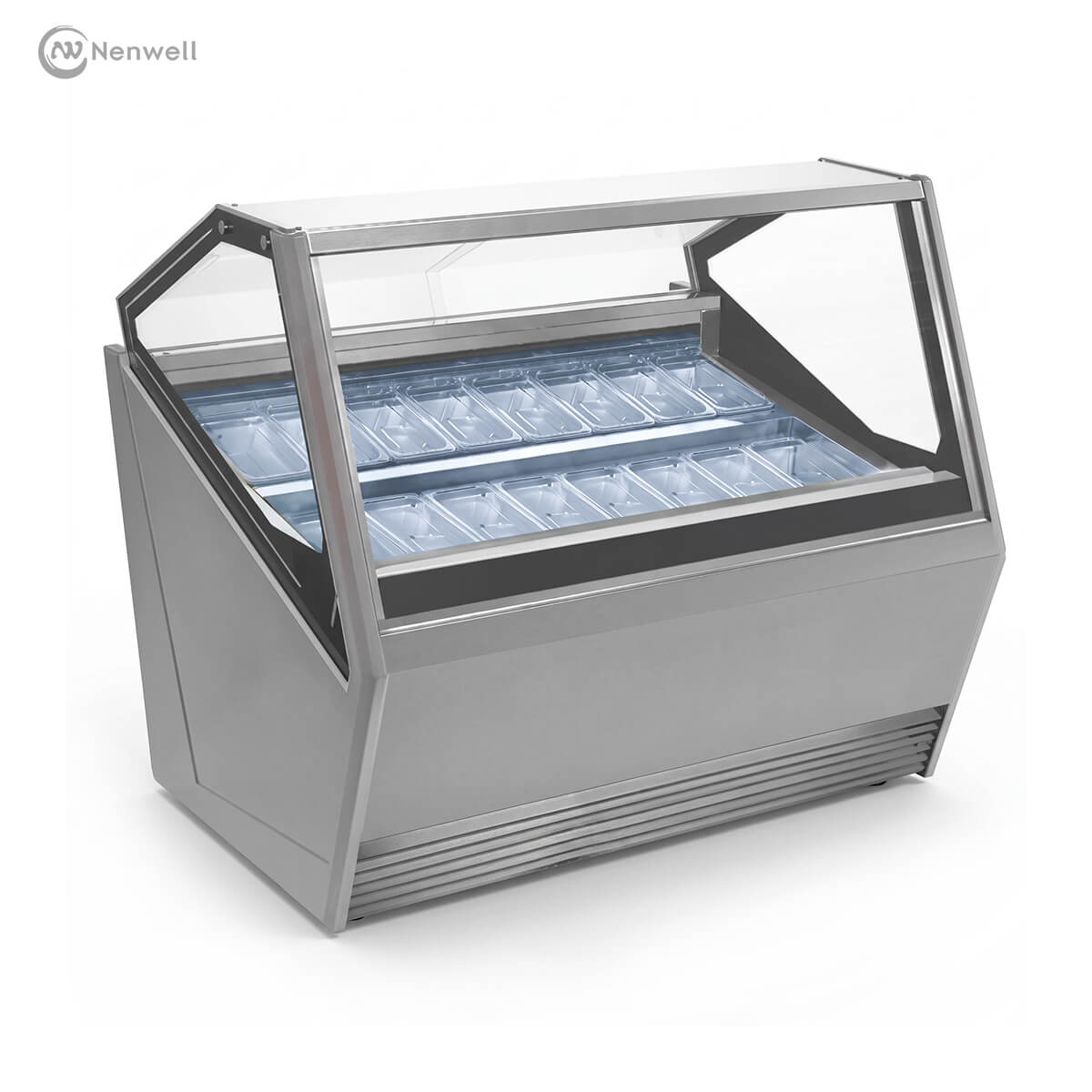
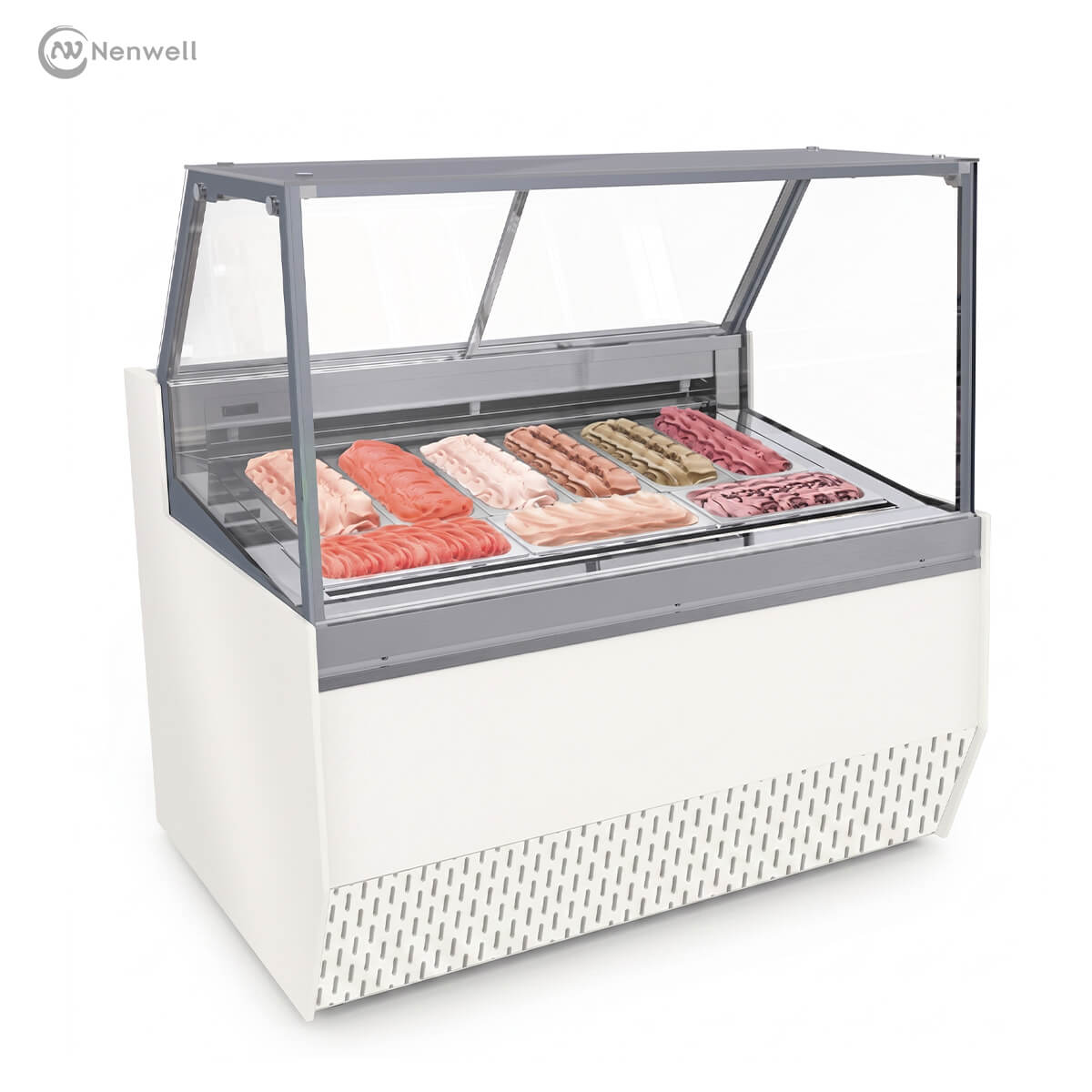
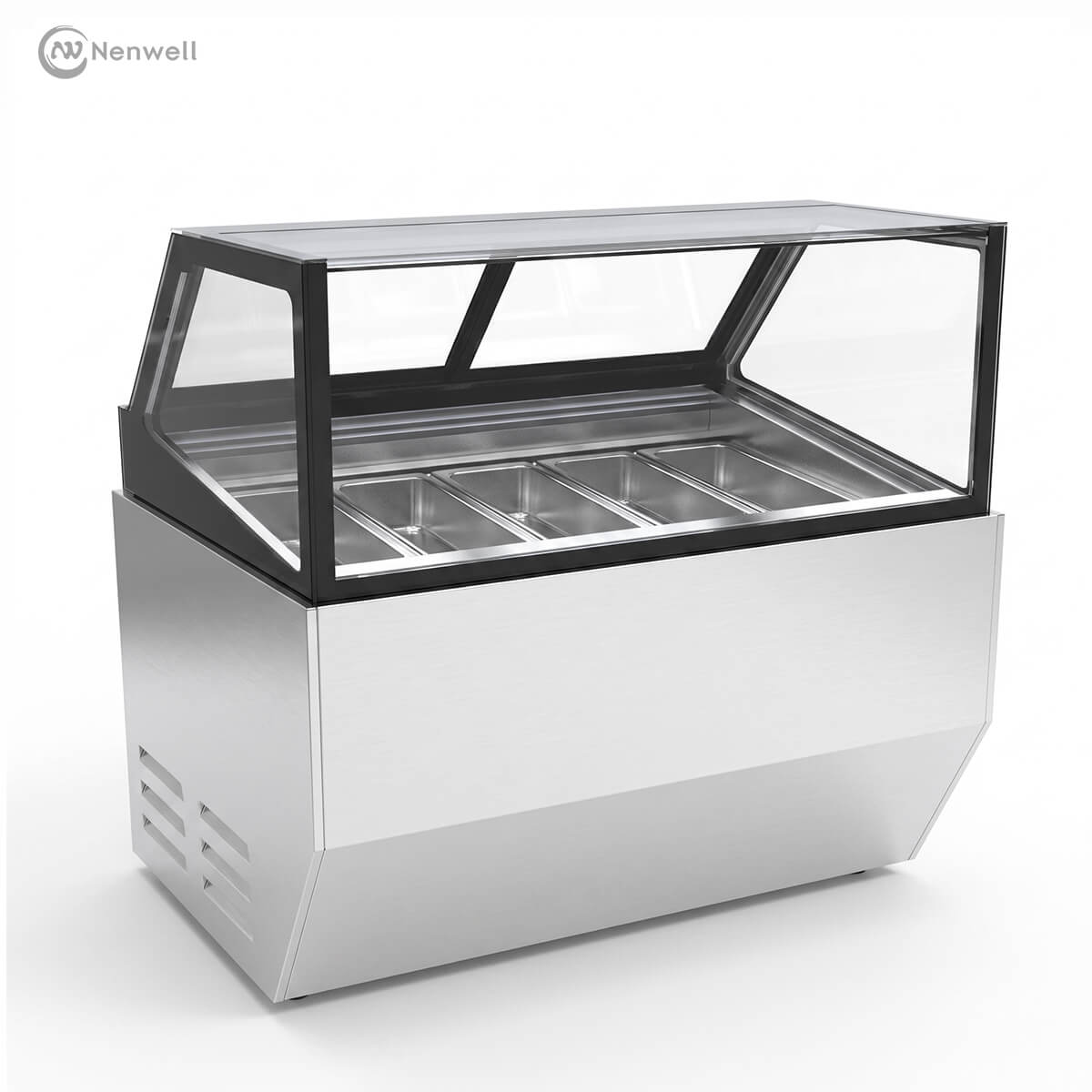
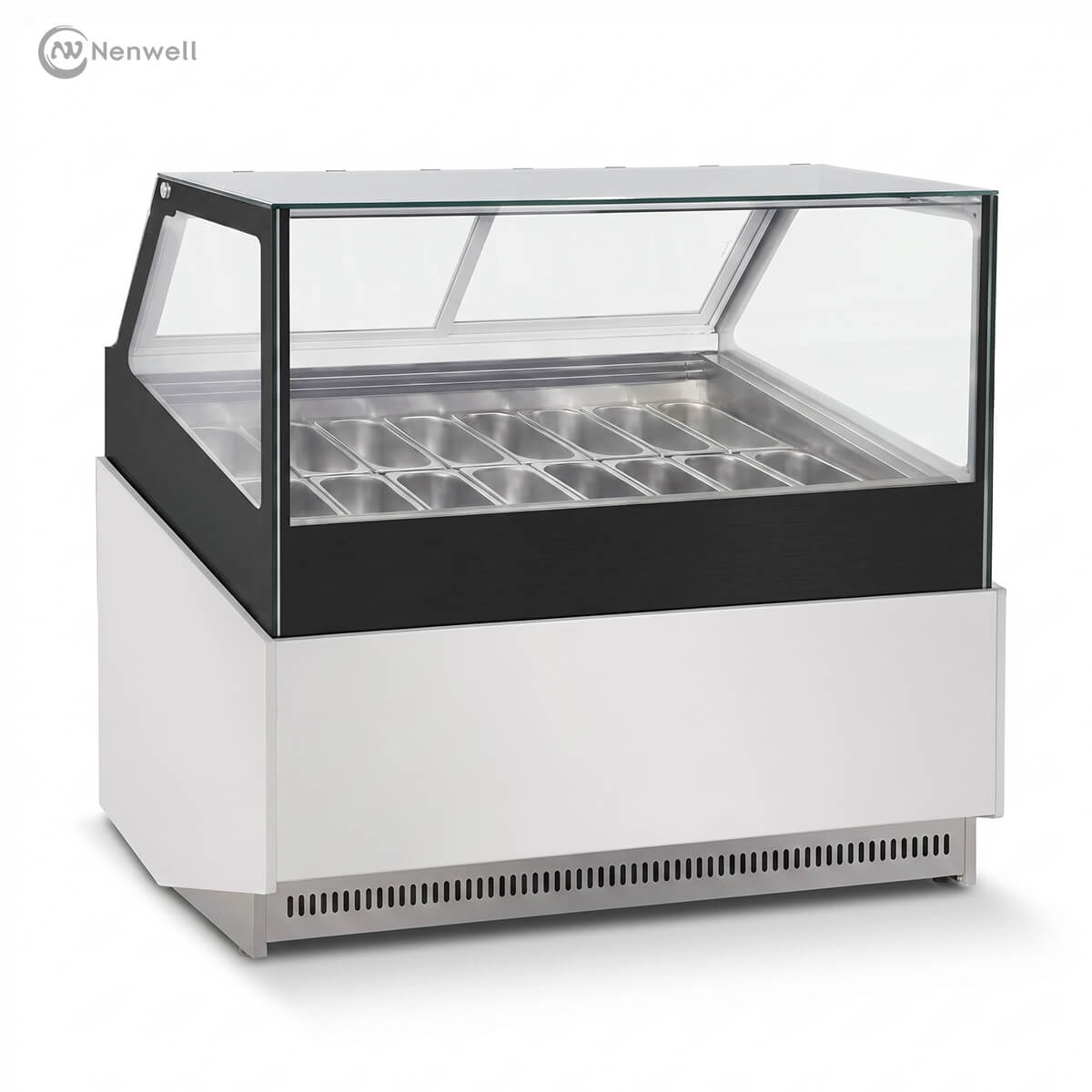
Key Models & Specifications
NW‑SC86BT is a countertop ice‑cream freezer purpose‑built for retail locations. Dual‑layer tempered‑glass doors resist condensation, well‑suited for placement near checkout lanes or main entryways in small grocery stores.
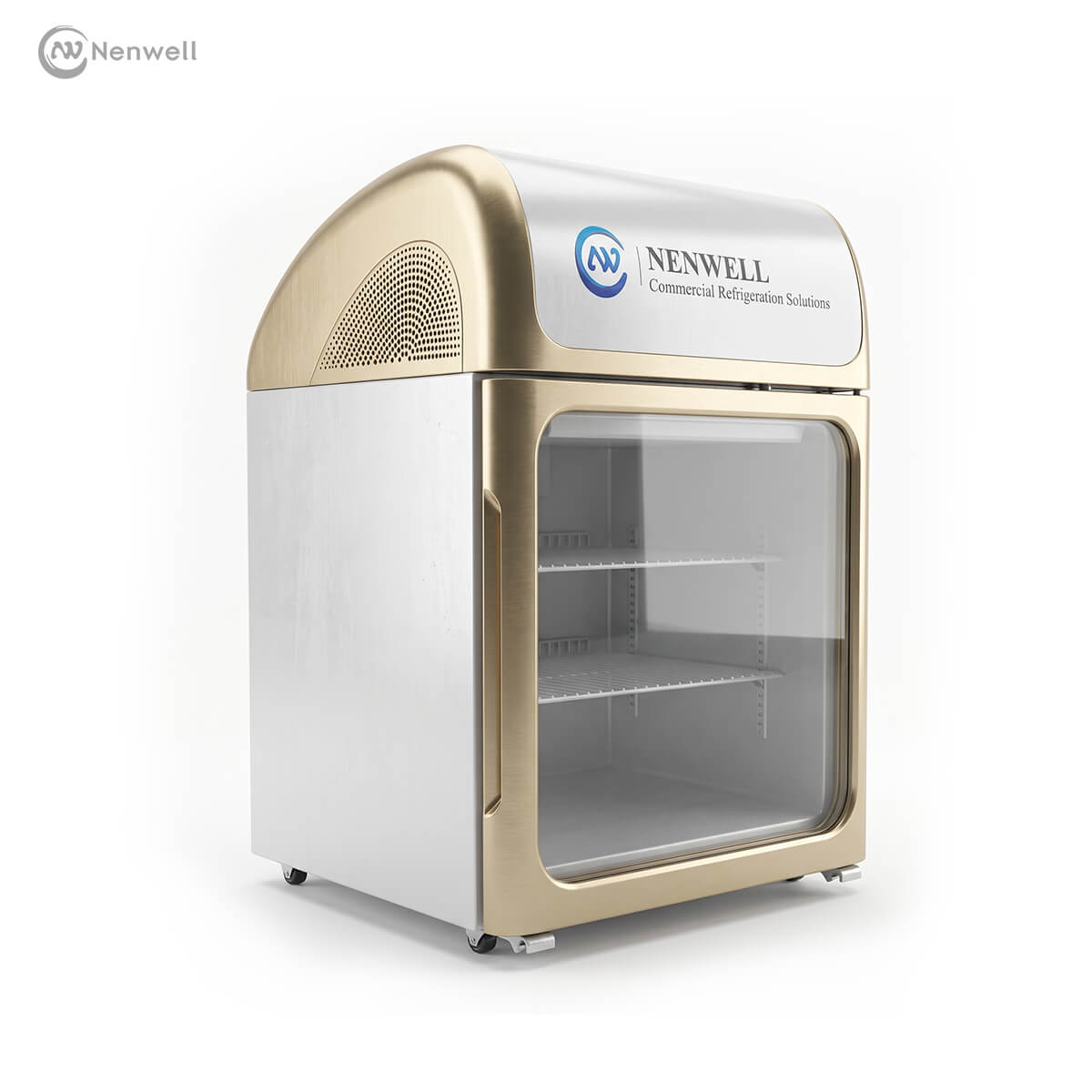
| Spec Item | Value |
| Gross Usable Volume | 70L |
| Temperature Range | -18℃ ~ -24℃ |
| Rated Power | 352W |
| Daily Energy Use | 0.7kW·h |
| Dimensions | 600×520×845mm |
| Refrigerant | R290 |
| Features | 2 removable storage baskets, LED lighting, digital temperature controller, adjustable casters |
Sizing Logic & Supporting Data
(1) Temperature Stability: Ice‑cream is highly sensitive to temperature swings; repeated freeze‑thaw cycles create grainy texture. The SC86BT features precise digital temperature control with fluctuation ≤±1℃, meeting GB 31605‑2024 food‑safety standards. It holds ice‑cream bars, cup‑style ice‑cream and quick‑frozen foods like dumplings.
(2) Store‑Layout Compatibility: This countertop unit occupies merely 0.31 m². It can sit right by checkout or at prime entry‑zone spots without claiming extra back‑of‑house floor area. Industry data shows entry‑position ice‑cream displays boost summer store foot traffic by more than 12 %.
(3) Capacity Planning: The 70L unit holds roughly 60‑80 ice‑cream bars plus 10 cup‑style servings, supporting 3‑5‑day inventory turnover for neighborhood grocery stores doing $28‑$71 daily ice‑cream sales.
1.5 Chest Freezers: Bulk Storage for Frozen Grocery Goods
Use‑Case Profile
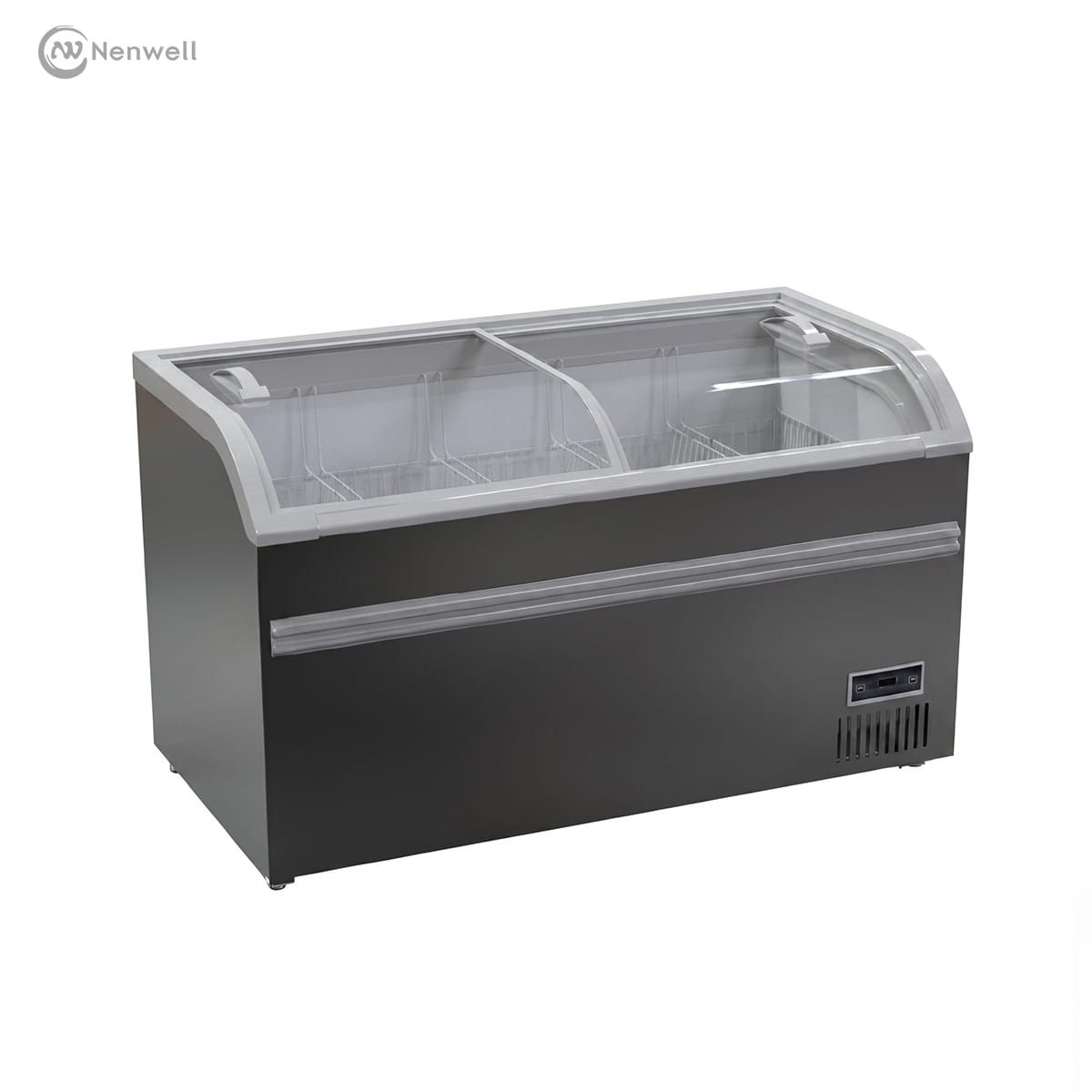
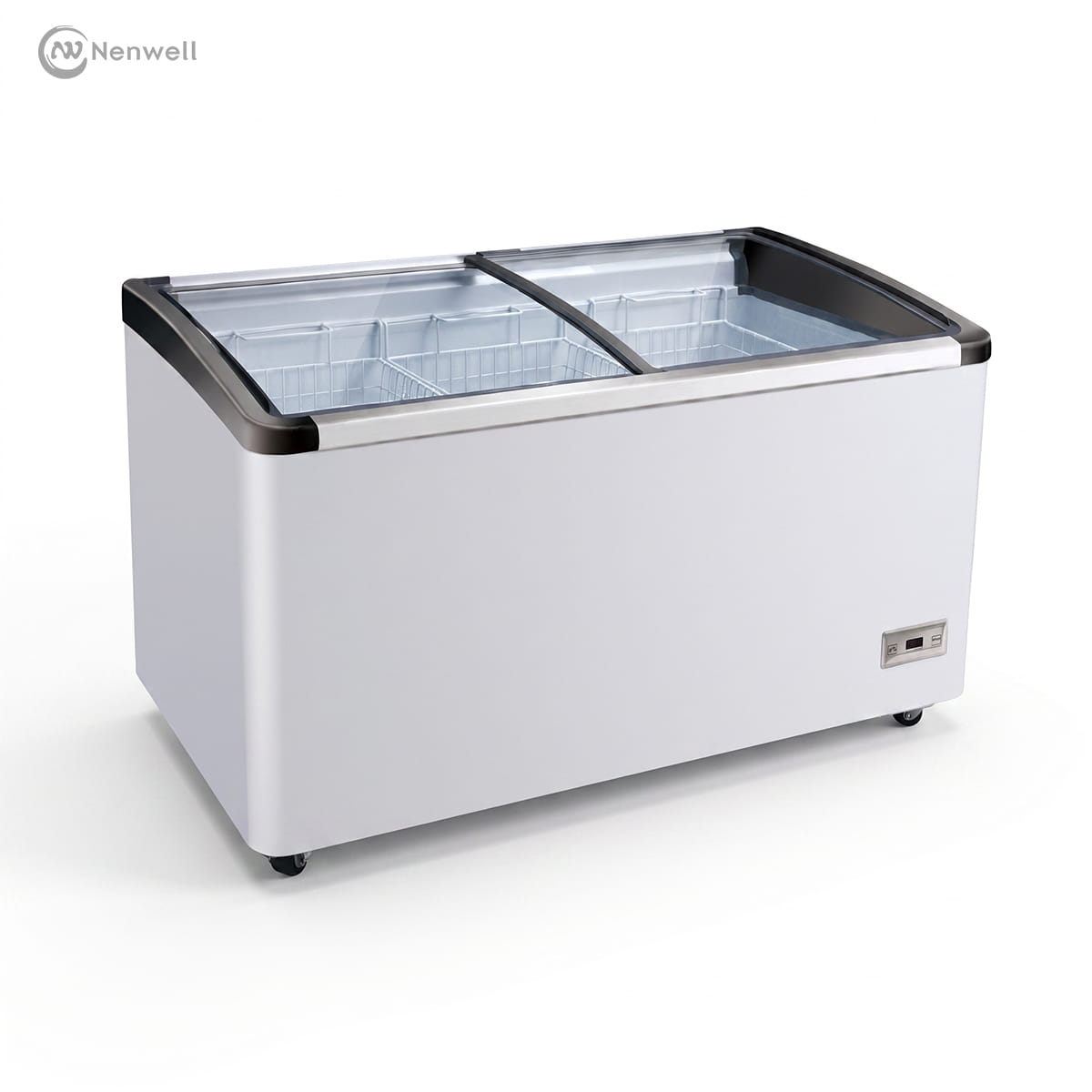
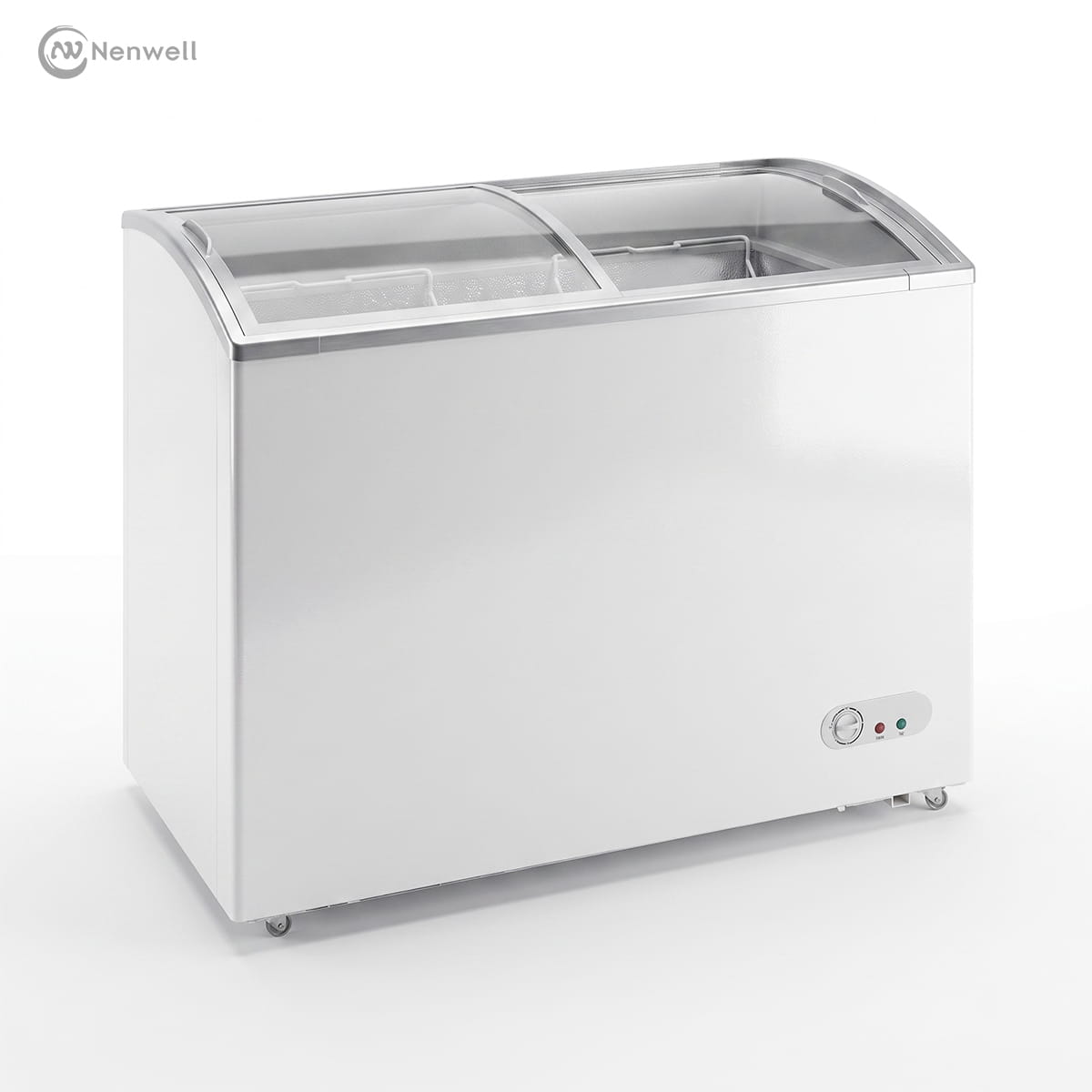
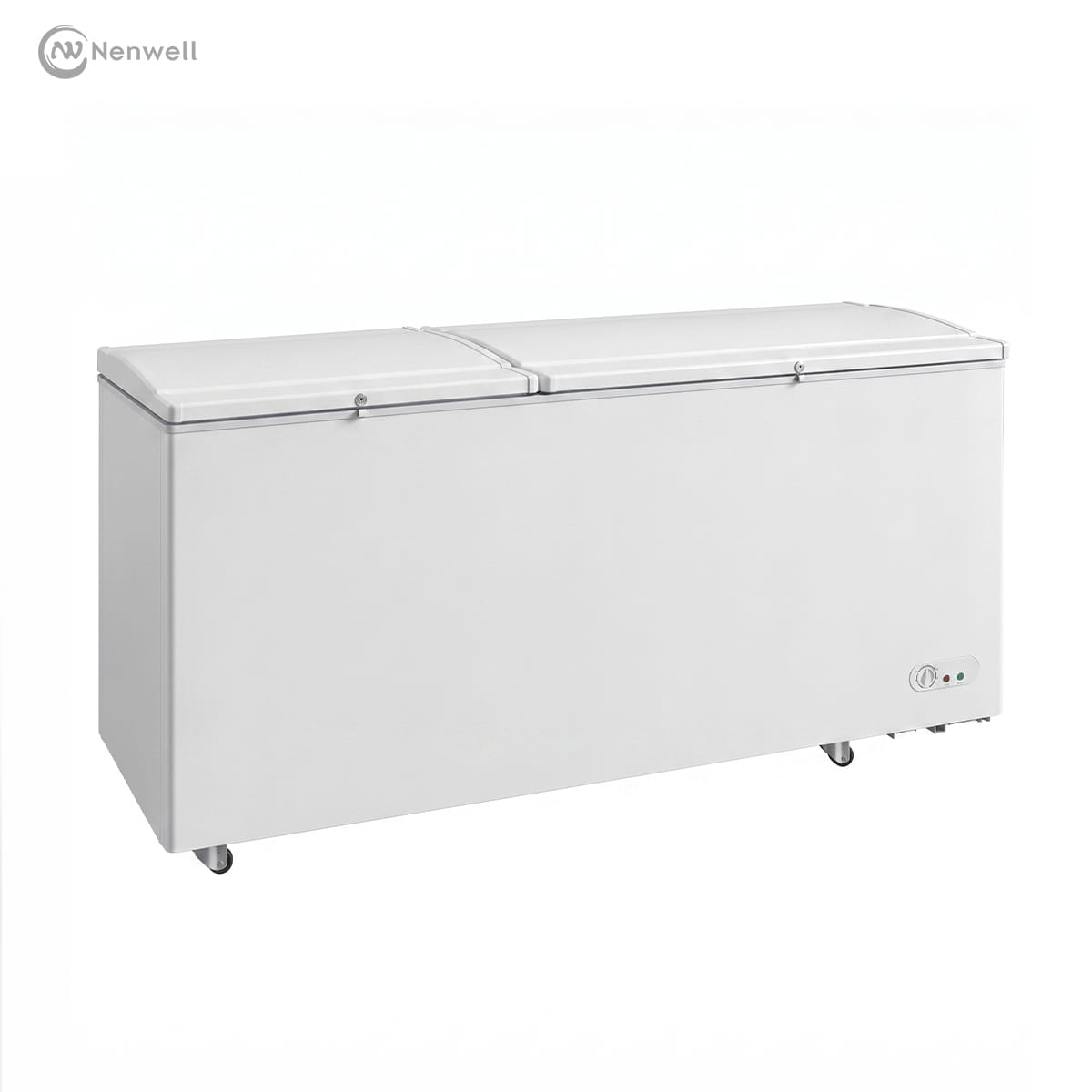
Chest freezers excel at bulk stock‑up storage and long‑term temperature retention. They hold slow‑turnover frozen goods including frozen dumplings, soup‑dumplings, hot‑pot ingredients and bagged frozen foods, and serve as overflow inventory for ice‑cream displays. Top‑lid design minimizes cold‑air loss and delivers better energy performance than upright freezers, fitting cost‑conscious small‑grocery operators.
Products & Core Specifications
Nenwell top‑opening chest freezers use commercial‑grade compressors plus heavy‑duty insulation. They maintain cold for 12+ hours after power loss, performing reliably in rural areas and locations with unstable voltage.
| Volume Class | Typical Temperature Range | Cooling Method | Key Strengths |
| 200L | -18℃ ~ -25℃ | Static cooling | Small footprint for micro‑grocers |
| 350L | -18℃ ~ -25℃ | Static cooling | Popular balanced size: storage vs footprint |
| 500L | -18℃ ~ -25℃ | Static cooling | High‑volume bulk storage for grocery‑focused stores |
Comparative Analysis & Supporting Data
A. Energy‑efficiency comparison: Lab testing shows for equal 500L capacity, a chest freezer consumes roughly 5.2 kWh daily versus 6.8 kWh for an upright freezer. Chest‑style units save around 584 kWh per year. At $0.14 per kWh commercial power rate, that equals $82 saved yearly, nearly $855 over a 10‑year service life.
B. Insulation performance: On top‑lid chest freezers cold air sinks downward. Cold‑air loss per lid‑lift is only 5.1‑7.5 %, far lower than 6.8‑9.3 % for upright freezers. Temperatures stay more stable with frequent opening, cutting frozen‑product waste by 40 %.
C. Space trade‑offs: Chest freezers do demand larger floor space, and bottom‑layer items have only 35 % visibility, requiring shoppers to bend down. For that reason, small grocery stores commonly deploy a hybrid setup: one chest freezer for back‑stock plus one display‑oriented freezer for customer‑facing merchandising, balancing operating costs and sales performance.
Selection Guidance
(1) Stores under 30 m²: choose 200L chest freezer for baseline frozen‑food storage;
(2) Standard 60 m² locations: select 350L chest freezer paired with countertop ice‑cream display;
(3) 100 m² grocery‑focused stores: opt for 500L high‑capacity unit or two side‑by‑side chest freezers for partitioned storage.
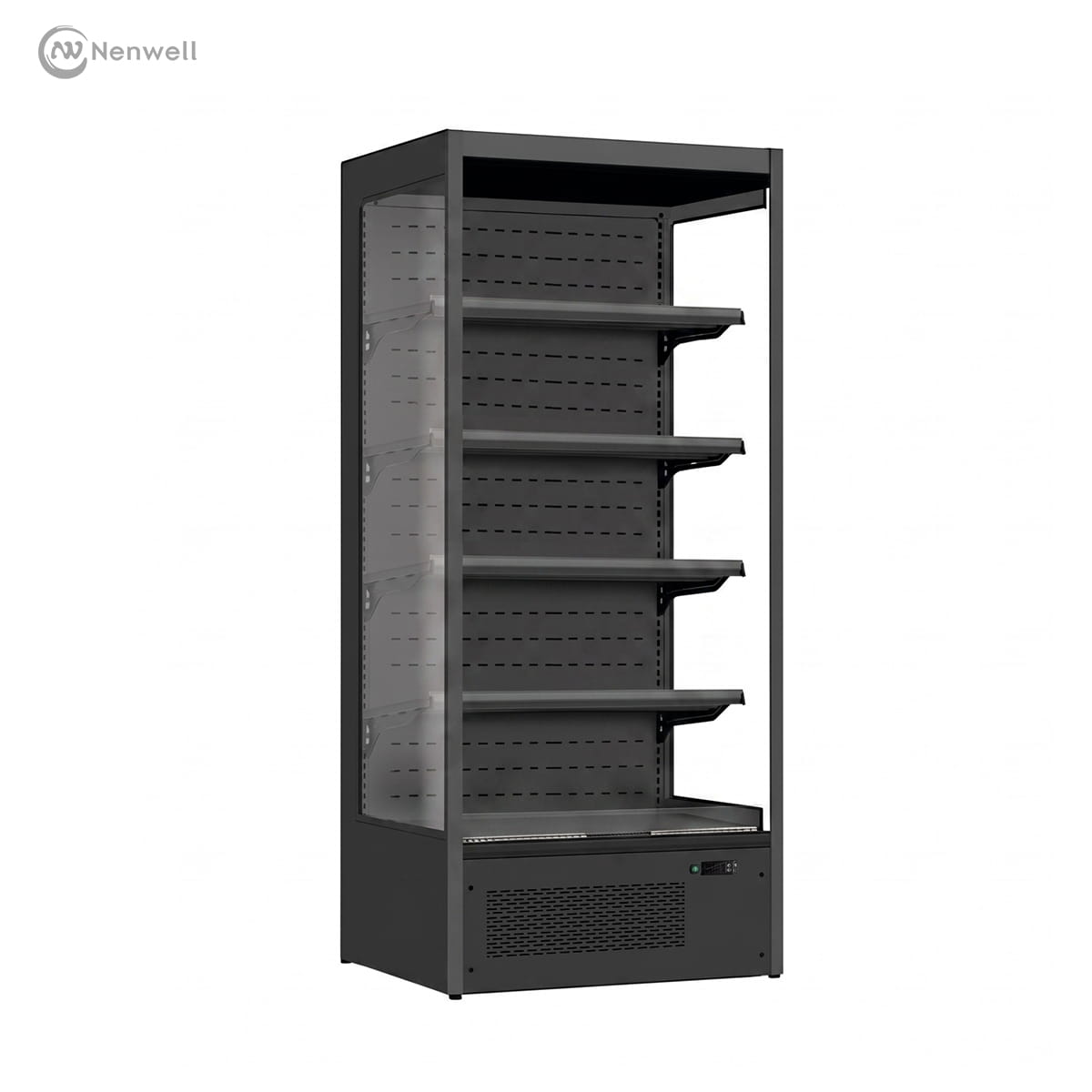
1.6 Open‑Air Multideck Cases: Open Merchandising for Produce & Short‑Shelf‑Life Goods
Use‑Case Profile
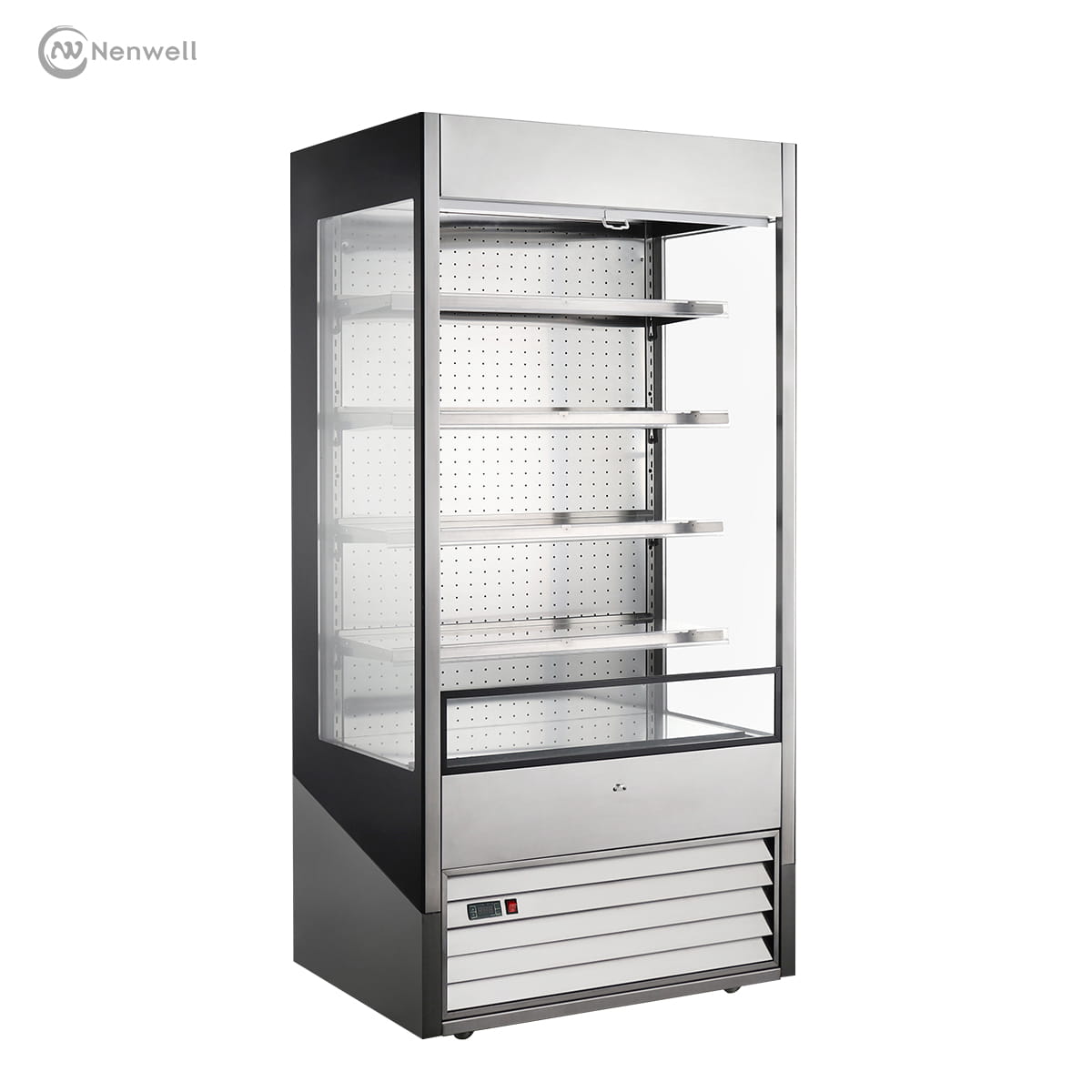
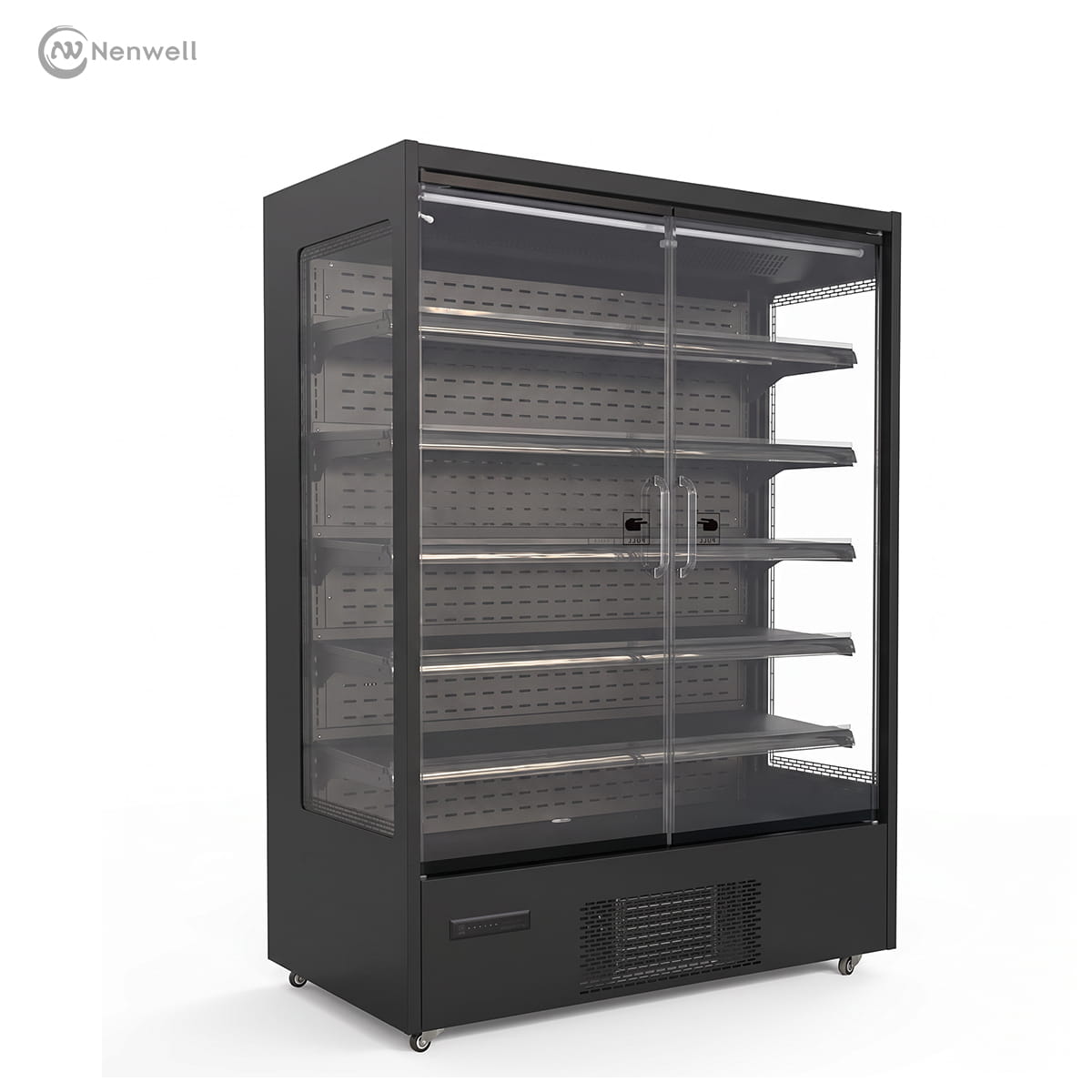
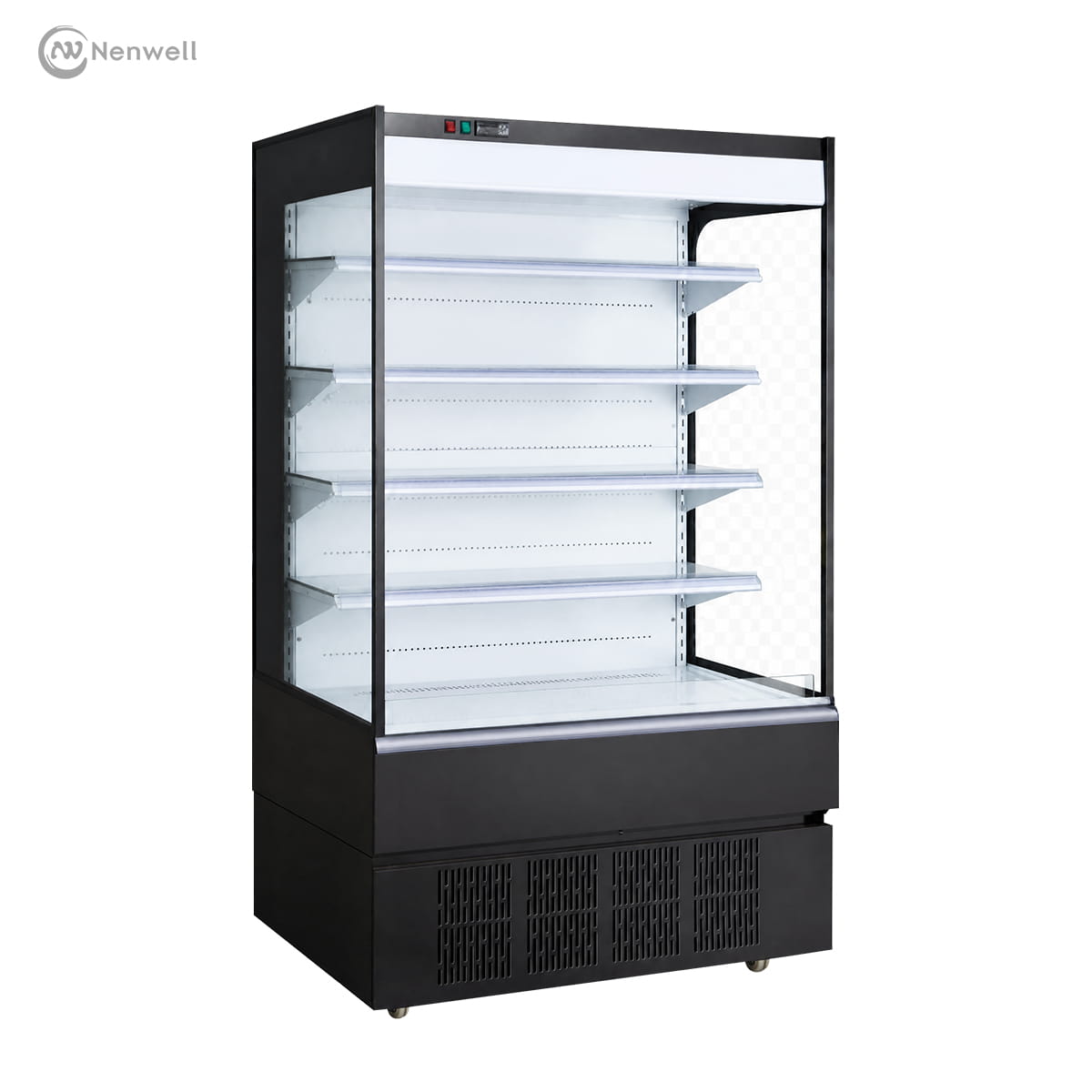
Multideck open‑air refrigerated cases allow hands‑on product access without opening doors, delivering outstanding convenience and visual merchandising. They hold fresh fruit, vegetables, raw meat, prepared deli foods and short‑life ready‑to‑eat meals. For small grocery stores selling fresh produce, multideck cases are key to lifting fresh‑goods presentation and inventory turnover speed.
Key Models & Specifications
Nenwell NW‑RTS680L commercial multideck case features forced‑air circulation with independent air outlets per shelf for even temperature distribution. It comes with a built‑in night curtain to cut energy draw overnight.
| Spec Item | Value |
| Gross Usable Volume | 680L |
| Temperature Range | 2‑10℃ |
| Rated Input Power | 1750W |
| Cooling Method | Ventilated Cooling |
| Defrost System | Auto‑defrost |
| Shelves | 5 stainless‑steel shelves |
| Lighting | Independent LED lighting per shelf |
| Refrigerant | R404a |
| Mobility | 4 casters, 2 lockable brakes |
Selection Notes & Supporting Data
Thanks to the open‑front design, multideck cases use substantially more power than glass‑door upright coolers. The 680L model draws 12‑15 kWh per day — 3‑4 times the energy consumption of an equal‑volume upright cooler. For that reason, we recommend them only for stores where fresh produce makes up over 20 % of sales and daily fresh‑goods revenue exceeds $425.
Door‑free access cuts average customer‑selection time by 40 %. Fresh‑item turnover rises above 25 %, while product shrinkage drops 15 %, well‑suited for fast‑turn short‑shelf‑life merchandise.
Installing a thermal night curtain during off‑business hours reduces overnight energy consumption by 30 %+. Activate night‑shift energy‑saving mode by raising set temperature by 2℃ for further electricity savings.
II. Standardized Equipment Packages for Small‑Grocery Stores of Different Sizes
2.1 Micro‑Grocery Stores Under 30 m²
Store Profile
Family‑run street‑front shops and neighborhood corner stores, 20‑30 m², roughly 300‑500 SKUs. Primary offerings: beverages, snacks and general merchandise; limited frozen‑food assortment. Daily foot traffic: 200‑300 visitors. Capital is constrained; priorities are low upfront investment and minimal floor‑space consumption.
Equipment Package
| Equipment Type | Model | Qty | Placement | Primary Purpose |
| Upright Refrigerated Case | NW‑LSC215W (230L) | 1 unit | Right‑hand wall by entrance | Bottled water, carbonated drinks, dairy |
| Countertop Refrigerated Case | NW‑SC52 (52L) | 1 unit | On checkout counter | Energy drinks, yogurt |
| Countertop Ice‑Cream Freezer | NW‑SC86BT (70L) | 1 unit | Floor beside checkout stand | Ice‑cream bars, small frozen servings |
| Chest Freezer | 200L top‑opening | 1 unit | Store corner | Bulk frozen‑food inventory |
Capacity & Operating Projections
Total refrigerated volume: 282L, supporting daily turnover of 300 beverage bottles plus 50 dairy portions;
Total frozen volume: 270L, holding 3‑5‑day stock of ice‑cream, dumplings, hot‑pot items and common frozen goods;
Total equipment footprint: ~1.8 m², taking up about 6 % of store area, fitting compact‑store constraints;
Total daily power draw: ~4.5 kWh; monthly electric bill approx. $19, keeping running costs manageable.
Investment Estimate
Full‑package hardware cost runs roughly $710‑$850, representing a light‑capital outlay. At 25 % gross margin on beverage and frozen categories, full equipment payback happens within 6‑8 months.
2.2 Standard Neighborhood Grocery Stores: 30‑60 m²
Store Profile
Established neighborhood convenience format, 30‑60 m², around 800‑1200 SKUs. Full‑range assortment: beverages, snacks, tobacco‑alcohol and frozen foods. Daily foot‑traffic: 500‑800 guests. Meaningful alcohol and frozen‑food demand; balancing sales performance and store presentation matters.
Equipment Package
| Equipment Type | Model | Qty | Placement | Primary Purpose |
| Upright Refrigerated Case | NW‑LSC305W (300L) | 2 units | Side‑by‑side on main entry‑wall | Separate merchandising for ambient‑temp drinks and cold dairy |
| Mini Beer Cooler | NW‑EC170 (170L) | 1 unit | Next to alcohol section | Canned & bottled beer refrigeration |
| Countertop Refrigerated Case | NW‑LT58L (58L) | 1 unit | Center of checkout counter | Coffee, premium beverages |
| Countertop Ice‑Cream Freezer | NW‑SC86BT (70L) | 1 unit | Prime entry‑zone floor spot | Ice‑cream & popsicle merchandising |
| Chest Freezer | 350L top‑opening | 1 unit | Frozen‑goods section | Frozen prepared meals, hot‑pot ingredients |
Layout & Customer‑Flow Design
Pair two upright beverage coolers along the main entry wall to create a visual cold‑merchandising wall that grabs customer attention immediately. Place the beer cooler adjacent to alcohol displays to encourage cross‑category purchases and lift average order value. Position the ice‑cream freezer near the entrance to capture impulse buys from incoming and outgoing shoppers. Tuck the chest freezer toward the store rear, guiding shoppers through the full sales floor and increasing exposure to additional items.
Capacity & Operating Projections
Total refrigerated volume: 828L, supporting daily turnover of 800‑1000 beverage units and meeting peak summer demand. Total frozen volume: 420L, covering full frozen‑goods assortment for weekends and holiday stock‑ups. Total equipment footprint: ~3.2 m² (~7 % of store area). Daily total energy draw: ~8.2 kWh, monthly power bill approx. $35, within reasonable operating‑cost bounds.
2.3 Fresh‑Produce‑Focused Grocery Stores: 60‑100 m²
Store Profile
Neighborhood fresh‑food grocery store, 60‑100 m², over 1500 SKUs. Assortment includes fruit, vegetables, raw meat and prepared deli foods. Fresh‑food revenue accounts for 25‑40 % of total sales. Daily foot‑traffic: 800‑1200 visitors. High requirements for cold‑chain equipment versatility and precise temperature control.
Equipment Package
| Equipment Type | Model | Qty | Placement | Primary Purpose |
| Upright Refrigerated Case | NW‑LSC355W (360L) | 2 units | Beverage section | Bottled drinks, dairy products |
| Multideck Open‑Air Case | NW‑RTS680L (680L) | 1 unit | Main fresh‑produce zone | Fruit‑vegetable, short‑life deli, ready meals |
| Mini Beer Cooler | NW‑EC170 | 1 unit | Alcohol‑tobacco section | Chilled‑beer merchandising |
| Countertop Refrigerated Case | NW‑SC21‑2 | 2 units | Bar counter | Canned‑drink display |
| Ice‑Cream Display Freezer | Small chest‑style island freezer | 1 unit | Entrance to frozen‑goods aisle | Ice‑cream merchandising |
| Chest Freezer | 500L top‑opening | 2 units | Rear frozen‑goods zone | Bulk frozen‑food and fresh‑produce stock‑up |
Package Rationale
Position the multideck open‑air case, the centerpiece for fresh‑goods merchandising, beside the main central aisle where every customer passes, lifting fresh‑produce conversion rates. For frozen‑goods zones follow a “display‑front / stock‑back” layout: island display freezers up front drive impulse sales, while rear chest freezers hold bulk inventory and cut restocking frequency. Add one extra countertop cooler in the deli section for cold storage of cold salads and marinated ready‑to‑eat foods, complying with food‑safety storage rules.
Capacity & Operating Projections
Combined refrigerated volume: ~1500L. Multideck units handle fresh produce while upright coolers manage beverages; clear separation prevents cross‑category temperature interference. Total frozen volume: ~1100L, satisfying both fresh‑produce and frozen‑goods bulk‑stock requirements. Total equipment footprint: ~7.5 m² (8‑10 % of store area), matching industry footprint benchmarks for fresh‑focused grocery retail. Total daily power draw: ~22 kWh; monthly electric bill approx. $94. Supported by healthy gross margins on fresh categories, full equipment payback is achieved within 8‑10 months.
III. Full‑Lifecycle Operating‑Cost Analysis
3.1 Real‑World Energy‑Use Comparison of Core Cabinet Types
Energy consumption represents the dominant long‑term cost for small‑grocery cold‑chain hardware, accounting for over 60 % of total full‑lifetime spending. Below are measured daily‑power‑draw figures for popular Nenwell models under 25℃ ambient‑temperature normal operating conditions:
| Model | Volume | Daily Energy Use (kWh) | Monthly Commercial‑Rate Power Cost (USD) | Energy‑Performance Rating |
| NW‑LSC215W | 230L | 1.1 | $4.70 | 12 % better than national Grade‑3 standard |
| NW‑LSC305W | 300L | 1.4 | $6.00 | 10 % better than national Grade‑3 standard |
| NW‑SC52 | 52L | 0.8 | $3.40 | Class‑leading for its volume bracket |
| NW‑SC86BT Ice‑Cream Freezer | 70L | 2.1 | $9.00 | Meets commercial freezer Tier‑1 standard |
| 350L Chest Freezer | 350L | 3.8 | $16.40 | 8 % above industry average |
| NW‑RTS680L Multideck Case | 680L | 13.5 | $58.30 | Matches industry average for this size class |
Note: Calculated with commercial electricity rate $0.14/kWh over 30‑day months
3.2 Total Cost of Ownership (TCO) Calculation
Commercial refrigeration cabinets typically deliver 8‑10 years service life. Total cost of ownership = purchase cost + 10‑year electricity expense + maintenance‑repair expense. Using the 60 m² standard‑store configuration as an example, full‑lifetime cost breakdown is as follows:
| Cost Component | USD Equivalent | Percentage Share |
| Full‑set hardware purchase cost | ~$1 710 | 32 % |
| 10‑year cumulative electricity cost | ~$3 140 | 59 % |
| 10‑year maintenance‑repair outlay | ~$430 | 8 % |
| Total 10‑year cost of ownership | ~$5 280 | 100 % |
The numbers make clear that power bills outpace upfront hardware costs. When shopping, do not focus only on sticker price; energy‑efficiency grade carries greater weight. For example, a 300L upright cooler that is 10 % more efficient might cost $29 extra at purchase, yet saves over $71 in electricity across 10 years for a solid net financial gain.
3.3 Low‑Cost Energy‑Saving Tactics & ROI
Aligned with 2026 industry trends, small‑grocery operators can cut cold‑chain energy consumption through three low‑investment measures:
(1) Install night thermal curtains: Cover multideck open‑air cases and upright coolers with thermal curtains during off‑hours. Overnight energy consumption drops by 30 %. A multideck case alone can save roughly 1400 kWh annually. Hardware costs are minimal, and payback comes inside one month.
(2) Quarterly condenser cleaning: Clear dust buildup on condenser coils every three months. Cooling efficiency rises 15 % and energy draw drops roughly 8 %. This is a zero‑cost maintenance practice.
(3) Optimize temperature set‑points: Set beverage coolers to 6℃ in summer and 8℃ in winter; avoid over‑cooling. Every +1℃ upward adjustment delivers ~5 % energy savings without hurting drink‑consumption experience.
3.4 2026 Regulatory Compliance & Technical Upgrades
Food‑safety compliance: GB 31605‑2024 mandates full traceability for refrigerated‑food temperature history. Select units with built‑in temperature logging or add external data loggers to reduce regulatory‑violation risks.
Refrigerant‑transition trend: Natural‑refrigerant R290 has become mainstream. Its ODP (Ozone Depletion Potential) equals zero, and GWP (Global Warming Potential) is only 3. It supports carbon‑reduction policies and delivers superior cooling performance, making it a compliance‑driven long‑term choice.
Smart optional upgrade: If budget permits, add IoT temperature‑control modules for remote mobile temperature monitoring plus automated fault alerts. While adding roughly 20 % to unit price, this feature cuts frozen‑goods shrinkage, suiting unattended locations and multi‑store operators.
IV. Installation, Service & Long‑Term Support Program
4.1 Critical On‑Site Installation Requirements
Leave ≥10 cm clearance behind upright coolers and ≥5 cm on both sides. For multideck open‑air cases, reserve ≥20 cm rear clearance to guarantee proper condenser heat dissipation. Poor ventilation can reduce cooling efficiency by over 30 % and shorten compressor service life.
Every unit must have proper ground‑fault protection and dedicated 10‑Amp+ outlets. Never daisy‑chain multiple refrigerators onto one power strip to prevent overload tripping. High‑draw multideck cases require dedicated 2.5 mm² copper wiring runs.
Units must sit level, adjusted via leveling feet. Maximum allowable tilt ≤2°. Excessive tilt impairs compressor lubrication and compromises door‑seal tightness.
Keep units out of direct sunlight. Sun exposure increases glass‑door condensation and raises energy consumption by 15 %+. Position units away from stoves, heating equipment and other heat sources.
4.2 Standard Routine‑Maintenance Guidelines
Daily Quick Check (5 minutes)
Verify temperature readings stay within target ranges. Inspect door‑gasket integrity for tears or gaps. Clear water pooling and debris around cabinet openings to keep drain pathways unobstructed.
Monthly Maintenance
Wipe cabinet interior and exterior; clean glass doors and LED light fixtures. Rearrange shelf stock so merchandise never blocks air‑supply vents. Inspect drain holes and clear clogs to stop condensate overflow.
Quarterly Deep Maintenance
Brush or blow dust off condenser fins, working parallel to fin orientation. Test door‑gasket sealing: slip a paper slip between gasket and frame. If the paper pulls out with no resistance, replace the gasket. Check casters and leveling feet for cabinet stability.
4.3 Common Issues & Emergency Troubleshooting
First rule out excessive door openings, insufficient ventilation or dirty condenser coils. If cooling still fails after those checks, contact authorized service technicians — do not disassemble hardware yourself. Condensation during high‑humidity summer conditions is normal; use built‑in anti‑fog heating (if equipped). Persistent heavy condensation points to leaking door gaskets. Confirm unit sits level and stored goods are not hitting internal fan assemblies. If you hear abnormal compressor noise, shut down power immediately and reach out to support to avoid cascading component failure.
V. Selection Summary & Purchasing Advice
5.1 Core Selection Principles Recap
Pick cabinet volume sized for 3‑5‑day sales turnover. Err slightly smaller rather than over‑sized. Excess capacity wastes both upfront purchase dollars and ongoing electricity costs.
Upright coolers for beverages; countertop units for impulse‑buy items; chest freezers for bulk frozen‑goods stock‑up; multideck open‑air cases for fresh produce. Do not force one cabinet model to cover every store requirement.
Electricity accounts for over 60 % of full‑lifetime costs. Prioritize high‑efficiency models running eco‑friendly refrigerants for best long‑run savings.
When planning store layout, reserve ~10 % extra flexible floor space. This allows adding temporary coolers during peak selling seasons or accommodating future category‑mix adjustments.
5.2 Nenwell Brand‑Specific Advantages
As a specialist commercial‑refrigeration brand, Nenwell brings three distinct strengths for small‑grocery retail:
Comprehensive product portfolio spans 52L countertop units all the way to 680L multideck open‑air cases, covering both refrigeration and freezing. Buy your complete cold‑chain suite from one brand for streamlined after‑sales support.
All models use commercial‑grade compressors and heavy‑duty insulation, engineered for long run‑hours and frequent door openings typical in small‑grocery settings. Mean‑time‑between‑failure metrics exceed consumer‑grade appliances by over 40 %.
Majority of production lines have transitioned to eco‑friendly R600a and R290 refrigerants. Temperature‑control accuracy meets the latest national food‑safety standards, aligning with 2026 regulatory requirements.
Twenty years of industry experience backs mature supply‑chain infrastructure and technical know‑how, delivering reliable customer‑service protection for your business.
5.3 2026 Buying‑Window Recommendation
March‑April represents the off‑peak buying season for refrigeration hardware. Prices run 8‑12 % lower than peak‑demand months (May‑July), plus installation lead‑times are more flexible. Complete purchase and installation in spring to get fully prepared for summer sales peaks.
Purchasing your full equipment suite from a single brand commonly unlocks 5‑10 % volume discounts. You may also negotiate extended‑warranty terms to lower future maintenance risk.
This solution brief is compiled based on 2026 Nenwell full‑series product specifications for reference purposes only. All hardware configurations have been validated in real‑world retail locations and can be adjusted flexibly based on your store’s exact square footage, category assortment and available budget.
Post time: Aug-26-2026 Views: