
There are significant differences between chain convenience stores and supermarkets in Europe and America. The procurement of commercial refrigerated cabinets should be tailored to operating environments. Key factors include energy consumption, electricity costs, cooling performance and capacity. Store size and foot traffic density also matter. Purchasers should not only compare quoted prices but conduct comprehensive evaluations combining convenience store requirements and compliance certifications.
I. Mandatory Requirements for Commercial Refrigerated Cabinets Based on Convenience Store Environments
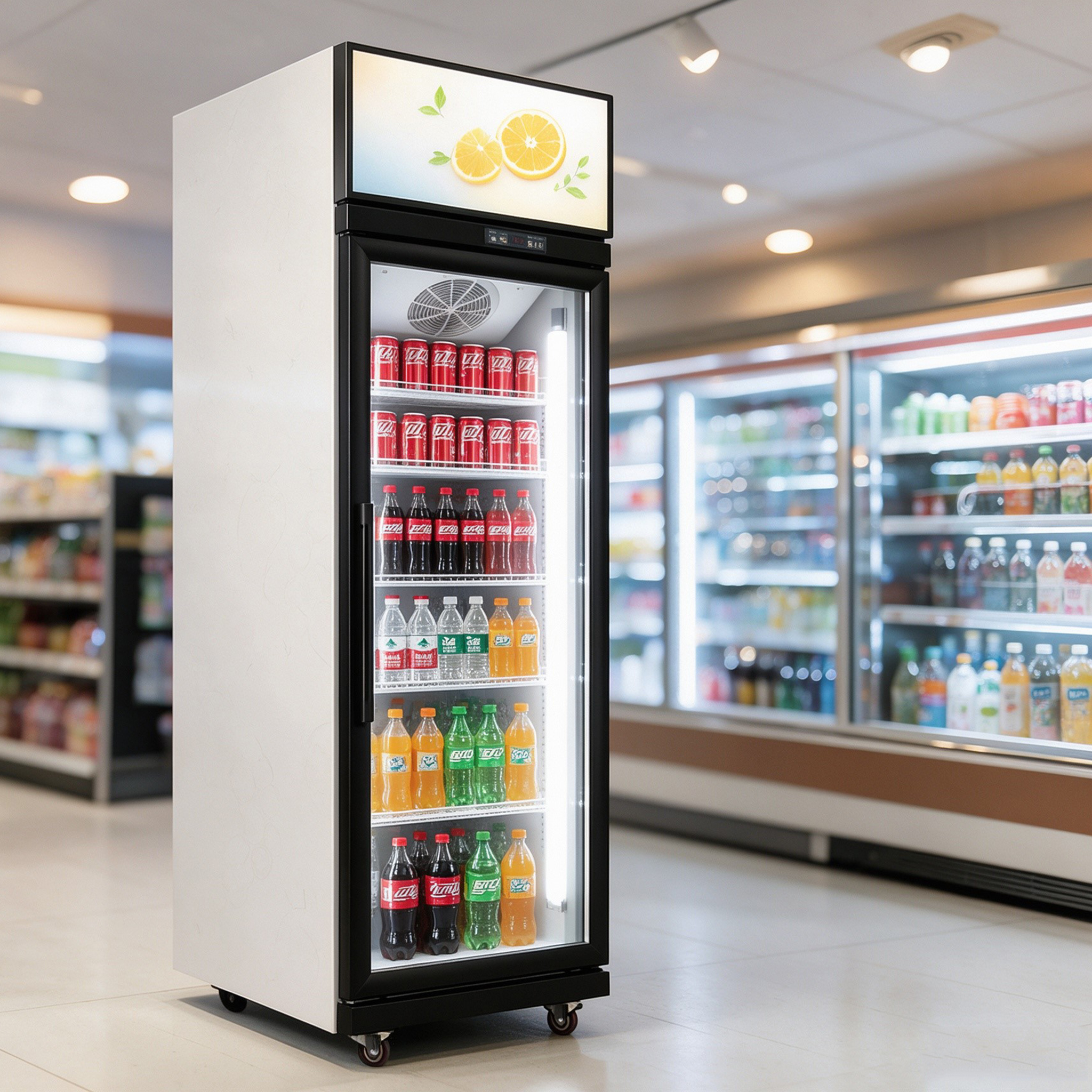
Numerous neighbourhood convenience stores feature compact layouts and narrow aisles with round-the-clock operation. Given limited floor space, maximising visible display windows is essential. In terms of certification, the EU Ecodesign Directive and US ENERGY STAR energy efficiency standards impose mandatory requirements on commercial refrigerated cabinets; equipment failing to meet standards cannot be put into service. Humidity varies by region. In coastal areas, fogging easily forms on chiller glass, undermining the display of beverages and dairy products.
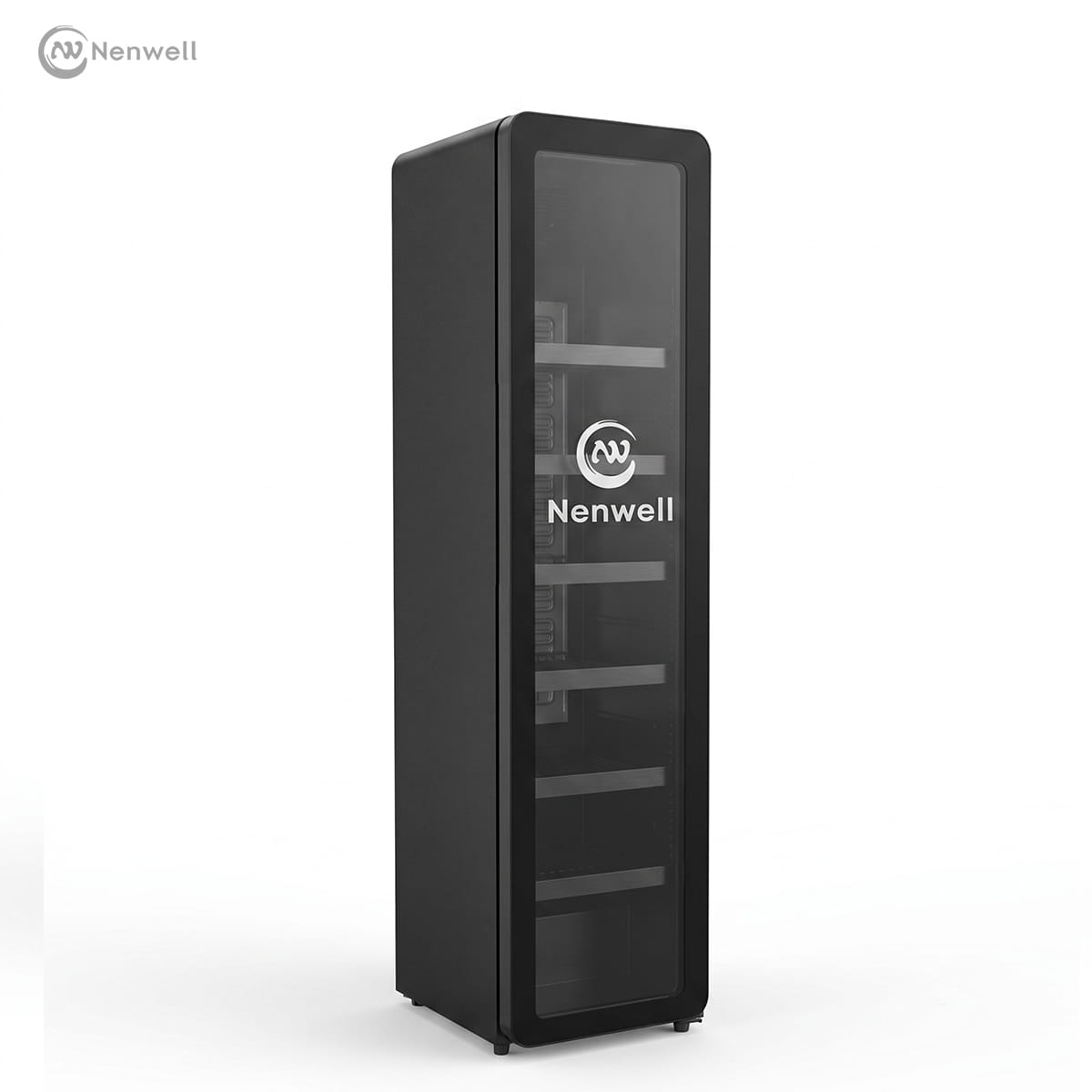
Traditional vertical chillers with thick frames occupy substantial display space, greatly reducing product visibility and leading to poor customer experience. In contrast, narrow-frame single-door tempered glass refrigerated cabinets adopt slim aluminium alloy frames paired with double-layer anti-fog tempered glass, delivering a remarkably larger viewing area at the same cabinet width. The tempered glass is shatter-resistant, suitable for frequent door opening, closing and collisions caused by staff and customers in convenience stores. Features such as magnetic automatic door closing, safety locks and movable casters facilitate daily store cleaning and display layout adjustment. Temperature is stably maintained between 2–10°C for storing bottled drinks, fresh milk and pre-packaged cold food. The EC210 series chillers satisfy these requirements.
II. Four Core Selection Criteria
1. Core Power Consumption Indicator
Convenience store purchasers often fall into the trap of focusing solely on upfront purchase prices. For equipment running continuously year-round, energy cost represents a major long-term expense, making energy saving critical. These display cabinets use eco-friendly R290/R600a refrigerants, fitted with high-efficiency Embraco compressors and high-density fluorine-free polyurethane foam insulation to minimise cold loss.
The narrow-frame single-door tempered glass refrigerated cabinet NW-LG series has a power range of 160–250W. A fan pause design activates when doors open to reduce cold air leakage. Actual tests show it cuts annual power consumption by 15%–22% compared with competing models of the same specification, saving hundreds of US dollars in electricity bills per store each year. The two-door NW-LD series has a total power of approximately 750W with larger capacity, yet power consumption does not rise proportionally with capacity, making it more suitable for high-foot-traffic stores.
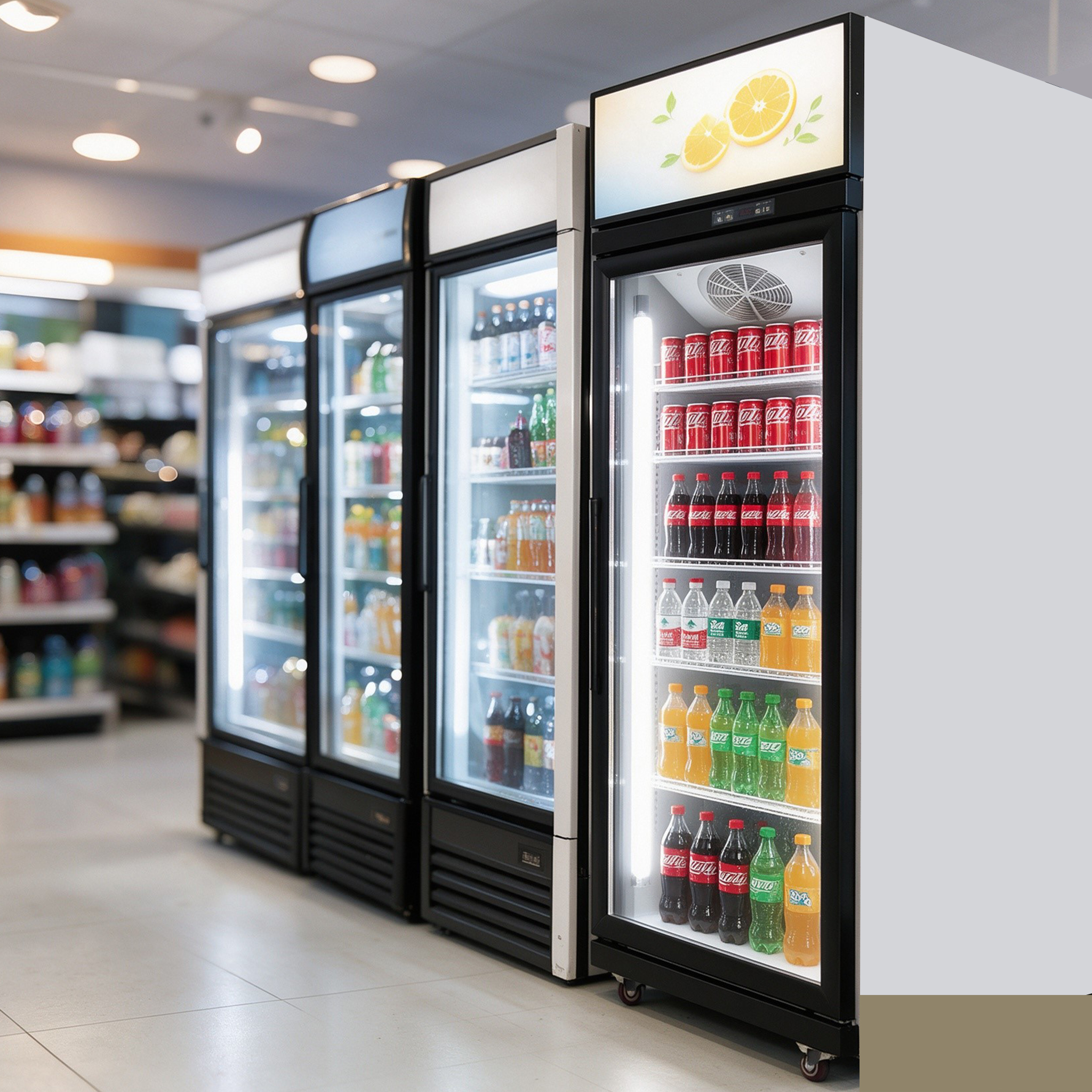
Recommendation: Small neighbourhood convenience stores should prioritise single-door tempered glass commercial refrigerated cabinets. Stores in business districts and gas stations with heavy foot traffic can deploy Newell two-door vertical refrigerated cabinets, with configurations graded according to store visitor volume.
2. Selecting Single-door or Double-door Models
Narrow-frame tempered glass refrigerated cabinets enjoy strong market sales. Accordingly, the Nenwell platform offers models including NW-LG268, NW-LG300, NW-LG350 and NW-LG430. The slim aluminium alloy frame maximises glass display surface while occupying little floor space, enabling placement against walls in narrow spots. An advantage of standalone units is that a fault in one machine will not disrupt the operation of other chillers in the store, ideal for dispersed display of energy drinks. The downside is limited storage capacity per unit, requiring more frequent restocking in high-traffic stores.
The two-door vertical commercial refrigerated cabinet NW-LD620W features large capacity and air-cooled frost-free operation, suited for large convenience stores in downtown commercial zones and along highways to display large quantities of beverages and pre-packaged food at once. Adopting two-door units reduces the total number of chillers needed for a store, yet the overall cabinet width is greater, and the frame cannot achieve the slim effect of single-door models. They tend to block customer passage aisles in small neighbourhood shops, with higher procurement, ocean freight and spare part maintenance costs.
3. Pricing and Costs
In the commercial refrigerated cabinet market across Europe and America, prices of imported vertical glass chillers fluctuate greatly depending on capacity, glass material, energy efficiency grade and certifications. Single-door tempered glass refrigerated cabinets fall into the mid-range cost-performance bracket when purchased in full-container bulk orders, with low initial investment and lower ocean freight, warehousing and part replacement costs, perfect for mass rollout at newly opened chain convenience stores.
Large-capacity two-door units carry higher per-unit purchase prices. Increased cabinet weight pushes up cross-border logistics and on-site installation costs. However, the storage cost per litre is more competitive, making them fit for concentrated product display in large flagship convenience stores.
Procurement teams need to calculate full-lifecycle costs: equipment purchase price + international freight + customs duties + annual electricity charges + maintenance and spare part fees. Many low-priced alternatives are cheap to buy but have poor insulation and compressor quality. Their failure rates climb after 3–5 years of use, accompanied by rising energy consumption year by year. Newell notes that readily available consumable spare parts such as door gaskets, tempered glass and thermostats help cut food losses caused by equipment downtime.
4. Customisation Capabilities
Chain convenience stores attach great importance to consistent in-store visual identity, with varying demands from different brands.
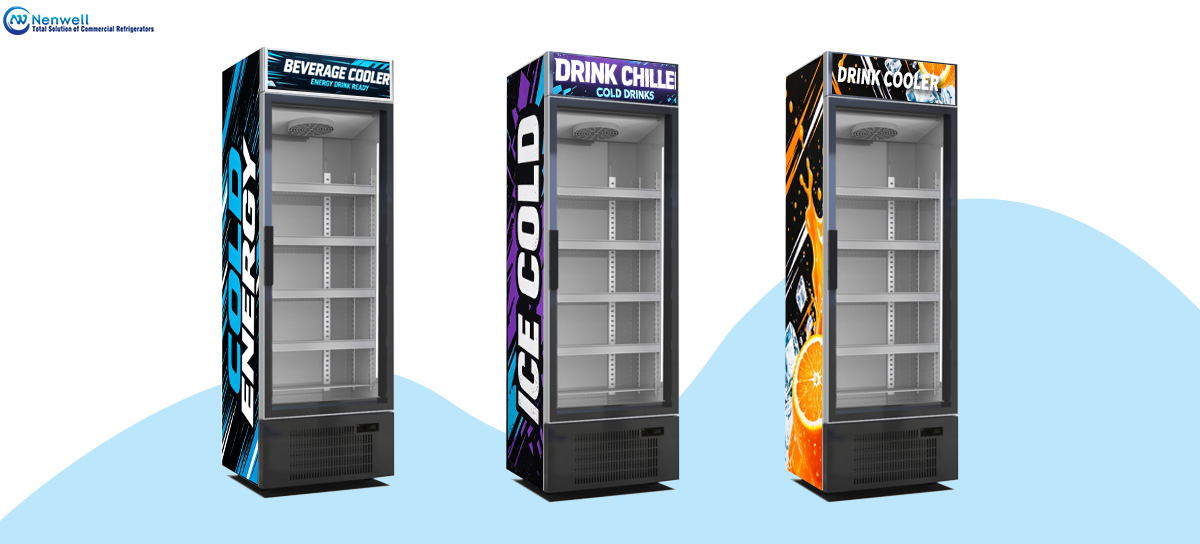
Appearance customisation: cabinets are available in black, white, grey and other colours; brand LOGOs of convenience stores can be printed on top advertising light boxes, with light box dimensions customisable on demand.
Door assembly options: narrow-frame tempered glass doors can be upgraded to Low-E low-emissivity electrically heated anti-fog glass, adapting to high-humidity North American and low-temperature Nordic environments. Automatic door closing and anti-theft safety locks are optional. Internal accessories: dip-coated adjustable shelves allow height adjustment for beverage cans, bottled water and ready-to-eat meal boxes. LED lighting can be side-mounted or fitted as top light strips.
These units support 110V voltage for North America and 230V for the EU, with mandatory European and American certifications including CE and CB to meet market access requirements for different regions.
III. Application Scenarios for Convenience Store Procurement in Europe and America
Newell NW-LG Series Narrow-frame Single-door Tempered Glass Commercial Refrigerated Cabinets
NW-LG268/300/350/430 and EC210 are Newell’s flagship single-door tempered glass refrigerated cabinets for convenience stores. Equipped with slim aluminium alloy frames, double-layer Low-E anti-fog tempered glass and vertical air-cooled frost-free design, they maintain 2–10°C temperature. With power output of 160–250W and excellent energy efficiency, they come with digital temperature control, internal LED cabinet lighting, adjustable shelves and bottom movable casters. Suitable for small neighbourhood convenience stores and mini gas station outlets to display drinks, yoghurt and ready-to-eat light meals. They are the preferred choice for stores with limited wall display width, greatly boosting product visibility.
NW-MG Series Slim Single-door Refrigerated Display Cabinets
NW-MG220XF and NW-MG230XF are ultra-slim commercial refrigerated cabinets. Their compact depth fits narrow display areas beside checkout counters as auxiliary chillers for premium drinks and functional beverages. Low power consumption and quiet operation avoid disturbing checkout zones.
NW-LD620W Two-door Vertical Refrigerated Cabinet
Newell two-door air-cooled refrigerated cabinet with a net volume of 460L. It is equipped with high-efficiency compressors and automatic evaporative drainage without manual water emptying. Ideal for large convenience stores in downtown business districts and along highways for concentrated display of beverages and pre-packaged food. For spacious locations with high daily foot traffic, one unit can replace multiple single-door chillers to reduce equipment quantity.
IV. Practical Implementation Suggestions for Convenience Store Procurement
Recommendation for tiered store configuration: purchase refrigerated cabinets in bulk for small neighbourhood stores; deploy a small number of two-door units for large stores in business districts. Prior to procurement, verify equipment energy efficiency certificates, voltage compatibility and compliance documents, and assess store electrical load. Request prototype trial operation at target store locations to test power consumption, glass anti-fog performance and operating noise before placing bulk orders.
Meanwhile, plan spare part procurement in advance. Newell maintains mature spare part supply channels across Europe and America. Consumables including tempered glass, door gaskets and thermostats can be restocked quickly to minimise cold food losses from equipment downtime.
When purchasing commercial refrigerated cabinets, convenience stores should adopt a cost-performance strategy. Total energy consumption cost, maintenance cost and usage cost of equipment are all critical. (Written by the Nenwell Team)
Post time: Sep-21-2026 Views: